
Apr . 01, 2024 17:55 Back to list
amoxicillin clavulanate injection Manufacturing and Performance

Introduction
Amoxicillin clavulanate injection is a sterile injectable suspension combining amoxicillin, a beta-lactam antibiotic, with clavulanate potassium, a beta-lactamase inhibitor. This formulation is primarily utilized for the treatment of severe bacterial infections where oral administration is impractical or ineffective. Its technical position within the pharmaceutical supply chain falls under the category of parenteral antibiotics, requiring stringent manufacturing control and quality assurance protocols. Core performance characteristics include broad-spectrum antibacterial activity, resistance to beta-lactamase enzymes produced by many bacteria, and rapid bioavailability following intramuscular or intravenous administration. A critical pain point in the industry revolves around maintaining sterility during manufacturing and ensuring the stability of the suspension to prevent precipitation and maintain accurate dosing. Another significant concern is the rising prevalence of antibiotic resistance and the need for formulations that can effectively combat resistant strains. Furthermore, proper reconstitution and administration protocols are essential to maximize efficacy and minimize adverse reactions.
Material Science & Manufacturing
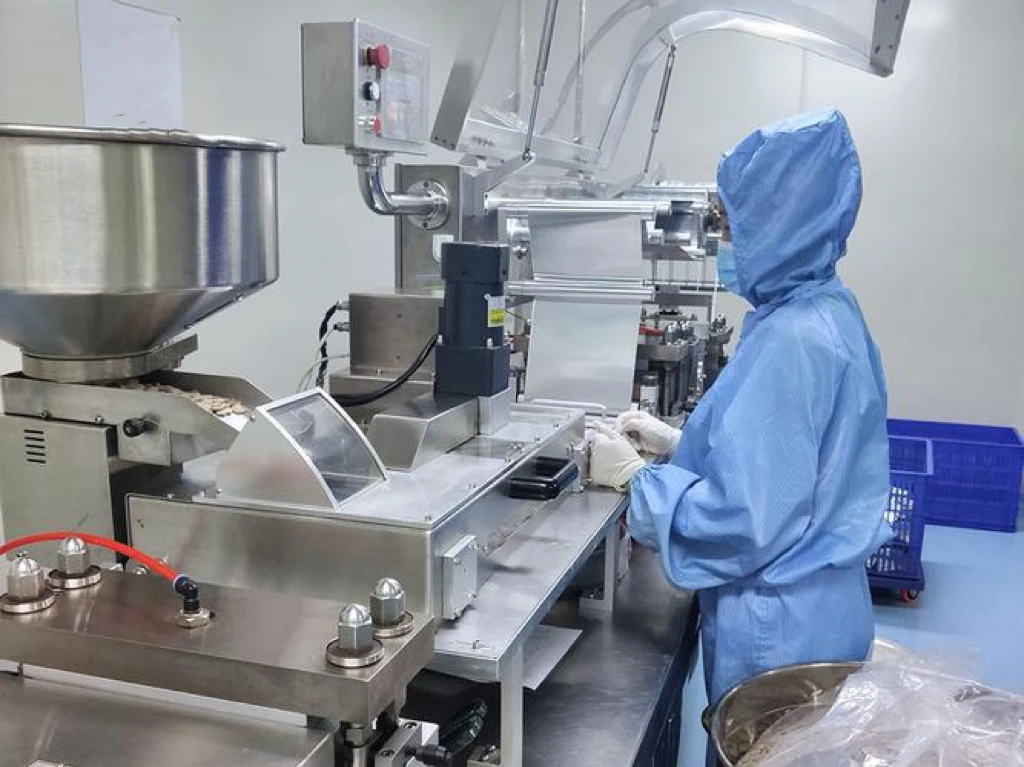
The core components, amoxicillin and clavulanate potassium, possess distinct physicochemical properties. Amoxicillin trihydrate exists as a white or nearly white crystalline powder, sparingly soluble in water. Its structure contains a beta-lactam ring susceptible to hydrolysis. Clavulanate potassium is a potassium salt of clavulanic acid, a beta-lactamase inhibitor, also a crystalline powder, and is highly hygroscopic. Manufacturing involves several critical steps. First, the active pharmaceutical ingredients (APIs) undergo rigorous quality control testing for purity, potency, and particle size distribution. The APIs are then micronized to enhance solubility and suspension stability. The suspension formulation typically includes excipients such as sodium chloride for isotonicity, polysorbate 80 as a surfactant to maintain suspension, and buffering agents to maintain pH within a stable range (typically 6.0-8.0). The manufacturing process utilizes aseptic techniques under strict environmental control, including HEPA filtration and sterile processing suites. Lyophilization (freeze-drying) is often employed to create a stable powder for reconstitution. Critical parameters include maintaining a controlled temperature during mixing, ensuring complete dissolution of excipients, and achieving a uniform particle size distribution. Sterilization is typically achieved via filtration through 0.22-micron filters and aseptic filling into sterile vials. Powder characteristics, specifically flowability and compressibility, are vital for efficient vial filling and reconstitution. The manufacturing process must adhere to Good Manufacturing Practice (GMP) guidelines outlined by regulatory bodies like the FDA and EMA.
Performance & Engineering
The performance of amoxicillin clavulanate injection is heavily influenced by pharmacokinetics and pharmacodynamics. After intramuscular injection, amoxicillin exhibits rapid absorption, reaching peak plasma concentrations within approximately one hour. Clavulanate potassium absorption is also rapid, but generally slightly lower than amoxicillin. The bioavailability is directly correlated with the reconstitution volume and the rate of administration. From an engineering standpoint, the stability of the reconstituted suspension is paramount. Factors such as pH, temperature, and the presence of metal ions can accelerate degradation. The formulation is designed to minimize precipitation and maintain a consistent drug concentration throughout the labeled shelf life. Environmental resistance considerations include protection from light and moisture, achieved through amber-colored vials and appropriate packaging materials. Compliance requirements dictate adherence to pharmacopoeial standards for sterility, pyrogenicity, and particulate matter. The injection must pass stringent tests for bacterial endotoxins and maintain a specific pH range to prevent patient discomfort and ensure drug stability. Force analysis is relevant in the design of the injection device, ensuring ease of administration and minimizing the risk of needlestick injuries. Proper reconstitution requires a specific volume of sterile water for injection, and agitation is crucial to achieve a homogenous suspension. The efficacy relies on the synergistic action of amoxicillin and clavulanate – amoxicillin inhibits bacterial cell wall synthesis, while clavulanate prevents beta-lactamase enzymes from inactivating amoxicillin, thereby extending its spectrum of activity.
Technical Specifications
| Specification | Amoxicillin Content (mg/mL) | Clavulanate Content (mg/mL) | pH Range | Sterility | Particle Size (μm) |
|---|---|---|---|---|---|
| Typical Strength 1 | 500 | 125 | 6.0 - 8.0 | Sterile | < 10 |
| Typical Strength 2 | 1000 | 250 | 6.0 - 8.0 | Sterile | < 10 |
| Reconstitution Volume (mL) | 10 | 10 | N/A | N/A | N/A |
| Osmolarity (mOsm/L) | 275-385 | 275-385 | N/A | N/A | N/A |
| Endotoxin Level (EU/mL) | < 5 | < 5 | N/A | N/A | N/A |
| Storage Temperature (°C) | 2-8 | 2-8 | N/A | N/A | N/A |
Failure Mode & Maintenance
Failure modes of amoxicillin clavulanate injection can be categorized into physical, chemical, and microbiological failures. Physical failures include precipitation of the drug substance during storage, leading to inaccurate dosing. This is exacerbated by temperature fluctuations and improper storage conditions. Chemical degradation, specifically hydrolysis of the beta-lactam ring in amoxicillin and clavulanate, reduces potency over time. This is accelerated by high humidity and exposure to light. Microbiological contamination is a critical failure mode, potentially leading to sepsis in patients. This can occur due to compromised sterility during manufacturing or improper aseptic technique during reconstitution. Fatigue cracking of the vial during handling or transport can also lead to leakage and loss of sterility. Delamination of the vial coating, if present, can introduce particulate matter into the solution. Oxidation of the APIs can result in discoloration and loss of potency. Maintenance involves strict adherence to storage conditions (2-8°C, protected from light), proper reconstitution procedures (using only sterile water for injection and gentle mixing), and meticulous aseptic technique during administration. Regular stability testing is essential to monitor drug potency and identify any degradation products. Visual inspection for particulate matter or discoloration should be performed before administration. In case of precipitation, the solution should not be used. Furthermore, a robust quality control system is essential to detect and prevent manufacturing defects and ensure product integrity throughout its shelf life.
Industry FAQ
Q: What is the acceptable range for particulate matter in amoxicillin clavulanate injection?
A: The acceptable range for particulate matter is strictly defined by pharmacopoeial standards (USP, EP, JP). Typically, this is specified in terms of the number of particles exceeding certain size thresholds (e.g., 10 μm and 25 μm) per mL of solution. Compliance with these standards is critical to prevent adverse reactions and ensure patient safety. Specific limits are detailed in the relevant pharmacopoeia monographs.
Q: How does the reconstitution process impact the stability of the injection?
A: The reconstitution process is a critical control point. Using the incorrect diluent, improper volume, or vigorous shaking can all negatively impact stability. Utilizing sterile water for injection is mandatory. Gentle swirling, rather than shaking, is recommended to ensure complete dissolution without generating excessive foam or causing premature degradation of the APIs. The reconstituted solution should be used immediately or within the timeframe specified in the product labeling.
Q: What are the key considerations for validating the sterilization process?
A: Sterilization validation requires a comprehensive approach. Typically, sterilization is achieved via filtration. Validation involves demonstrating that the filtration process consistently removes microorganisms with a log reduction of at least 6 (SAL of 10-6). This involves challenge studies using bacterial spores of known resistance. Process parameters like filter pore size, flow rate, and filtration time must be carefully controlled and monitored. Routine sterility testing is also essential to confirm ongoing process effectiveness.
Q: How do you prevent beta-lactamase mediated resistance when formulating this injection?
A: The inclusion of clavulanate potassium is the primary mechanism for preventing beta-lactamase mediated resistance. Clavulanate acts as a suicide inhibitor of beta-lactamase enzymes, preventing them from hydrolyzing the beta-lactam ring of amoxicillin. The ratio of amoxicillin to clavulanate is carefully optimized to ensure sufficient clavulanate is present to effectively inhibit the most common beta-lactamases.
Q: What analytical methods are used to assess the potency of amoxicillin and clavulanate in the final product?
A: High-Performance Liquid Chromatography (HPLC) is the primary analytical method for quantifying amoxicillin and clavulanate. The method requires validated standards and a well-defined chromatographic separation. UV detection is commonly employed. Titration methods can also be used, particularly for amoxicillin. Assay validation must demonstrate specificity, linearity, accuracy, precision, and robustness.
Conclusion
Amoxicillin clavulanate injection represents a vital therapeutic option for the treatment of severe bacterial infections. Its efficacy relies on a complex interplay of pharmaceutical formulation, aseptic manufacturing, and rigorous quality control. Maintaining sterility, ensuring drug stability, and optimizing reconstitution protocols are crucial challenges. Adherence to stringent regulatory standards, including GMP guidelines and pharmacopoeial requirements, is paramount to guarantee product safety and efficacy.
Future advancements may focus on novel formulation strategies to enhance stability, improve bioavailability, and overcome emerging antibiotic resistance mechanisms. Continuous monitoring of antimicrobial resistance patterns and investment in research and development will be essential to ensure the continued clinical utility of this important injectable antibiotic.
Latest news
Copyright © 2026
Dingzhou Kangquan Pharmaceutical Co., Ltd. All Rights Reserved. Sitemap | Privacy
Policy


