
Apr . 01, 2024 17:55 Back to list
Amoxicillin Forte Injection Price Performance Analysis
Introduction
Amoxicillin Forte Injection, characterized by its higher concentration of amoxicillin, is a parenteral antibiotic formulation utilized in the treatment of severe bacterial infections. Positioned within the pharmaceutical supply chain as a sterile injectable, it represents a critical intervention in scenarios where oral administration is impractical or ineffective. Its core performance characteristics revolve around achieving rapid and sustained therapeutic levels of amoxicillin in the bloodstream, targeting both Gram-positive and Gram-negative bacteria susceptible to penicillin. The escalating prevalence of antibiotic resistance and the demand for rapid therapeutic responses are key drivers shaping the market for formulations like Amoxicillin Forte Injection. A crucial pain point in the industry revolves around maintaining sterility and ensuring consistent potency throughout the shelf life, factors directly impacting patient safety and treatment efficacy. Understanding the nuances of its manufacturing process and quality control measures is therefore paramount for procurement managers and medical professionals.
Material Science & Manufacturing
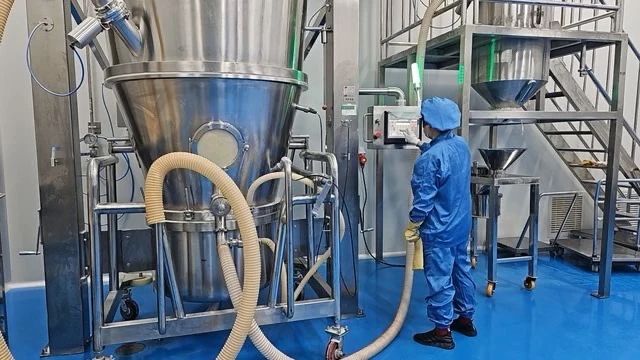
The primary raw material, amoxicillin trihydrate, is a semi-synthetic penicillin derived from 6-aminopenicillanic acid (6-APA). Its physical properties, including crystalline structure and hygroscopicity, directly influence its dissolution rate and bioavailability. The manufacturing process begins with the synthesis of amoxicillin, followed by purification and crystallization. The sterile injection formulation utilizes pharmaceutical-grade excipients such as sodium chloride for isotonicity, and water for injection (WFI) as the solvent. The manufacturing process strictly adheres to Good Manufacturing Practices (GMP) guidelines. Key process parameters include filtration (0.22 µm sterilization filters), aseptic filling into sterile vials or ampoules, and lyophilization (freeze-drying) to enhance stability. Lyophilization cycle parameters – freezing rate, primary drying temperature, and secondary drying temperature – are critical for maintaining the structural integrity of the amoxicillin molecule. Chemical compatibility studies are performed to ensure the excipients do not degrade the amoxicillin or introduce unwanted impurities. Container closure system (vial/stopper/cap) selection is also crucial, ensuring minimal leaching of extractables and maintaining sterility. The pH of the final solution is carefully controlled to optimize amoxicillin stability, typically between 7.0 and 8.5. Process Analytical Technology (PAT) is increasingly implemented for real-time monitoring of critical quality attributes (CQAs).

Performance & Engineering
The performance of Amoxicillin Forte Injection is intrinsically linked to its pharmacokinetic and pharmacodynamic properties. Following intramuscular or intravenous administration, amoxicillin exhibits rapid distribution into body tissues and fluids. Force analysis centers around the required injection force for consistent drug delivery via various administration devices (syringes, infusion pumps). Environmental resistance is addressed through stringent packaging requirements – protection from light, moisture, and temperature extremes. Compliance requirements are governed by pharmacopoeial standards (USP, EP, BP) and regulatory authorities (FDA, EMA). The injectable formulation must demonstrate sterility, pyrogenicity, and bacterial endotoxin limits that conform to established guidelines. Functional implementation focuses on achieving target plasma concentrations sufficient to inhibit bacterial growth. The formulation's osmolality is engineered to minimize pain upon injection and prevent tissue damage. Consideration is given to potential drug-drug interactions and the impact on renal function. The concentration of amoxicillin in the injection influences both the volume administered and the potential for infusion-related adverse events, requiring careful titration based on patient factors and infection severity.
Technical Specifications
| Parameter | Specification | Test Method | Compliance Standard |
|---|---|---|---|
| Amoxicillin Content (mg/mL) | 200-500 mg/mL (depending on formulation) | HPLC | USP <467> |
| Sterility | Sterile | USP <71> | USP |
| Pyrogens | < 0.5 EU/mL | USP <1078> | USP |
| Bacterial Endotoxins | < 0.5 EU/mL | LAL Test | USP <1078> |
| pH | 7.0 – 8.5 | Potentiometry | USP |
| Osmolality | 280 – 380 mOsm/kg | Osmometer | USP |
Failure Mode & Maintenance
Potential failure modes include particulate matter formation during lyophilization, degradation of amoxicillin due to moisture ingress, loss of sterility due to compromised container closure, and precipitation of amoxicillin upon reconstitution. Fatigue cracking of vials during handling and shipping can also occur. Failure analysis involves microscopic examination of particulates, HPLC analysis to detect degradation products, and leak testing of containers. Maintenance strategies encompass strict adherence to cold chain management (storage temperatures between 2-8°C), proper handling procedures to minimize vial breakage, and regular monitoring of environmental conditions. Implementing a robust Quality Control (QC) system with periodic testing of retained samples is essential. Addressing issues of bacterial contamination requires root cause analysis, identification of the source, and implementation of corrective and preventative actions (CAPA). Furthermore, monitoring for sub-visible particles is crucial; such particles can induce adverse reactions in patients. Proper training of personnel in aseptic techniques and maintenance of equipment are vital for preventing failures.
Industry FAQ
Q: What is the impact of lyophilization cycle variations on the long-term stability of Amoxicillin Forte Injection?
A: Variations in freezing rate, primary drying temperature, and secondary drying temperature can significantly affect the residual moisture content and the crystalline structure of the amoxicillin. Insufficient drying leads to increased degradation rates, while excessive drying can cause cake collapse and reduced solubility. Maintaining tight control over these parameters, validated through rigorous stability studies, is crucial for ensuring a defined shelf life.
Q: How do you ensure the absence of pyrogens and bacterial endotoxins in the final product?
A: We employ multiple control measures throughout the manufacturing process. These include using WFI that meets or exceeds USP Purified Water standards, utilizing filters with a pore size of 0.22 µm to remove bacteria, and performing regular testing for pyrogens using the rabbit pyrogen test (USP <1078>) and bacterial endotoxins using the Limulus Amebocyte Lysate (LAL) test. Raw materials are also rigorously tested for endotoxin levels.
Q: What are the challenges associated with maintaining sterility during aseptic filling?
A: Maintaining sterility during aseptic filling requires a highly controlled environment, including a validated cleanroom with HEPA filtration, stringent personnel hygiene practices, and meticulous monitoring of air and surface microbial contamination. Regular environmental monitoring, personnel training, and adherence to aseptic processing procedures are paramount. Process simulations are conducted to validate the effectiveness of the aseptic process.
Q: How is the compatibility of Amoxicillin Forte Injection with intravenous fluids assessed?
A: Compatibility studies are performed with common intravenous fluids, such as 0.9% sodium chloride and 5% dextrose, to ensure that no precipitation, discoloration, or loss of potency occurs upon mixing. These studies are conducted under controlled temperature and light conditions, and the mixtures are analyzed using HPLC to determine amoxicillin stability over time.
Q: What quality control tests are performed on the final product to ensure its conformance to specifications?
A: The final product undergoes a comprehensive battery of quality control tests, including assay for amoxicillin content (HPLC), sterility testing (USP <71>), pyrogen testing (USP <1078>), bacterial endotoxin testing (LAL), pH measurement, osmolality measurement, particulate matter analysis (USP <788>), and visual inspection for defects.
Conclusion
Amoxicillin Forte Injection represents a vital pharmaceutical intervention demanding rigorous manufacturing control and quality assurance. Its efficacy hinges upon maintaining sterility, potency, and compatibility throughout its lifecycle. The meticulous attention to raw material sourcing, aseptic processing, lyophilization parameters, and container closure integrity are not merely procedural steps but essential safeguards protecting patient health.
Looking forward, advancements in continuous manufacturing technologies and real-time release testing (RTRT) hold the potential to enhance production efficiency and reduce variability. Further research into novel excipients and formulation strategies could also improve stability and bioavailability. Consistent adherence to international regulatory standards and a commitment to continuous improvement will remain paramount for manufacturers seeking to deliver safe and effective Amoxicillin Forte Injection formulations.
Latest news
Copyright © 2026
Dingzhou Kangquan Pharmaceutical Co., Ltd. All Rights Reserved. Sitemap | Privacy
Policy


