
Apr . 01, 2024 17:55 Back to list
amoxicillin injectable cattle Performance Analysis
Introduction
Amoxicillin injectable cattle is a broad-spectrum penicillin antibiotic formulated for the treatment of bacterial infections in cattle. It occupies a critical position in veterinary medicine, serving as a frontline defense against economically significant diseases affecting livestock. Amoxicillin, a derivative of penicillin, exhibits enhanced acid stability and oral absorption, making it effective against a wider range of Gram-positive and Gram-negative bacteria compared to earlier penicillin formulations. This injectable formulation bypasses the gastrointestinal tract, ensuring rapid and complete bioavailability, crucial for treating acute infections. Core performance characteristics include rapid onset of action, broad-spectrum efficacy, and minimal tissue irritation at the injection site when administered correctly. Its efficacy is contingent upon proper dosage, administration technique, and consideration of bacterial susceptibility patterns. Resistance monitoring and prudent use are paramount to maintain its long-term effectiveness within the cattle population.
Material Science & Manufacturing
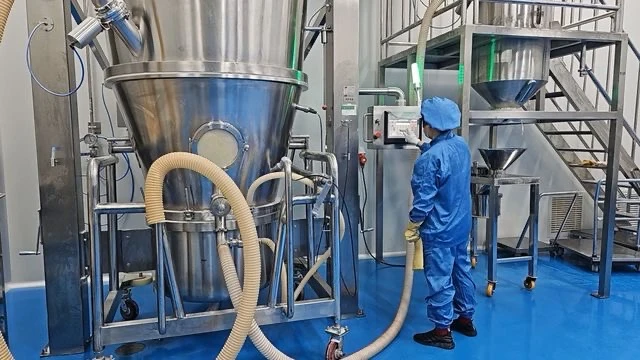
The primary active pharmaceutical ingredient (API) is amoxicillin trihydrate, a semi-synthetic penicillin. Its physical properties include a white to off-white crystalline powder with a molecular weight of 365.40 g/mol. Chemical stability is significantly impacted by pH, temperature, and humidity. Manufacturing begins with 6-aminopenicillanic acid (6-APA), a fermentation product derived from Penicillium fungi. 6-APA undergoes acylation with D-(-)-p-hydroxyphenylglycine to yield amoxicillin. The injectable solution typically consists of amoxicillin trihydrate dissolved in a sterile aqueous solution, often containing buffering agents (e.g., phosphate buffers) to maintain a pH between 7.0 and 8.5, ensuring optimal stability and solubility. Formulation also includes excipients such as preservatives (e.g., benzyl alcohol) to prevent microbial contamination and viscosity modifiers (e.g., propylene glycol) to improve syringeability. Manufacturing processes are governed by Good Manufacturing Practices (GMP) regulations, including stringent control of sterilization procedures (typically autoclaving), filtration (0.22 μm filters to remove bacteria), and aseptic filling into sterile vials. Quality control testing includes assays for amoxicillin content (HPLC), sterility testing, pyrogen testing (Limulus Amebocyte Lysate – LAL assay), and pH measurements. Raw material sourcing and supplier qualification are critical to ensure API purity and prevent contamination with endotoxins.
Performance & Engineering
The therapeutic efficacy of amoxicillin injectable cattle hinges on its pharmacokinetic and pharmacodynamic properties. Following intramuscular administration, amoxicillin exhibits rapid absorption, achieving peak plasma concentrations within 30-60 minutes. Distribution is extensive, penetrating various tissues and body fluids. Elimination occurs primarily through renal excretion, with a half-life typically ranging from 20-30 minutes in cattle. Dosage regimens are calculated to maintain plasma concentrations above the minimum inhibitory concentration (MIC) of target bacteria for an adequate duration. Engineering considerations focus on optimizing injection volume and viscosity to minimize pain and tissue damage at the injection site. Needle gauge and length selection are also critical to ensure proper drug delivery. The formulation must be compatible with commonly used veterinary administration equipment (syringes, needles). Environmental resistance is primarily related to temperature and light exposure; the product should be stored in a cool, dark place to prevent degradation. Compliance requirements involve adherence to veterinary drug regulations established by governing bodies such as the FDA (in the US) and EMA (in Europe). These regulations dictate labeling requirements, withdrawal times (the period required for drug residues to clear from edible tissues), and monitoring programs to assess antibiotic resistance trends.
Technical Specifications
| Parameter | Specification | Test Method | Units |
|---|---|---|---|
| Amoxicillin Content (Potency) | 150 mg/mL (typical) | HPLC | mg/mL |
| pH | 7.0 – 8.5 | pH Meter | - |
| Sterility | Complies | USP <71> or EP 2.6.1 | - |
| Bacterial Endotoxins (Pyrogens) | < 0.5 | LAL Test | EU/mL |
| Clarity and Color | Clear and colorless to pale yellow | Visual Inspection | - |
| Viscosity | < 100 | Viscometer | cP |
Failure Mode & Maintenance
Failure modes of amoxicillin injectable cattle can be categorized as related to the drug product itself or to improper administration. Degradation of amoxicillin due to temperature extremes or prolonged light exposure can lead to reduced potency and therapeutic failure. Hydrolytic degradation can occur in solutions with inappropriate pH. Sterility breaches resulting from compromised vial seals or improper aseptic technique during administration can lead to localized infections and abscess formation. Injection site reactions, such as swelling, pain, or inflammation, may occur due to improper injection technique or hypersensitivity to the drug. Allergic reactions, ranging from mild skin rashes to anaphylaxis, are a potential failure mode. Resistance development in target bacteria, driven by overuse or inappropriate dosing, represents a long-term failure mode impacting overall treatment efficacy. Maintenance recommendations include strict adherence to labeled storage conditions (cool, dark place). Vials should be inspected for particulate matter or discoloration before use. Aseptic technique must be followed during reconstitution and administration. Proper needle gauge and length should be selected to minimize tissue trauma. Veterinarians should adhere to antimicrobial stewardship principles and prescribe amoxicillin judiciously, considering bacterial susceptibility patterns and minimizing unnecessary use.
Industry FAQ
Q: What is the optimal injection site for minimizing tissue irritation in cattle?
A: The optimal injection site is generally the anterior portion of the neck, cranial to the shoulder, or the large muscle mass of the hind limb, avoiding major blood vessels and nerves. Subcutaneous injections are not recommended as they can lead to slower absorption and increased risk of localized reactions. Rotating injection sites is crucial to prevent cumulative tissue damage.
Q: How does amoxicillin resistance develop in bacterial populations, and what mitigation strategies can be employed?
A: Amoxicillin resistance develops through several mechanisms, including beta-lactamase production (enzymes that degrade amoxicillin), alterations in penicillin-binding proteins (PBPs), and decreased permeability of the bacterial cell wall. Mitigation strategies include implementing antimicrobial stewardship programs, using appropriate dosages and treatment durations, and employing combination therapies with beta-lactamase inhibitors. Monitoring resistance patterns through bacterial culture and sensitivity testing is essential.
Q: What are the key differences between amoxicillin and other beta-lactam antibiotics used in cattle, such as ceftiofur?
A: Ceftiofur is a third-generation cephalosporin with a broader spectrum of activity than amoxicillin, particularly against Gram-negative bacteria. However, cephalosporins are generally more expensive and have a higher potential for inducing resistance. Amoxicillin is often preferred for treating infections caused by Gram-positive bacteria and is less likely to contribute to cross-resistance with cephalosporins.
Q: What is the significance of withdrawal time following amoxicillin administration, and what factors influence it?
A: Withdrawal time is the period required for amoxicillin residues to decline to safe levels in edible tissues (meat, milk). It is crucial to prevent human exposure to antibiotic residues through food consumption. Withdrawal time is determined by pharmacokinetic studies and is regulated by veterinary drug authorities. Factors influencing withdrawal time include dosage, frequency of administration, and individual animal metabolism.
Q: How should amoxicillin injectable cattle be reconstituted and administered to ensure optimal stability and efficacy?
A: Amoxicillin for injection typically comes as a lyophilized powder that must be reconstituted with the appropriate sterile diluent (usually sterile water for injection or bacteriostatic water). The reconstitution process should be performed using aseptic technique. Once reconstituted, the solution should be used immediately or stored according to the manufacturer's instructions (typically refrigerated). Administer via intramuscular injection, ensuring proper needle placement and technique to minimize tissue irritation.
Conclusion
Amoxicillin injectable cattle remains a vital antibiotic in veterinary medicine, offering effective treatment for a wide range of bacterial infections in cattle. Its performance relies on a complex interplay of material science, manufacturing precision, and pharmacokinetic/pharmacodynamic principles. Maintaining its long-term efficacy requires a multi-faceted approach encompassing responsible antibiotic stewardship, accurate diagnosis, appropriate dosage regimens, and rigorous quality control throughout the production and administration processes.
Future advancements in formulation technology, such as sustained-release formulations or nano-delivery systems, could potentially enhance amoxicillin’s efficacy and minimize the development of antibiotic resistance. Continuous monitoring of resistance patterns and refinement of treatment protocols will be essential to ensure this critical drug remains a valuable tool in maintaining cattle health and food safety.
Latest news
Copyright © 2026
Dingzhou Kangquan Pharmaceutical Co., Ltd. All Rights Reserved. Sitemap | Privacy
Policy


