
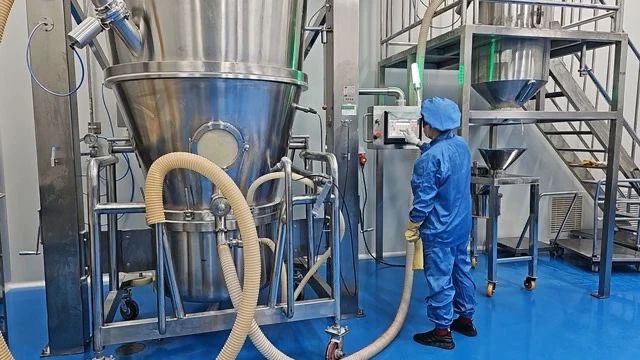
Amoxicillin injection is a sterile, aqueous solution of amoxicillin trihydrate, a broad-spectrum beta-lactam antibiotic. Positioned within the parenteral drug delivery segment of the pharmaceutical industry, it serves as a critical therapeutic agent for treating bacterial infections where oral administration is impractical or ineffective. Its primary function is to inhibit bacterial cell wall synthesis, leading to bacterial lysis and death. Core performance characteristics include rapid onset of action, high bioavailability compared to oral formulations, and the ability to achieve therapeutic concentrations in tissues and fluids inaccessible to oral medications. This guide provides an in-depth technical overview of amoxicillin injection, covering material science, manufacturing processes, performance parameters, potential failure modes, and relevant industry standards. The increasing prevalence of antibiotic resistance necessitates rigorous quality control and a thorough understanding of the factors influencing the stability and efficacy of this essential medication. This document aims to serve as a comprehensive resource for pharmaceutical manufacturers, quality control personnel, and healthcare professionals involved in the production, distribution, and administration of amoxicillin injection.
Amoxicillin trihydrate, the active pharmaceutical ingredient (API), is synthesized through a semi-synthetic process starting from 6-aminopenicillanic acid (6-APA). Raw material quality is paramount, demanding stringent control of impurities and adherence to pharmacopeial specifications (USP, EP, JP). The API exhibits polymorphic behavior, influencing its solubility and stability. The beta-lactam ring is susceptible to hydrolysis, necessitating careful handling and storage conditions. Excipients commonly include sodium chloride for isotonicity, and water for injection (WFI) as the solvent. WFI must meet or exceed USP Purified Water standards with a Total Organic Carbon (TOC) level ≤ 30 ppb and a conductivity ≤ 1.8 μS/cm. Manufacturing typically involves dissolving the amoxicillin trihydrate in WFI, adjusting pH to enhance stability (typically between 8.0 and 9.0 using a buffering agent like sodium hydroxide), sterile filtration through a 0.22 μm filter, and aseptic filling into vials or ampoules. Aseptic processing requires Class 100 (ISO 5) environment and rigorously validated sterilization processes. Lyophilization (freeze-drying) is often employed to enhance long-term stability. Key parameters to control include temperature, pH, filtration velocity, filling volume accuracy, and sterilization cycle parameters. Post-filling inspection includes visual inspection for particulate matter, leak testing, and sterility testing. The glass vials or ampoules are typically Type I borosilicate glass to minimize leaching of alkali ions, which can catalyze amoxicillin degradation.

The therapeutic efficacy of amoxicillin injection relies on achieving and maintaining adequate antibiotic concentrations at the site of infection. Pharmacokinetic parameters, including volume of distribution, elimination half-life, and clearance, dictate dosing regimens. Force analysis considerations include the mechanical stress imposed on the vial/ampoule during filling, sterilization, and transportation. Glass breakage can lead to loss of sterility and patient harm. Environmental resistance is a crucial factor. Amoxicillin is susceptible to degradation by heat, light, and moisture. Storage conditions (temperature, humidity, light exposure) must be tightly controlled throughout the product lifecycle. Compliance requirements include adherence to Good Manufacturing Practices (GMP) as outlined by regulatory agencies (FDA, EMA, PMDA). Sterility assurance level (SAL) of 10-6 is typically required, validated through robust sterilization process validation studies. Functional implementation involves evaluating the injection’s compatibility with infusion fluids (e.g., saline, dextrose) to prevent precipitation or drug inactivation. Stability studies, conducted according to ICH guidelines, are essential to determine shelf life and appropriate storage conditions. Particulate matter control is critical; USP <788> defines limits for particulate contamination in injectable products. Bioburden testing and endotoxin testing are conducted to ensure the absence of microbial contamination and pyrogenic substances.
| Parameter | Specification | Test Method | Acceptance Criteria |
|---|---|---|---|
| Amoxicillin Content (Potency) | 90.0% - 110.0% of labeled amount | HPLC | Within specified range |
| pH | 8.0 – 9.0 | Potentiometry | Within specified range |
| Sterility | No microbial growth | USP <71> | Complies |
| Endotoxins | < 0.5 EU/mL | LAL Test (USP <85>) | Below specified limit |
| Particulate Matter | Meets USP <788> requirements | Microscopic Particle Count | Complies with USP limits |
| Water Content | ≤ 5.0% | Karl Fischer Titration | Within specified limit |
Common failure modes include degradation of amoxicillin due to hydrolysis, leading to loss of potency. This is accelerated by elevated temperatures and pH fluctuations. Particulate matter formation can occur from glass delamination, fiber shedding from filter membranes, or precipitation of degraded amoxicillin. Sterility breaches can arise from inadequate sterilization, compromised vial seals, or contamination during aseptic processing. Color changes (yellowing or darkening) indicate degradation. Visible cracks or flaws in the glass vial/ampoule can compromise containment. Maintenance strategies involve strict adherence to validated sterilization procedures, regular monitoring of environmental conditions (temperature, humidity), robust quality control testing of raw materials and finished products, and preventative maintenance of manufacturing equipment. Periodic revalidation of sterilization processes is essential. Storage at recommended temperatures (typically 2-8°C) minimizes degradation. Regular inspections for visual defects in vials/ampoules are crucial. Implementation of a robust change control system prevents unintended alterations to manufacturing processes. Investigating any deviations from specifications is paramount to identify root causes and implement corrective and preventative actions (CAPA).
A: Type I borosilicate glass is preferred due to its low alkali content, minimizing leaching and subsequent catalysis of amoxicillin degradation. Type II and Type III glasses contain higher alkali levels and can accelerate degradation. Compatibility studies should be conducted to confirm suitability of any glass container.
A: Lyophilization removes water, significantly reducing the rate of hydrolytic degradation of amoxicillin. It also increases the long-term stability of the product, allowing for extended shelf life. However, proper optimization of the lyophilization cycle is crucial to avoid collapse or cake cracking.
A: Critical control points include maintaining a Class 100 (ISO 5) environment, sterilization of all equipment and materials, personnel training and gowning, aseptic technique adherence, and rigorous environmental monitoring for microbial contamination. Continuous monitoring and validation are essential.
A: SAL is verified through comprehensive validation studies of the sterilization process (typically autoclaving or filtration). These studies demonstrate the process’s ability to reliably achieve a 10-6 reduction in microbial population. Bioburden testing and sterility testing of finished product samples provide ongoing verification.
A: Exceeding the endotoxin limit can cause fever, shock, and potentially death in patients. Strict adherence to endotoxin testing protocols and control of raw material sources are crucial. Any batch exceeding the limit must be rejected and investigated.
Amoxicillin injection remains a cornerstone in the treatment of bacterial infections. Achieving consistent quality and efficacy demands meticulous control over the entire manufacturing process, from raw material sourcing to finished product testing. The susceptibility of amoxicillin to degradation necessitates stringent temperature and humidity control, appropriate packaging materials, and robust stability studies. Understanding the interplay between material science, engineering principles, and regulatory compliance is vital for pharmaceutical manufacturers.
Future developments may focus on optimizing lyophilization cycles to further enhance stability, exploring novel packaging materials with improved barrier properties, and implementing advanced analytical techniques for real-time monitoring of amoxicillin degradation. Continuous improvement in manufacturing processes and adherence to evolving regulatory guidelines are essential to ensure the continued availability of a safe and effective amoxicillin injection for patients worldwide.


