
2695018275@qq.com
+86
13780513619
- Afrikaans
- Albanian
- Amharic
- Arabic
- Armenian
- Azerbaijani
- Basque
- Belarusian
- Bengali
- Bosnian
- Bulgarian
- Catalan
- Cebuano
- Corsican
- Croatian
- Czech
- Danish
- Dutch
- English
- Esperanto
- Estonian
- Finnish
- French
- Frisian
- Galician
- Georgian
- German
- Greek
- Gujarati
- Haitian Creole
- hausa
- hawaiian
- Hebrew
- Hindi
- Miao
- Hungarian
- Icelandic
- igbo
- Indonesian
- irish
- Italian
- Japanese
- Javanese
- Kannada
- kazakh
- Khmer
- Rwandese
- Korean
- Kurdish
- Kyrgyz
- Lao
- Latin
- Latvian
- Lithuanian
- Luxembourgish
- Macedonian
- Malgashi
- Malay
- Malayalam
- Maltese
- Maori
- Marathi
- Mongolian
- Myanmar
- Nepali
- Norwegian
- Norwegian
- Occitan
- Pashto
- Persian
- Polish
- Portuguese
- Punjabi
- Romanian
- Russian
- Samoan
- Scottish Gaelic
- Serbian
- Sesotho
- Shona
- Sindhi
- Sinhala
- Slovak
- Slovenian
- Somali
- Spanish
- Sundanese
- Swahili
- Swedish
- Tagalog
- Tajik
- Tamil
- Tatar
- Telugu
- Thai
- Turkish
- Turkmen
- Ukrainian
- Urdu
- Uighur
- Uzbek
- Vietnamese
- Welsh
- Bantu
- Yiddish
- Yoruba
- Zulu
Apr . 01, 2024 17:55 Back to list
cat daily vitamins Manufacturing Standards
Introduction
Cat daily vitamins represent a crucial supplement within the feline health and nutrition industry, positioned as preventative healthcare rather than solely therapeutic intervention. These formulations, typically incorporating essential vitamins, minerals, and often supplemental amino acids and fatty acids, address common nutritional gaps in commercially produced cat food, particularly those resulting from ingredient processing and storage. The core performance indicators center around bioavailability of nutrients, palatability to ensure compliance, and demonstrable impact on key physiological markers such as coat condition, immune function, and energy levels. The industry faces challenges related to regulatory ambiguity regarding supplement claims, ensuring product stability and avoiding ingredient interactions, and competing with a fragmented market containing a wide range of product quality. Understanding the underlying biochemistry of feline nutritional needs, manufacturing standards, and potential degradation pathways is essential for both manufacturers and consumers.
Material Science & Manufacturing
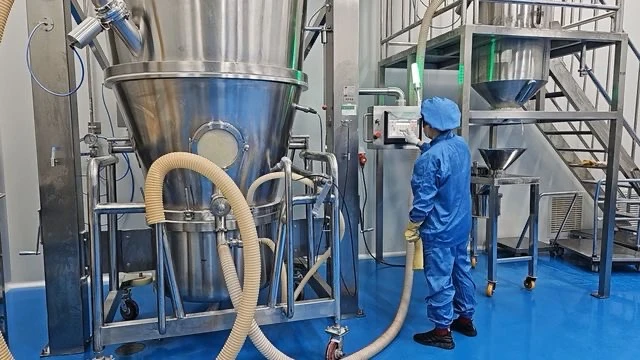
The production of cat daily vitamins involves a complex interplay of material science and manufacturing processes. Active pharmaceutical ingredients (APIs), encompassing vitamins A, D, E, B-complex, and minerals like taurine, calcium, and zinc, dictate the biochemical efficacy. These APIs are often sourced via chemical synthesis or extraction from natural sources. Raw material purity is paramount, necessitating stringent quality control based on United States Pharmacopeia (USP) standards. Excipients, comprising binders (e.g., microcrystalline cellulose), fillers (e.g., lactose), flavorings (e.g., fish meal, poultry digest), and coatings (e.g., gelatin, vegetable gums), enhance palatability, stability, and manufacturability. Manufacturing processes commonly involve dry granulation, wet granulation, or direct compression, depending on API properties and desired dosage form (tablets, capsules, powders, or chews). Encapsulation requires precise control of temperature and humidity to prevent degradation of heat-sensitive vitamins. Coating processes impact dissolution rates and protect APIs from oxidation. Parameter control includes particle size distribution of powdered ingredients, moisture content throughout the process, compression force for tablets, and coating thickness. Chemical compatibility between APIs and excipients must be rigorously assessed to avoid adverse reactions and ensure bioavailability. Packaging materials (typically high-density polyethylene (HDPE) or polypropylene (PP) with oxygen absorbers) are crucial for maintaining product integrity and preventing oxidative degradation.
Performance & Engineering
The performance of cat daily vitamins is dictated by several engineering principles, primarily focused on bioavailability, stability, and palatability. Bioavailability, the extent to which a nutrient is absorbed and utilized by the cat, is influenced by particle size, dissolution rate, and the chemical form of the nutrient. Fat-soluble vitamins (A, D, E, K) require incorporation into lipid-based delivery systems (e.g., oil emulsions) to enhance absorption. Mineral chelation with amino acids (e.g., zinc bisglycinate) improves absorption and reduces gastrointestinal irritation. Product stability is a critical performance parameter; vitamins are susceptible to degradation from exposure to oxygen, moisture, light, and heat. Antioxidants (e.g., Vitamin E, Vitamin C) are added to formulations to minimize oxidative damage. Packaging selection plays a vital role in protecting the product from environmental factors. Palatability significantly impacts compliance; flavor masking techniques and the use of highly palatable ingredients are essential. Force analysis during tablet compression is crucial to ensure sufficient mechanical strength without compromising dissolution. Environmental resistance considerations include maintaining product integrity across a range of temperatures and humidity levels. Compliance requirements encompass adherence to Good Manufacturing Practices (GMP) and labeling regulations set forth by governing bodies like the FDA’s Center for Veterinary Medicine (CVM).
Technical Specifications
| Vitamin | Typical Concentration (per serving) | Bioavailability (%) | Stability (Shelf Life – % remaining after 12 months) |
|---|---|---|---|
| Vitamin A (Retinol) | 500 IU | 75-85 | 80-85 |
| Vitamin D3 (Cholecalciferol) | 100 IU | 60-70 | 75-80 |
| Vitamin E (Alpha-Tocopherol) | 30 IU | 50-60 | 65-70 |
| Vitamin B1 (Thiamine) | 1 mg | 70-80 | 85-90 |
| Taurine | 250 mg | 90-95 | 90-95 |
| Omega-3 Fatty Acids (EPA/DHA) | 100 mg | 80-90 | 70-75 |
Failure Mode & Maintenance
Failure modes in cat daily vitamins are diverse and relate to both product degradation and feline-specific factors. Oxidation of fat-soluble vitamins (A, D, E) is a common failure mechanism, leading to reduced potency. This is exacerbated by exposure to air and light. Hydrolysis of vitamins (especially B-vitamins) in the presence of moisture can also diminish effectiveness. Delamination of coated tablets or capsules can occur due to improper coating application or exposure to humidity, impacting dissolution rates. Palatability decline over time, due to flavorant degradation or ingredient oxidation, results in reduced compliance. Manufacturing defects, such as improper compression or encapsulation, can lead to inconsistent dosage. From a feline perspective, individual cats may exhibit varying absorption rates depending on their gastrointestinal health and diet. Maintenance strategies involve proper storage in a cool, dry, dark place, using airtight containers, and monitoring expiration dates. Manufacturers should employ robust packaging materials with oxygen and moisture barriers. Formulation adjustments, such as incorporating antioxidants and using stabilized vitamin forms, can enhance shelf life. Regular quality control testing, including potency assays and dissolution testing, is essential. Consumers should follow storage instructions and observe their cat for any signs of adverse reactions or decreased acceptance of the supplement.
Industry FAQ
Q: What is the significance of chelated minerals in cat vitamin formulations?
A: Chelated minerals, where a mineral is bound to an amino acid, significantly enhance bioavailability. The amino acid acts as a carrier, facilitating absorption across the intestinal lining. Traditional mineral salts are often poorly absorbed, leading to lower efficacy and potential gastrointestinal upset. Chelation increases the solubility of the mineral and protects it from interactions with other dietary components that could inhibit absorption.
Q: How does the manufacturing process impact the stability of Vitamin C (Ascorbic Acid)?
A: Vitamin C is notoriously unstable, readily oxidizing in the presence of oxygen, moisture, and heat. Manufacturing processes must minimize exposure to these factors. Encapsulation in a moisture-resistant coating is crucial. Dry granulation is preferred over wet granulation as it reduces moisture content. The use of antioxidants (e.g., Vitamin E) in the formulation can further protect Vitamin C from degradation. Nitrogen flushing of packaging can remove oxygen and extend shelf life.
Q: What are the regulatory considerations for making health claims associated with cat daily vitamins?
A: Regulatory oversight of pet supplements is less stringent than for pharmaceuticals, falling under the purview of the FDA’s Center for Veterinary Medicine (CVM). However, manufacturers must adhere to Good Manufacturing Practices (GMP). Claims related to disease treatment or prevention require pre-approval, which is rare. Most claims are structured as “supports” or “promotes” rather than “treats” or “cures.” Misleading or unsubstantiated claims can result in enforcement actions.
Q: What role does particle size play in the absorption of powdered vitamin supplements?
A: Particle size directly influences the surface area available for dissolution. Smaller particle sizes generally lead to faster dissolution rates and improved absorption, especially for poorly soluble vitamins. However, excessively small particles can lead to clumping and reduced flowability during manufacturing. Milling and micronization techniques are used to control particle size distribution, optimizing both dissolution and manufacturability.
Q: How are palatability issues addressed during formulation development?
A: Palatability is paramount for ensuring compliance. Manufacturers employ several strategies, including flavor masking (using palatability enhancers like fish meal or poultry digest), coating tablets with palatable coatings, and selecting ingredients with inherent appealing tastes. Sensory panels, consisting of cats, are often used to assess the palatability of different formulations. Adjusting the texture (e.g., creating chewable tablets) can also improve acceptance.
Conclusion
Cat daily vitamins are a vital component of preventative feline healthcare, addressing inherent nutritional deficiencies in commercially available diets. Their efficacy is contingent upon a sophisticated understanding of material science principles governing API stability and bioavailability, coupled with precise manufacturing control. Addressing key challenges like oxidation, moisture sensitivity, and palatability through robust formulation strategies and packaging solutions is critical for delivering consistently effective products.
Future innovation in this sector will likely focus on advanced delivery systems, such as liposomes and nanoemulsions, to further enhance nutrient absorption. Personalized vitamin formulations, tailored to individual cats’ age, breed, and health status, may also emerge. Increased regulatory scrutiny and a demand for greater transparency will drive manufacturers to prioritize quality control and substantiate health claims with rigorous scientific evidence.
Latest news
Copyright © 2026
Dingzhou Kangquan Pharmaceutical Co., Ltd. All Rights Reserved. Sitemap | Privacy
Policy


