
Apr . 01, 2024 17:55 Back to list
Chicken growth medicine Performance Analysis
Introduction
Poultry growth promoters, commonly referred to as chicken growth medicine, represent a critical segment within the animal health industry. These formulations, encompassing antibiotics, prebiotics, probiotics, enzymes, and organic acids, are utilized to enhance feed efficiency, improve growth rates, and bolster the immune systems of broiler chickens. Their technical position in the industry chain extends from pharmaceutical synthesis and ingredient sourcing through formulation, manufacturing, distribution, and ultimately, application on commercial poultry farms. Core performance metrics focus on weight gain, feed conversion ratio (FCR), mortality rates, and the minimization of antibiotic resistance – a growing global concern. The industry currently faces increasing pressure to transition away from prophylactic antibiotic use, driving innovation in alternative growth promotion strategies. Understanding the complex interplay of these compounds with the avian microbiome, gut physiology, and immune response is paramount for optimizing poultry production and ensuring food safety.
Material Science & Manufacturing
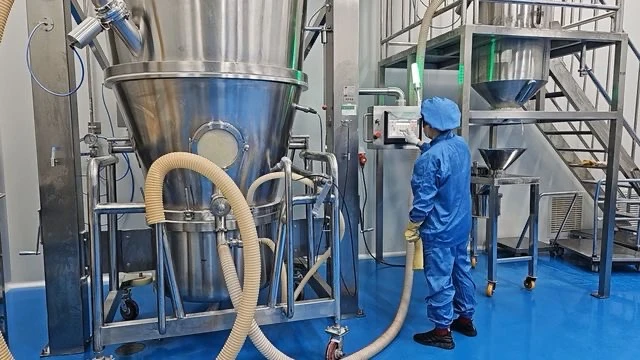
The manufacturing of chicken growth medicine is a multi-stage process governed by stringent quality control measures. Raw materials can range from synthetically produced antibiotics (e.g., tetracyclines, bacitracin) to naturally derived prebiotics (e.g., fructooligosaccharides – FOS) and probiotics (e.g., Bacillus subtilis, Lactobacillus species). The physical properties of these materials are critical. Antibiotics, often crystalline powders, require precise particle size control during milling to ensure uniform distribution in feed. Prebiotics and probiotics, typically existing as dried powders or liquid concentrates, demand controlled dehydration techniques (spray drying, freeze-drying) to maintain viability and activity. Formulation often involves blending active pharmaceutical ingredients (APIs) with carriers such as cornstarch, calcium carbonate, or wheat middlings. Granulation processes (wet granulation, dry granulation) are employed to improve flowability and reduce dust during feed mixing. Key parameter control includes maintaining consistent API concentration, ensuring appropriate moisture content, and monitoring microbial load to prevent contamination. Chemical compatibility between APIs and carriers must be verified to avoid degradation or inactivation. Quality control typically includes High-Performance Liquid Chromatography (HPLC) for API quantification, microbiological assays for viability of probiotics, and physical tests for particle size and moisture content. Manufacturing adheres to Good Manufacturing Practices (GMP) guidelines to guarantee product safety and efficacy.
Performance & Engineering
The performance of chicken growth medicine is intrinsically linked to pharmacokinetics and pharmacodynamics within the avian system. Antibiotics, for example, exert their effect by inhibiting bacterial protein synthesis or disrupting cell wall formation, thereby reducing pathogenic load in the gut. The bioavailability of antibiotics is affected by factors like gut pH, feed transit time, and the presence of other dietary components. Force analysis, while not directly applicable to the medicine itself, influences the design of feed milling equipment to ensure uniform distribution of the supplement. Environmental resistance is a critical consideration, particularly for probiotics, which are susceptible to degradation by heat, moisture, and UV light. Encapsulation techniques are often employed to enhance probiotic survival during feed processing and storage. Compliance requirements are dictated by regulatory agencies like the FDA (in the US) and EFSA (in Europe), demanding rigorous testing for residues and adherence to withdrawal periods before slaughter. Functional implementation necessitates accurate dosage calculation, ensuring consistent delivery through feed or drinking water, and monitoring flock health parameters (weight gain, FCR, mortality) to assess efficacy. The growing concern over antimicrobial resistance necessitates careful monitoring of antibiotic usage and the development of alternative growth promoters that modulate the gut microbiome without selecting for resistant bacteria.
Technical Specifications
| Parameter | Unit | Typical Value (Antibiotic Formulation) | Typical Value (Probiotic Formulation) |
|---|---|---|---|
| Active Ingredient Concentration | mg/kg | 100-500 (depending on antibiotic) | 1 x 10^9 - 1 x 10^11 CFU/kg |
| Particle Size (Average) | µm | 50-150 | 20-80 |
| Moisture Content | % | < 5 | < 8 |
| pH (in aqueous solution) | - | 6.0-8.0 | 6.5-7.5 |
| Bulk Density | g/cm³ | 0.5-0.8 | 0.4-0.6 |
| Shelf Life (under recommended storage) | Months | 24-36 | 12-18 |
Failure Mode & Maintenance
Failure modes in chicken growth medicine can manifest in various ways. For antibiotic formulations, degradation due to exposure to heat, light, or moisture can reduce potency, leading to sub-therapeutic levels and potential development of resistance. Caking or clumping during storage can hinder proper dispersion in feed. For probiotic formulations, loss of viability due to improper storage or handling is a primary failure mode. Contamination with undesirable microorganisms can also compromise product efficacy. Fatigue cracking isn’t relevant to the product itself but can affect packaging integrity. Delamination can occur in coated formulations if the coating is compromised. Oxidation of sensitive ingredients can occur over time. Maintenance of efficacy relies heavily on proper storage conditions – cool, dry, and protected from light. Regular quality control testing is crucial to verify API concentration and probiotic viability. Proper packaging, utilizing moisture-barrier materials, is essential. Implementing a "first-expired, first-out" inventory system minimizes the risk of using degraded products. For farms utilizing liquid formulations, maintaining the integrity of the delivery system (e.g., water lines) is critical to ensure accurate dosage.
Industry FAQ
Q: What are the primary concerns regarding the use of antibiotic growth promoters in poultry production?
A: The escalating threat of antimicrobial resistance is the foremost concern. Prolonged, low-dose exposure to antibiotics selects for resistant bacteria, potentially compromising the effectiveness of antibiotics used in human medicine. This has led to increasing regulatory pressure to reduce or eliminate prophylactic antibiotic use in poultry production.
Q: How do prebiotics and probiotics differ in their mechanism of action?
A: Prebiotics are non-digestible feed ingredients that selectively stimulate the growth and/or activity of beneficial bacteria already present in the gut. Probiotics, conversely, are live microorganisms that, when administered in adequate amounts, confer a health benefit on the host. Prebiotics act as food for beneficial bacteria, while probiotics directly introduce beneficial bacteria into the gut.
Q: What is the role of feed conversion ratio (FCR) in evaluating the efficacy of a growth promoter?
A: FCR is a key performance indicator that measures the amount of feed required to produce one unit of weight gain. A lower FCR indicates greater feed efficiency, meaning the chickens are converting feed into muscle mass more effectively. Growth promoters aim to improve FCR by optimizing gut health and nutrient absorption.
Q: What analytical methods are used to ensure the quality and potency of probiotic formulations?
A: Colony Forming Unit (CFU) counts are the primary method for quantifying probiotic viability. Microscopic examination can confirm bacterial morphology. Molecular methods, such as PCR, can identify specific probiotic strains and assess their purity. Tests for antibiotic susceptibility are also performed to ensure the probiotics are free from antibiotic resistance genes.
Q: How does storage temperature affect the stability of poultry growth medicine?
A: Elevated temperatures can accelerate the degradation of both antibiotics and probiotics. For antibiotics, heat can induce chemical decomposition. For probiotics, heat can reduce viability. Maintaining storage temperatures below 25°C (77°F) is generally recommended. Some formulations may require refrigeration.
Conclusion
Chicken growth medicine, encompassing a diverse range of formulations, plays a crucial role in modern poultry production. While antibiotics have historically been central to this, increasing concerns surrounding antimicrobial resistance are driving a shift towards alternative strategies centered on prebiotics, probiotics, enzymes, and organic acids. The effectiveness of these products relies on a deep understanding of avian gut physiology, pharmacokinetics, and adherence to stringent quality control standards throughout the manufacturing process.
Future developments will likely focus on precision nutrition, personalized growth promotion strategies tailored to specific genetic lines and environmental conditions, and the development of novel microbiome-modulating compounds. Continued research into the complex interplay between diet, gut microbiota, and immune function will be essential for optimizing poultry health and ensuring sustainable and responsible production practices.
Latest news
Copyright © 2026
Dingzhou Kangquan Pharmaceutical Co., Ltd. All Rights Reserved. Sitemap | Privacy
Policy


