
Apr . 01, 2024 17:55 Back to list
chicken malaria medicine Manufacturing Analysis
Introduction
Coccidiosis, commonly known as chicken malaria, is a parasitic disease caused by several species of Eimeria. It affects the intestinal tract of poultry, leading to significant economic losses in the poultry industry due to reduced growth rates, decreased feed conversion efficiency, and increased mortality. Treatment relies heavily on coccidiostats and coccidiocides, classified as ionophore antibiotics, synthetic chemicals, or biological products. This guide details the chemical and manufacturing aspects of a representative coccidiostat, Amprolium, focusing on its synthesis, formulation, efficacy mechanisms, potential failure modes, and relevant industry standards. Amprolium functions as a thiamine analogue, disrupting thiamine metabolism in the parasite, thereby inhibiting its reproduction. Understanding its production and quality control is crucial for maintaining poultry health and minimizing the development of drug resistance.
Material Science & Manufacturing
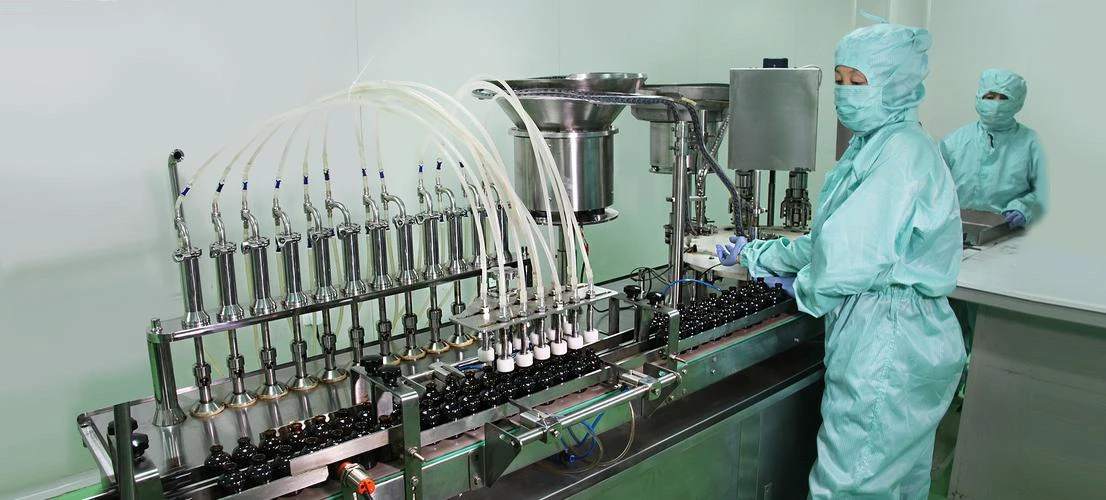
Amprolium (C12H17N3O) is a synthetic thiamine analogue with a molecular weight of 223.28 g/mol. The raw materials for Amprolium synthesis typically include 4-amino-2-dimethylaminopyrimidine and 3-hydroxy-2-methyl-4-pyrone (maltol). The synthesis typically involves a condensation reaction between these two components, often catalyzed by an acid. The purity of these starting materials is paramount, requiring stringent quality control based on techniques like High-Performance Liquid Chromatography (HPLC) and Gas Chromatography-Mass Spectrometry (GC-MS). The manufacturing process involves several stages: synthesis of the core molecule, purification (often involving crystallization and recrystallization from solvents like ethanol or isopropanol), milling to achieve a specific particle size distribution, and blending with excipients to create a commercially viable formulation. Particle size control is critical, influencing dissolution rate and bioavailability. Excipients commonly used include diluents (e.g., lactose, starch), binders (e.g., polyvinylpyrrolidone), and stabilizers (e.g., antioxidants). Quality control during manufacturing includes monitoring reaction yields, impurity profiles, particle size distribution, moisture content, and assay of the final product using spectrophotometric methods. The stability of Amprolium is affected by pH, temperature, and light exposure; therefore, storage conditions are carefully controlled to ensure product integrity.
Performance & Engineering
The efficacy of Amprolium hinges on its ability to competitively inhibit thiamine transport across the intestinal wall of Eimeria parasites. The drug’s performance is directly related to its solubility, dissolution rate, and bioavailability in the chicken’s digestive system. Bioavailability is influenced by factors such as feed composition, gut motility, and the presence of other medications. Engineering considerations focus on optimizing the formulation to enhance drug delivery to the target site. This involves controlling particle size to maximize surface area for dissolution and utilizing excipients that promote drug absorption. Pharmacokinetic studies in poultry assess the absorption, distribution, metabolism, and excretion (ADME) profile of Amprolium. Resistance to Amprolium can develop through mutations in the thiamine transporter protein of Eimeria species. Strategies to mitigate resistance include rotating different classes of coccidiostats and implementing proper biosecurity measures to prevent the introduction and spread of resistant strains. Environmental resistance refers to the drug’s stability under different storage conditions. Amprolium degrades slowly under normal storage, but exposure to UV light and elevated temperatures can accelerate degradation, reducing its potency. Compliance requirements dictate strict adherence to Good Manufacturing Practices (GMP) and regulations set forth by veterinary drug authorities in each country.
Technical Specifications
| Parameter | Specification | Test Method | Units |
|---|---|---|---|
| Assay (Amprolium Content) | ≥ 98% | HPLC-UV | % w/w |
| Water Content | ≤ 1.0 | Karl Fischer Titration | % w/w |
| Residue on Ignition | ≤ 0.5 | Gravimetric Analysis | % w/w |
| Heavy Metals (as Pb) | ≤ 10 ppm | Atomic Absorption Spectroscopy | ppm |
| Particle Size (D90) | ≤ 100 μm | Laser Diffraction | μm |
| pH (1% solution) | 6.0 – 8.0 | Potentiometry | - |
Failure Mode & Maintenance
Common failure modes for Amprolium formulations include degradation due to exposure to light, heat, or moisture, leading to reduced potency. Caking or clumping of the powder can occur during storage, affecting flowability and dispensing accuracy. Contamination with microbial pathogens can compromise product sterility and efficacy. Decreased efficacy in the field is frequently linked to the development of Eimeria resistance. Failure can also stem from improper formulation, such as insufficient binder resulting in tablet friability, or inadequate excipient compatibility leading to drug-excipient interactions. Maintenance involves strict adherence to storage guidelines (cool, dry, and dark conditions). Regular monitoring of product quality through periodic testing is essential, including assay, water content, and particle size analysis. Preventive maintenance includes proper cleaning and calibration of manufacturing equipment, as well as robust quality control procedures throughout the production process. In the event of a suspected failure, a thorough investigation should be conducted, including root cause analysis and corrective and preventive action (CAPA) implementation. Addressing resistance requires a multifaceted approach, including responsible drug use, rotation of different coccidiostat classes, and biosecurity measures.
Industry FAQ
Q: What is the primary mechanism by which Amprolium exhibits its anti-coccidial activity?
A: Amprolium acts as a thiamine analogue, competitively inhibiting the active transport of thiamine into the Eimeria parasite. This disrupts thiamine metabolism, which is essential for parasite growth and reproduction. The parasite is unable to utilize thiamine, leading to its eventual death.
Q: How does particle size influence the bioavailability of Amprolium in poultry?
A: Smaller particle sizes generally lead to a larger surface area, promoting faster dissolution and improved absorption in the intestinal tract. However, excessively small particles can lead to aggregation, reducing bioavailability. An optimal particle size distribution is crucial for maximizing drug absorption and efficacy.
Q: What are the key indicators of Amprolium degradation during storage?
A: The primary indicators of degradation include a decrease in assay (Amprolium content), an increase in degradation products detectable by HPLC, and a change in physical appearance (e.g., discoloration, caking). Exposure to light, heat, and moisture accelerates degradation.
Q: What steps can be taken to mitigate the development of Amprolium resistance in Eimeria populations?
A: Implementing a coccidiostat rotation program using different classes of drugs is crucial. Good biosecurity practices to prevent the introduction of resistant strains, optimization of poultry management practices to reduce stress, and avoiding continuous low-level drug exposure are also essential.
Q: What regulatory guidelines govern the manufacturing and quality control of Amprolium for veterinary use?
A: Manufacturing must adhere to Good Manufacturing Practices (GMP) as defined by regulatory agencies like the FDA (in the US) or EMA (in Europe). Quality control testing must comply with pharmacopeial standards (e.g., USP, EP) and relevant national regulations for veterinary drug products.
Conclusion
Amprolium remains a valuable tool in the prevention and treatment of coccidiosis in poultry. Its efficacy, however, is inextricably linked to stringent quality control throughout the manufacturing process, optimized formulation design, and responsible use to minimize the emergence of drug resistance. Maintaining consistent product quality, from raw material sourcing to final dosage form, is paramount for ensuring consistent therapeutic outcomes.
Future research should focus on developing novel formulations that enhance Amprolium bioavailability, overcome resistance mechanisms, and minimize environmental impact. Investigating synergistic combinations with other anti-coccidial agents could also provide more effective and sustainable control strategies for coccidiosis in the poultry industry.
Latest news
Copyright © 2026
Dingzhou Kangquan Pharmaceutical Co., Ltd. All Rights Reserved. Sitemap | Privacy
Policy


