
Apr . 01, 2024 17:55 Back to list
colis v poultry medicine Performance Analysis
Introduction
Colis V Poultry Medicine represents a crucial component in modern avian health management, specifically targeting and mitigating the effects of Escherichia coli infections in poultry. This formulation functions as a broad-spectrum antibacterial agent, primarily employing colistin sulfate as its active pharmaceutical ingredient. Its technical position within the poultry industry chain is as a therapeutic intervention, typically utilized following diagnostic confirmation of colibacillosis – a common and economically significant disease causing mortality, reduced weight gain, and secondary complications like airsacculitis and septicemia. Core performance characteristics include rapid bactericidal action against Gram-negative bacteria, including colistin-resistant strains (though susceptibility monitoring is essential), systemic availability following oral administration, and a relatively short withdrawal period allowing for swift return to market for treated birds. A significant industry pain point addressed by Colis V is the escalating antimicrobial resistance exhibited by E. coli, necessitating potent and reliable therapeutic options.
Material Science & Manufacturing
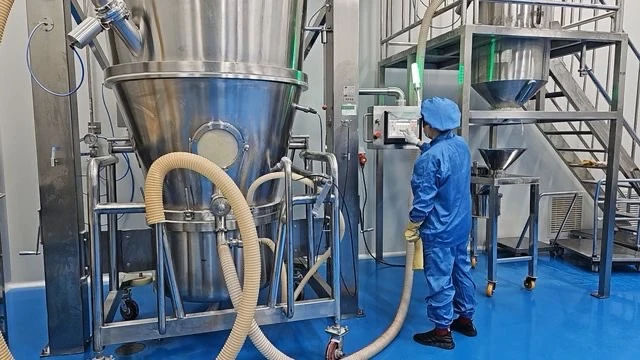
The primary raw material, colistin sulfate, is a polypeptide antibiotic derived from Bacillus polymyxa var. colistinus. Its physical properties are characterized by a white to off-white powder, high solubility in water, and a molecular weight of approximately 1789 g/mol. Manufacturing begins with fermentation of the Bacillus strain under controlled conditions (temperature, pH, nutrient availability). Downstream processing involves cell separation, purification via ion-exchange chromatography and precipitation, followed by sulfate salt formation and spray drying to obtain the final powder. Key parameter control during fermentation impacts yield and purity; monitoring pH (optimally 6.8-7.2), dissolved oxygen levels (>30%), and nutrient feed rates (carbon source, nitrogen source, trace elements) is critical. Formulation of Colis V Poultry Medicine typically involves blending colistin sulfate with excipients – diluents (lactose, starch), binders (gum arabic, polyvinylpyrrolidone), and flow aids (magnesium stearate) – to ensure uniform dosage and stability. Granulation (wet or dry) may be employed to improve flowability and compressibility for premix or soluble powder formulations. Batch-to-batch consistency is ensured through rigorous quality control testing, including HPLC analysis for colistin sulfate content and microbiological assays for sterility and potency.
Performance & Engineering
The efficacy of Colis V relies on its mechanism of action: binding to lipopolysaccharide (LPS) in the bacterial outer membrane, disrupting membrane integrity and leading to cell death. Pharmacokinetic studies in poultry demonstrate rapid absorption following oral administration, with peak plasma concentrations achieved within 2-4 hours. Distribution is extensive, reaching therapeutic levels in target tissues such as the lungs, air sacs, and kidneys. Force analysis regarding application is primarily relevant to premix formulations, where ensuring homogenous distribution within feed is crucial to deliver consistent dosage. Environmental resistance considerations include stability under varying temperature and humidity conditions. Colis V should be stored in a cool, dry place, protected from direct sunlight. Compliance requirements are stringent, dictated by veterinary drug regulations in each target market (e.g., FDA CVM in the US, EMA VMP in Europe). These regulations mandate detailed data on safety, efficacy, residue levels in edible tissues, and antimicrobial susceptibility patterns. Furthermore, ensuring adherence to Good Manufacturing Practices (GMP) is essential throughout the production process.
Technical Specifications
| Parameter | Specification | Test Method | Regulatory Standard |
|---|---|---|---|
| Colistin Sulfate Content | ≥ 50,000 IU/g | HPLC | BP, USP, EP |
| Moisture Content | ≤ 5.0% | Karl Fischer Titration | BP, USP, EP |
| Heavy Metals (as Pb) | ≤ 20 ppm | Atomic Absorption Spectroscopy | GB/T 627 |
| Arsenic (as As) | ≤ 3 ppm | Atomic Absorption Spectroscopy | GB/T 627 |
| Bacterial Endotoxins | ≤ 5 EU/mg | Limulus Amebocyte Lysate (LAL) Test | USP |
| Solubility in Water | ≥ 80 g/L at 25°C | Visual Observation | Internal Standard |
Failure Mode & Maintenance
Failure modes for Colis V Poultry Medicine can be categorized as potency loss, physical degradation, and bacterial resistance development. Potency loss can occur due to improper storage (exposure to heat, humidity, or light), leading to degradation of colistin sulfate. Physical degradation manifests as clumping or caking of the powder, affecting dispersibility in water or feed. Bacterial resistance is a significant concern; prolonged or inappropriate use of colistin can select for resistant strains of E. coli via mechanisms like plasmid-mediated mcr gene transfer. Maintenance protocols revolve around strict adherence to storage recommendations (cool, dry, dark place), proper handling procedures (avoiding contamination), and responsible antimicrobial stewardship. Implementing antimicrobial susceptibility testing programs is crucial to monitor resistance patterns and guide treatment decisions. In cases of suspected potency loss or physical degradation, the product should be discarded and replaced. Routine cleaning and disinfection of dispensing equipment are essential to prevent cross-contamination. Furthermore, educating poultry farmers on proper dosage, duration of treatment, and biosecurity measures is vital to minimize the emergence and spread of resistance.
Industry FAQ
Q: What is the impact of the mcr genes on the long-term efficacy of Colis V?
A: The emergence of mcr genes, particularly mcr-1, conferring plasmid-mediated colistin resistance, poses a significant threat to the long-term efficacy of Colis V. These genes can rapidly disseminate among bacterial populations, rendering Colis V ineffective. Continuous monitoring of antimicrobial susceptibility and judicious use of the product are paramount to mitigating this risk. Alternatives and preventative strategies (vaccination, improved biosecurity) should be explored proactively.
Q: What is the recommended withdrawal period after treatment with Colis V, and why is it important?
A: The withdrawal period varies depending on the target species and regulatory requirements of the specific country. Generally, for poultry destined for human consumption, a withdrawal period of 3-7 days is typical. This period is critical to ensure that colistin residues in edible tissues (muscle, liver) fall below the maximum residue limit (MRL) established by regulatory authorities, safeguarding human health.
Q: How does Colis V compare to other antibiotics commonly used to treat colibacillosis in poultry?
A: Colis V offers advantages over some older antibiotics due to its effectiveness against certain colistin-resistant E. coli strains. However, other antibiotics like fluoroquinolones and cephalosporins may be effective in specific cases, depending on the resistance profile of the infecting strain. The choice of antibiotic should be based on antimicrobial susceptibility testing and veterinary guidance. A key advantage of Colis V in certain situations is its relatively short withdrawal period compared to some alternatives.
Q: What are the key considerations for ensuring uniform distribution of Colis V when it is used as a premix in poultry feed?
A: Uniform distribution is crucial for delivering the correct dosage. Key considerations include using a high-quality premix with appropriate particle size distribution, employing a thorough mixing process with a validated mixer, and verifying homogeneity of the finished feed through sampling and analysis. The carrier used in the premix should be compatible with the feed ingredients to prevent segregation.
Q: What quality control measures are in place to ensure the purity and potency of Colis V?
A: Rigorous quality control measures are implemented throughout the manufacturing process. These include HPLC analysis to verify colistin sulfate content, microbiological assays to assess sterility and potency, tests for heavy metals and arsenic, and Karl Fischer titration to determine moisture content. Batch-to-batch testing ensures consistency and compliance with pharmacopoeial standards (BP, USP, EP).
Conclusion
Colis V Poultry Medicine remains a valuable tool in combating colibacillosis in poultry, offering a potent therapeutic option, especially in scenarios where antimicrobial resistance is a concern. Its efficacy relies on a combination of robust manufacturing processes, stringent quality control, and informed application guided by antimicrobial susceptibility testing. However, the escalating threat of mcr gene-mediated resistance necessitates responsible antimicrobial stewardship and proactive exploration of alternative control strategies.
Looking forward, continued research into novel colistin formulations, resistance mitigation strategies, and preventative measures like vaccination will be crucial to preserving the effectiveness of this important veterinary medicine and ensuring sustainable poultry production.
Latest news
Copyright © 2026
Dingzhou Kangquan Pharmaceutical Co., Ltd. All Rights Reserved. Sitemap | Privacy
Policy


