
2695018275@qq.com
+86
13780513619
- Afrikaans
- Albanian
- Amharic
- Arabic
- Armenian
- Azerbaijani
- Basque
- Belarusian
- Bengali
- Bosnian
- Bulgarian
- Catalan
- Cebuano
- Corsican
- Croatian
- Czech
- Danish
- Dutch
- English
- Esperanto
- Estonian
- Finnish
- French
- Frisian
- Galician
- Georgian
- German
- Greek
- Gujarati
- Haitian Creole
- hausa
- hawaiian
- Hebrew
- Hindi
- Miao
- Hungarian
- Icelandic
- igbo
- Indonesian
- irish
- Italian
- Japanese
- Javanese
- Kannada
- kazakh
- Khmer
- Rwandese
- Korean
- Kurdish
- Kyrgyz
- Lao
- Latin
- Latvian
- Lithuanian
- Luxembourgish
- Macedonian
- Malgashi
- Malay
- Malayalam
- Maltese
- Maori
- Marathi
- Mongolian
- Myanmar
- Nepali
- Norwegian
- Norwegian
- Occitan
- Pashto
- Persian
- Polish
- Portuguese
- Punjabi
- Romanian
- Russian
- Samoan
- Scottish Gaelic
- Serbian
- Sesotho
- Shona
- Sindhi
- Sinhala
- Slovak
- Slovenian
- Somali
- Spanish
- Sundanese
- Swahili
- Swedish
- Tagalog
- Tajik
- Tamil
- Tatar
- Telugu
- Thai
- Turkish
- Turkmen
- Ukrainian
- Urdu
- Uighur
- Uzbek
- Vietnamese
- Welsh
- Bantu
- Yiddish
- Yoruba
- Zulu
Apr . 01, 2024 17:55 Back to list
complete calm chews Manufacturing and Performance Analysis
Introduction
Complete Calm Chews represent a significant development in canine anxiety management, positioned within the rapidly expanding veterinary nutraceutical market. These chews are formulated to deliver targeted support for dogs experiencing stress related to separation anxiety, thunderstorms, travel, or other common triggers. Unlike traditional pharmacological interventions, Complete Calm Chews leverage a blend of naturally derived ingredients to promote a sense of relaxation without significant sedation. Their efficacy relies on modulating the canine nervous system through carefully selected compounds impacting neurotransmitter activity and HPA axis regulation. Understanding the chew’s composition, manufacturing process, and performance characteristics is crucial for veterinary professionals, pet owners, and manufacturers aiming for consistent product quality and optimal therapeutic outcomes. This guide provides a comprehensive technical overview, addressing material science, manufacturing protocols, performance evaluation, potential failure modes, and relevant industry standards.
Material Science & Manufacturing
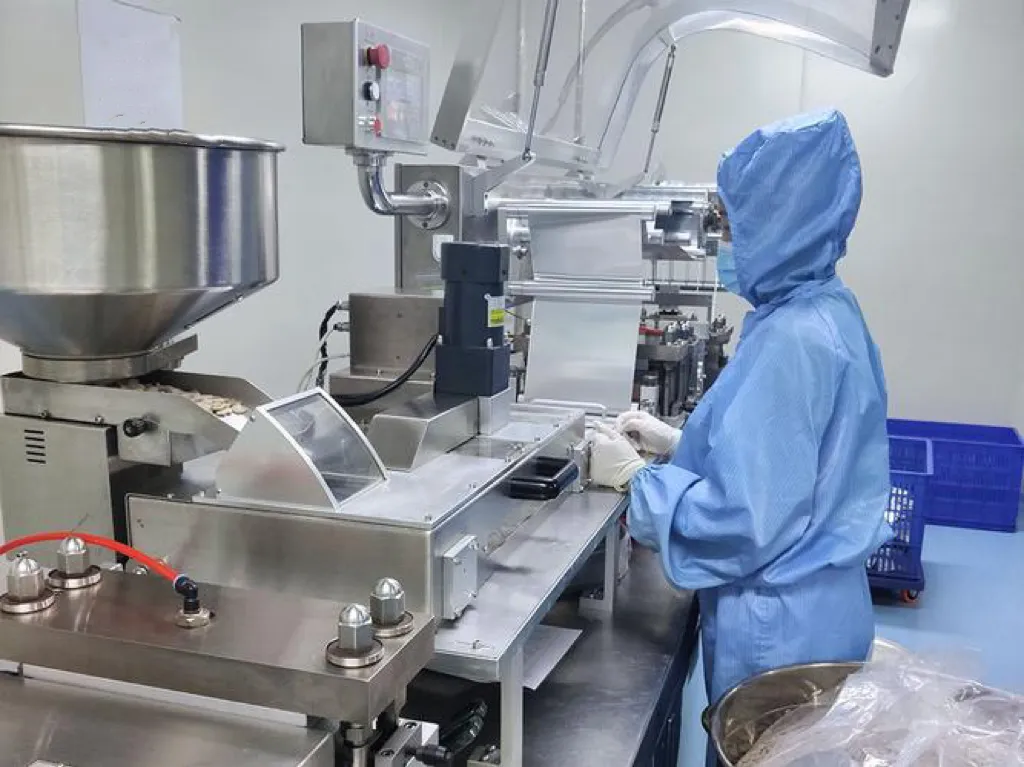
The formulation of Complete Calm Chews centers around several key ingredients, each with specific physical and chemical properties impacting the final product. L-Theanine, a primary active component, is an amino acid commonly found in green tea, exhibiting high solubility in water and moderate stability at room temperature. Colostrum Calming Complex (CCC), often sourced from bovine colostrum, comprises peptides and proteins requiring careful processing to maintain bioactivity. Magnesium bisglycinate chelate contributes to muscle relaxation and neuronal stability, exhibiting pH-dependent solubility. The chew's matrix itself typically consists of a blend of binding agents, such as glycerol, sorbitol, and gelatin, designed to provide structural integrity and palatability. Manufacturing begins with precise ingredient weighing and blending, ensuring homogeneity. This is followed by extrusion or compression molding, forming the chew’s characteristic shape. Critical process parameters include temperature control (to prevent degradation of heat-sensitive compounds like CCC), moisture content (affecting texture and shelf life), and compression force (influencing chew hardness and disintegration rate). Quality control includes assessing ingredient purity via HPLC, verifying CCC peptide profiles via mass spectrometry, and conducting disintegration testing according to USP standards. The gelatin used must meet pharmacopeial requirements for bloom strength and viscosity, ensuring appropriate chew texture. Polyethylene glycol (PEG) is often used as a plasticizer to enhance flexibility and prevent cracking. The correct ratio of PEG to gelatin is essential for maintaining optimal chewability. Ensuring proper mixing ratios is critical to avoid ingredient stratification and ensure a uniform distribution of active compounds.
Performance & Engineering
The performance of Complete Calm Chews is evaluated through a combination of in vitro and in vivo testing. In vitro disintegration tests, adhering to USP <701> guidelines, assess the rate at which the chew breaks down in simulated gastric fluids, influencing the release of active ingredients. Bioavailability studies, utilizing canine plasma samples, determine the absorption and metabolism of L-Theanine and CCC peptides. Force analysis, employing a texture analyzer, quantifies chew hardness and fracturability, crucial for palatability and acceptance. The intended mechanism of action involves the modulation of GABAergic neurotransmission by L-Theanine, increasing alpha brain wave activity associated with relaxation. CCC's peptides are believed to interact with opioid receptors in the gastrointestinal tract, triggering a calming effect via the gut-brain axis. Environmental resistance testing assesses the chew’s stability under varying temperature and humidity conditions, predicting shelf life. Compliance requirements are governed by regulations pertaining to veterinary nutraceuticals, including good manufacturing practices (GMP) and labeling requirements outlined by the FDA’s Center for Veterinary Medicine (CVM). The chew's formulation must be demonstrably safe for canine consumption, with no evidence of toxicity or adverse reactions. Considerations include potential interactions with existing medications and the sensitivity of individual animals. Engineering design focuses on optimizing chew size and shape for ease of administration and maximizing surface area for disintegration. The chew's structural integrity must withstand handling and packaging without crumbling or fracturing.
Technical Specifications
| Parameter | Specification | Test Method | Acceptance Criteria |
|---|---|---|---|
| L-Theanine Content | 100mg ± 5% per chew | HPLC-UV | 95-105mg |
| CCC Peptide Profile | Minimum 80% bioactive peptides | Mass Spectrometry | ≥80% of target peptides present |
| Magnesium Content | 30mg ± 2% per chew | Atomic Absorption Spectroscopy | 29.4-30.6mg |
| Disintegration Time | ≤30 minutes | USP <701> | Complete disintegration within 30 minutes |
| Chew Hardness | 20-40N | Texture Analyzer | Within specified force range |
| Moisture Content | ≤10% | Karl Fischer Titration | ≤10% water activity |
Failure Mode & Maintenance
Complete Calm Chews are susceptible to several failure modes impacting their efficacy and safety. Degradation of L-Theanine and CCC peptides due to exposure to heat, light, or oxygen can reduce potency. Hydrolytic degradation of gelatin can lead to softening and loss of structural integrity. Moisture absorption can promote microbial growth and alter texture. Cracking or fracturing during handling and packaging can result in ingredient loss and reduced palatability. Oxidation of lipids within the chew matrix can generate rancidity and off-flavors. Failure analysis involves microscopic examination of fractured chews to identify defects, HPLC analysis to quantify ingredient degradation, and microbial testing to assess contamination. Maintenance strategies include storing chews in a cool, dry place away from direct sunlight. Packaging in airtight, moisture-proof containers is crucial. Implementing a robust quality control program throughout the manufacturing process, including regular ingredient testing and process monitoring, minimizes the risk of defects. A first-in, first-out (FIFO) inventory management system ensures optimal product turnover and minimizes storage time. Regular assessment of product stability through accelerated aging studies is vital for determining shelf life and identifying potential degradation pathways. Maintaining proper humidity control in manufacturing and storage facilities is paramount to prevent moisture-related failures.
Industry FAQ
Q: What is the impact of varying chew particle size on L-Theanine bioavailability?
A: Smaller particle sizes generally correlate with increased surface area and faster dissolution rates, potentially enhancing L-Theanine bioavailability. However, excessively fine particles can lead to agglomeration and reduced flowability during manufacturing. Optimal particle size distribution is determined through solubility and dissolution studies, balancing bioavailability with processability.
Q: How does the source of gelatin (e.g., bovine, porcine) affect chew texture and stability?
A: Gelatin source impacts bloom strength and viscosity, influencing chew texture. Bovine gelatin typically exhibits higher bloom strength, resulting in firmer chews. Porcine gelatin may be more susceptible to moisture absorption, affecting stability. Gelatin sourcing must adhere to regulatory standards and consider potential allergenicity concerns.
Q: What are the key challenges in maintaining CCC peptide bioactivity during manufacturing?
A: CCC peptides are sensitive to heat and enzymatic degradation. Minimizing processing temperatures and incorporating protease inhibitors can help preserve bioactivity. Encapsulation of CCC within a protective matrix may also enhance stability. Regular monitoring of peptide profiles via mass spectrometry is essential to verify bioactivity.
Q: How can we ensure consistent chew hardness across different production batches?
A: Consistent chew hardness requires precise control of compression force, moisture content, and ingredient ratios. Implementing a statistical process control (SPC) system to monitor these parameters and identify deviations is crucial. Regular calibration of manufacturing equipment and validation of the compression process are also essential.
Q: What is the role of polyethylene glycol (PEG) in the chew formulation?
A: PEG functions as a plasticizer, increasing the chew's flexibility and reducing brittleness. It lowers the glass transition temperature of the gelatin matrix, preventing cracking and improving chewability. The concentration of PEG must be optimized to achieve the desired texture without compromising stability or safety.
Conclusion
Complete Calm Chews represent a sophisticated approach to canine anxiety management, relying on a complex interplay of material science, precise manufacturing protocols, and rigorous performance evaluation. The formulation’s efficacy hinges on maintaining the bioactivity of key ingredients – L-Theanine and CCC – and ensuring consistent chew properties through controlled processing parameters. Understanding potential failure modes, such as degradation and microbial contamination, is paramount for maintaining product quality and safety.
Future development should focus on exploring novel encapsulation techniques to further protect sensitive ingredients, optimizing chew formulations for specific anxiety triggers, and conducting long-term stability studies to refine shelf-life predictions. Adherence to evolving regulatory standards and implementation of robust quality control systems are essential for continued success in the competitive veterinary nutraceutical market. The ongoing pursuit of advancements in ingredient sourcing, manufacturing technologies, and analytical methods will undoubtedly lead to even more effective and palatable solutions for canine anxiety.
Latest news
Copyright © 2026
Dingzhou Kangquan Pharmaceutical Co., Ltd. All Rights Reserved. Sitemap | Privacy
Policy


