
Apr . 01, 2024 17:55 Back to list
cough medicine for chicken Formulation and Performance Analysis
Introduction
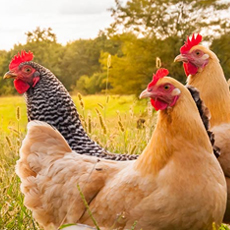
Avian respiratory therapeutics, commonly referred to as cough medicine for chickens, represent a critical component of modern poultry health management. This technical guide details the formulation, manufacturing, performance characteristics, potential failure modes, and relevant industry standards pertaining to these products. The poultry industry faces significant economic losses due to respiratory diseases such as infectious bronchitis, Newcastle disease, and chronic respiratory disease (CRD). Effective cough medicine addresses symptoms like coughing, sneezing, nasal discharge, and reduced feed intake, minimizing these losses and ensuring flock productivity. Current formulations primarily utilize expectorant, mucolytic, and bronchodilator principles to alleviate respiratory distress in chickens. This guide provides a comprehensive overview for procurement managers, veterinary professionals, and manufacturing engineers involved in the production and application of these critical medications.
Material Science & Manufacturing
The core components of cough medicine for chickens typically involve a complex interplay of organic and inorganic compounds. Active Pharmaceutical Ingredients (APIs) commonly include guaifenesin (expectorant), bromhexine hydrochloride (mucolytic), and theophylline (bronchodilator). Excipients play a vital role in formulation and include solvents (purified water, propylene glycol), viscosity modifiers (carboxymethylcellulose), preservatives (potassium sorbate, sodium benzoate), and flavoring agents to enhance palatability. Raw material sourcing necessitates rigorous quality control adhering to pharmacopoeial standards (USP, EP). Manufacturing processes usually involve dissolution, mixing, homogenization, and sterile filtration. Critical parameters monitored during production include pH (maintained within a narrow range for API stability), viscosity (ensuring proper dosing and delivery), and particulate matter (guaranteeing product safety). Powdered formulations undergo milling and granulation processes, with particle size distribution being a key quality attribute influencing drug absorption and bioavailability. Liquid formulations require stringent control over sterilization processes – typically autoclaving or sterile filtration – to prevent microbial contamination. Batch-to-batch consistency is maintained through validated analytical methods, including HPLC, GC-MS, and spectrophotometry. The selection of packaging materials (HDPE, LDPE) must consider chemical compatibility with the formulation and barrier properties to prevent degradation.
Performance & Engineering
The therapeutic efficacy of cough medicine for chickens relies on the pharmacokinetic and pharmacodynamic properties of its constituents. Guaifenesin’s efficacy is based on reducing the surface tension of respiratory secretions, facilitating expectoration. Bromhexine hydrochloride functions by breaking down mucopolysaccharide fibers, reducing mucus viscosity. Theophylline achieves bronchodilation by inhibiting phosphodiesterase, leading to increased cyclic AMP levels and smooth muscle relaxation. Dosage regimes are crucial and are calculated based on body weight and severity of infection. Pharmacokinetic studies assess absorption, distribution, metabolism, and excretion (ADME) of the APIs in chickens, informing optimal dosing schedules. Environmental resistance is a critical consideration; formulations must maintain stability under typical poultry house conditions (temperature, humidity, dust). Stability testing, conducted according to ICH guidelines, evaluates degradation rates and shelf life. Formulations are often designed to be administered via drinking water, requiring solubility and compatibility with water sources. Engineered delivery systems, such as microencapsulation, can improve API stability and palatability. Compliance requirements are dictated by veterinary regulations in each region, requiring registration and adherence to Good Manufacturing Practices (GMP).
Technical Specifications
| API Concentration (mg/mL) | Viscosity (cP) | pH | Specific Gravity |
|---|---|---|---|
| Guaifenesin: 50, Bromhexine HCl: 20, Theophylline: 10 | 150 - 250 | 6.0 - 7.5 | 1.10 - 1.20 |
| Guaifenesin: 75, Bromhexine HCl: 30, Theophylline: 15 | 180 - 280 | 6.2 - 7.8 | 1.12 - 1.22 |
| Guaifenesin: 25, Bromhexine HCl: 10, Theophylline: 5 | 120 - 220 | 5.8 - 7.3 | 1.08 - 1.18 |
| Guaifenesin: 100, Bromhexine HCl: 40, Theophylline: 20 | 200 - 300 | 6.5 - 8.0 | 1.15 - 1.25 |
| Guaifenesin: 40, Bromhexine HCl: 16, Theophylline: 8 | 140 - 240 | 5.9 - 7.4 | 1.11 - 1.21 |
| Guaifenesin: 60, Bromhexine HCl: 24, Theophylline: 12 | 160 - 260 | 6.1 - 7.6 | 1.13 - 1.23 |
Failure Mode & Maintenance
Common failure modes in cough medicine for chickens include API degradation (hydrolysis, oxidation), microbial contamination, precipitation of active ingredients, and loss of palatability. API degradation is accelerated by exposure to heat, light, and moisture. Microbial contamination can occur during manufacturing or storage if sterile procedures are compromised. Precipitation can occur due to pH changes or incompatibility of excipients. Loss of palatability leads to reduced drug intake and treatment failure. Failure analysis often involves HPLC analysis to quantify API content, microbial testing to detect contamination, and visual inspection for precipitation. Preventive maintenance includes regular equipment calibration, adherence to GMP guidelines, and implementation of a robust quality control system. Storage conditions are critical; products should be stored in a cool, dry, and dark place. Periodic stability testing should be conducted to monitor product quality and shelf life. For powdered formulations, preventing caking and maintaining flowability are essential maintenance aspects. Regular cleaning and sanitation of mixing and filtration equipment prevent cross-contamination and microbial growth.
Industry FAQ
Q: What is the acceptable level of particulate matter in a liquid formulation?
A: The acceptable level of particulate matter is defined by USP <788> and typically requires that solutions be substantially free from visible particles. Specific limits depend on the volume of the solution and are assessed using microscopic examination and light obscuration techniques. Generally, solutions should not contain more than six particles of 50 μm in size or greater per milliliter.
Q: How do you ensure the palatability of the medication when administering it via drinking water?
A: Palatability is crucial for ensuring adequate drug intake. This is achieved through the addition of flavoring agents, such as cherry or citrus flavors, and sweeteners. Formulations are also optimized for solubility and clarity to minimize off-flavors. Regular palatability testing with chickens is conducted to assess acceptance rates.
Q: What are the key considerations for selecting packaging materials?
A: Packaging materials must be chemically compatible with the formulation, provide a barrier against moisture and light, and prevent leaching of harmful substances into the product. HDPE and LDPE are commonly used due to their compatibility and cost-effectiveness. Packaging materials should also meet regulatory requirements for food contact materials.
Q: How frequently should stability testing be performed?
A: Stability testing should be performed initially to establish shelf life and then periodically throughout the product’s lifecycle. ICH guidelines recommend long-term, intermediate, and accelerated stability studies. Long-term studies are conducted at the recommended storage conditions, while accelerated studies are performed at elevated temperatures and humidity to predict degradation rates.
Q: What are the common causes of API degradation in liquid formulations?
A: Common causes of API degradation include hydrolysis, oxidation, and photolysis. Hydrolysis is catalyzed by water and is affected by pH. Oxidation is promoted by oxygen and light. Photolysis is caused by exposure to ultraviolet or visible light. Stabilizing excipients, such as antioxidants and UV absorbers, are often added to prevent degradation.
Conclusion
Effective avian respiratory therapeutics, or cough medicine for chickens, require a rigorous approach to formulation, manufacturing, and quality control. Understanding the material science underpinning API stability, optimizing manufacturing parameters for consistent product quality, and proactively addressing potential failure modes are paramount. Compliance with stringent regulatory standards and adherence to Good Manufacturing Practices are essential for ensuring product safety and efficacy.
Future developments in this field may focus on enhanced drug delivery systems, such as nanoencapsulation, to improve bioavailability and targeted delivery. Research into novel APIs with broader spectrum activity and reduced resistance potential is also crucial. Continuous monitoring of industry trends and adaptation to evolving regulatory requirements will be key to maintaining the effectiveness of these vital medications and protecting the health and productivity of poultry flocks.
Latest news
Copyright © 2026
Dingzhou Kangquan Pharmaceutical Co., Ltd. All Rights Reserved. Sitemap | Privacy
Policy


