
2695018275@qq.com
+86
13780513619
- Afrikaans
- Albanian
- Amharic
- Arabic
- Armenian
- Azerbaijani
- Basque
- Belarusian
- Bengali
- Bosnian
- Bulgarian
- Catalan
- Cebuano
- Corsican
- Croatian
- Czech
- Danish
- Dutch
- English
- Esperanto
- Estonian
- Finnish
- French
- Frisian
- Galician
- Georgian
- German
- Greek
- Gujarati
- Haitian Creole
- hausa
- hawaiian
- Hebrew
- Hindi
- Miao
- Hungarian
- Icelandic
- igbo
- Indonesian
- irish
- Italian
- Japanese
- Javanese
- Kannada
- kazakh
- Khmer
- Rwandese
- Korean
- Kurdish
- Kyrgyz
- Lao
- Latin
- Latvian
- Lithuanian
- Luxembourgish
- Macedonian
- Malgashi
- Malay
- Malayalam
- Maltese
- Maori
- Marathi
- Mongolian
- Myanmar
- Nepali
- Norwegian
- Norwegian
- Occitan
- Pashto
- Persian
- Polish
- Portuguese
- Punjabi
- Romanian
- Russian
- Samoan
- Scottish Gaelic
- Serbian
- Sesotho
- Shona
- Sindhi
- Sinhala
- Slovak
- Slovenian
- Somali
- Spanish
- Sundanese
- Swahili
- Swedish
- Tagalog
- Tajik
- Tamil
- Tatar
- Telugu
- Thai
- Turkish
- Turkmen
- Ukrainian
- Urdu
- Uighur
- Uzbek
- Vietnamese
- Welsh
- Bantu
- Yiddish
- Yoruba
- Zulu
Apr . 01, 2024 17:55 Back to list
dog growth vitamins Performance Analysis
Introduction
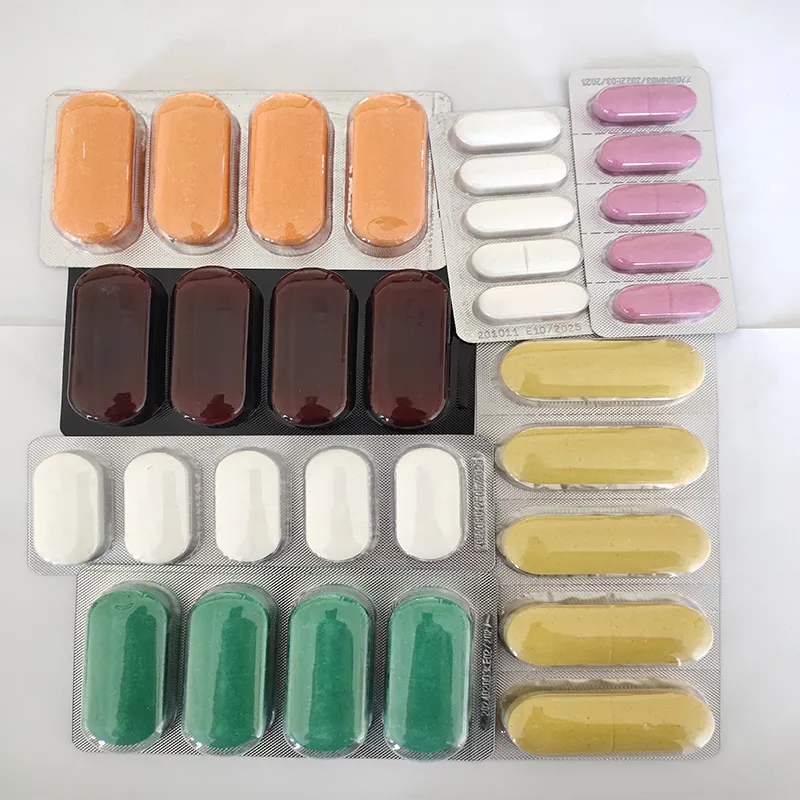
Dog growth vitamins represent a crucial segment within the companion animal nutrition industry, functioning as supplemental formulations designed to support optimal skeletal development, immune function, and overall health in puppies and adolescent dogs. These products are not intended as complete diets but rather as additions to a balanced canine nutritional plan. The technical position of these vitamins lies between feed-grade ingredients and pharmaceutical interventions, requiring rigorous quality control and adherence to established nutritional guidelines. Core performance indicators include bioavailability of key nutrients (calcium, phosphorus, Vitamin D3, essential amino acids), palatability, and demonstrable effects on growth rate and bone mineral density. The current market addresses pain points such as inadequate nutrient intake in commercially available diets, breed-specific growth requirements, and the prevention of developmental orthopedic diseases (DODs) like hip dysplasia and osteochondrosis dissecans (OCD).
Material Science & Manufacturing
The core raw materials in dog growth vitamin formulations comprise both organic and inorganic components. Organic components include Vitamin D3 (cholecalciferol), derived from lanolin or through UV irradiation of ergosterol; Vitamin A (retinol), often synthesized chemically or extracted from fish liver oils; and essential amino acids, produced via fermentation or hydrolysis of protein sources. Inorganic materials predominantly feature calcium and phosphorus compounds – dicalcium phosphate, calcium carbonate, and monocalcium phosphate are common, selected for their bioavailability and solubility. Manufacturing processes vary depending on the formulation type: powder, tablet, or liquid. Powder formulations typically involve blending micronized ingredients followed by homogenization. Tablet production utilizes granulation, compression, and coating techniques to ensure uniform dosage and palatability. Liquid formulations require precise solubilization and stabilization of vitamins, often incorporating chelating agents to prevent degradation. Parameter control is critical throughout, with moisture content, particle size distribution, and blend uniformity rigorously monitored. Encapsulation technologies, like microencapsulation with lipid-based carriers, are increasingly employed to enhance bioavailability and protect sensitive vitamins from oxidation and degradation during processing and storage. The source and purity of raw materials are paramount, with suppliers requiring stringent Certificates of Analysis (COAs) confirming compliance with pharmacopoeial standards.

Performance & Engineering
The efficacy of dog growth vitamins hinges on the pharmacokinetic properties of their constituent nutrients. Calcium and phosphorus absorption are influenced by the calcium-to-phosphorus ratio, typically maintained between 1:1 and 2:1 to optimize bone mineralization. Vitamin D3 plays a pivotal role in calcium homeostasis, regulating intestinal absorption and renal reabsorption. Amino acid profiles must align with the specific growth requirements of the target breed and age. Force analysis within the developing skeletal system considers compressive, tensile, and shear stresses on bones. Deficiencies in key nutrients can lead to decreased bone density, increased susceptibility to fractures, and the development of DODs. Environmental resistance considerations include vitamin stability under varying temperature and humidity conditions. Packaging materials must provide adequate barrier protection against oxygen, moisture, and light. Compliance requirements are dictated by regulatory bodies such as the FDA-CVM in the United States and the European Medicines Agency (EMA) in Europe, demanding demonstrated safety and efficacy through controlled clinical trials and adherence to Good Manufacturing Practices (GMP). Functional implementation necessitates careful dosage calculations based on body weight, growth stage, and individual nutritional needs. Bioavailability studies, employing isotopic tracers, are crucial to validate nutrient absorption and utilization.
Technical Specifications
| Parameter | Unit | Typical Value | Test Method |
|---|---|---|---|
| Calcium Content | % | 18-22 | AOAC 930.01 |
| Phosphorus Content | % | 12-16 | AOAC 930.02 |
| Vitamin D3 Potency | IU/kg | 10,000 - 15,000 | USP <612> |
| Vitamin A Potency | IU/kg | 5,000 - 8,000 | USP <601> |
| Lysine Content | % | 4-6 | AOAC 985.28 |
| Moisture Content | % | < 5 | Karl Fischer Titration |
Failure Mode & Maintenance
Failure modes in dog growth vitamin products can be categorized as chemical degradation, physical instability, and biological unavailability. Chemical degradation involves the oxidation of vitamins (A, D3), leading to a loss of potency. This is accelerated by exposure to oxygen, light, and elevated temperatures. Physical instability manifests as caking or clumping in powder formulations, reducing flowability and dosage accuracy. Tablet formulations can exhibit friability (brittleness) and cracking, impacting their structural integrity. Biological unavailability arises from poor absorption due to inadequate particle size, unsuitable formulation matrices, or interactions with dietary components. Failure analysis often involves HPLC analysis to quantify vitamin content, microscopic examination to assess particle morphology, and in-vitro dissolution testing to evaluate bioavailability. Maintenance strategies include storage in cool, dry, and dark conditions, using airtight containers, and incorporating antioxidants (Vitamin E, BHT) into formulations. Regular quality control testing and adherence to GMP principles are essential to prevent failures. For liquid formulations, maintaining pH stability and preventing microbial contamination are critical maintenance considerations. Proper handling and dispensing of the product, as instructed on the label, are also crucial for preserving efficacy.
Industry FAQ
Q: What is the optimal calcium-to-phosphorus ratio in a growth vitamin supplement for large-breed puppies?
A: For large-breed puppies, maintaining a calcium-to-phosphorus ratio between 1:1 and 1.5:1 is generally recommended. Higher calcium levels can exacerbate the risk of hypertrophic osteodystrophy (HOD) and osteochondrosis dissecans (OCD) in these rapidly growing breeds. Precise formulation requires consideration of the calcium and phosphorus content of the base diet.
Q: How does microencapsulation improve vitamin bioavailability in dog supplements?
A: Microencapsulation involves coating individual vitamin particles with a protective matrix, typically a lipid or polymer. This shields vitamins from degradation during processing and storage and enhances their solubility and absorption in the gastrointestinal tract. It also minimizes interactions with potentially antagonistic dietary components.
Q: What analytical methods are used to ensure the quality and potency of Vitamin D3 in these formulations?
A: High-Performance Liquid Chromatography (HPLC) with UV detection is the primary method for quantifying Vitamin D3 potency. Stability studies, conducted under accelerated aging conditions, are performed to monitor degradation rates. Additionally, microbiological testing ensures the absence of contaminants that could compromise product safety.
Q: What are the common causes of vitamin degradation during the shelf life of a powdered supplement?
A: Oxidation, moisture absorption, and exposure to light are the primary culprits. Vitamin A and D3 are particularly susceptible to oxidation. Proper packaging (airtight, opaque containers) and the inclusion of antioxidants (Vitamin E, BHT) mitigate these effects. Maintaining low moisture content is crucial.
Q: How important is palatability in dog growth vitamin supplements, and what techniques are used to improve it?
A: Palatability is critical for ensuring adequate consumption. Techniques include coating tablets with palatable flavors (liver, chicken, beef), using highly digestible carrier matrices in powder formulations, and incorporating palatability enhancers such as yeast extracts. Sensory evaluation panels with dogs are often used to assess palatability.
Conclusion
Dog growth vitamins represent a complex intersection of nutritional science, material science, and pharmaceutical engineering. Successful product development requires a thorough understanding of canine growth physiology, the bioavailability of key nutrients, and the potential for degradation during manufacturing and storage. Careful selection of raw materials, precise control of manufacturing parameters, and rigorous quality control testing are essential to deliver safe and effective supplements that support optimal skeletal development and overall health in growing puppies.
Future developments in this field will likely focus on personalized nutrition strategies, utilizing genetic testing and microbiome analysis to tailor vitamin formulations to individual dog’s needs. Enhanced encapsulation technologies and novel delivery systems will further improve bioavailability and efficacy. Continued research into the long-term effects of vitamin supplementation on skeletal health and the prevention of developmental orthopedic diseases is also warranted.
Latest news
Copyright © 2026
Dingzhou Kangquan Pharmaceutical Co., Ltd. All Rights Reserved. Sitemap | Privacy
Policy


