2695018275@qq.com
+86
13780513619
- Afrikaans
- Albanian
- Amharic
- Arabic
- Armenian
- Azerbaijani
- Basque
- Belarusian
- Bengali
- Bosnian
- Bulgarian
- Catalan
- Cebuano
- Corsican
- Croatian
- Czech
- Danish
- Dutch
- English
- Esperanto
- Estonian
- Finnish
- French
- Frisian
- Galician
- Georgian
- German
- Greek
- Gujarati
- Haitian Creole
- hausa
- hawaiian
- Hebrew
- Hindi
- Miao
- Hungarian
- Icelandic
- igbo
- Indonesian
- irish
- Italian
- Japanese
- Javanese
- Kannada
- kazakh
- Khmer
- Rwandese
- Korean
- Kurdish
- Kyrgyz
- Lao
- Latin
- Latvian
- Lithuanian
- Luxembourgish
- Macedonian
- Malgashi
- Malay
- Malayalam
- Maltese
- Maori
- Marathi
- Mongolian
- Myanmar
- Nepali
- Norwegian
- Norwegian
- Occitan
- Pashto
- Persian
- Polish
- Portuguese
- Punjabi
- Romanian
- Russian
- Samoan
- Scottish Gaelic
- Serbian
- Sesotho
- Shona
- Sindhi
- Sinhala
- Slovak
- Slovenian
- Somali
- Spanish
- Sundanese
- Swahili
- Swedish
- Tagalog
- Tajik
- Tamil
- Tatar
- Telugu
- Thai
- Turkish
- Turkmen
- Ukrainian
- Urdu
- Uighur
- Uzbek
- Vietnamese
- Welsh
- Bantu
- Yiddish
- Yoruba
- Zulu
Apr . 01, 2024 17:55 Back to list
dog multivitamin supplement Bioavailability Analysis
Introduction
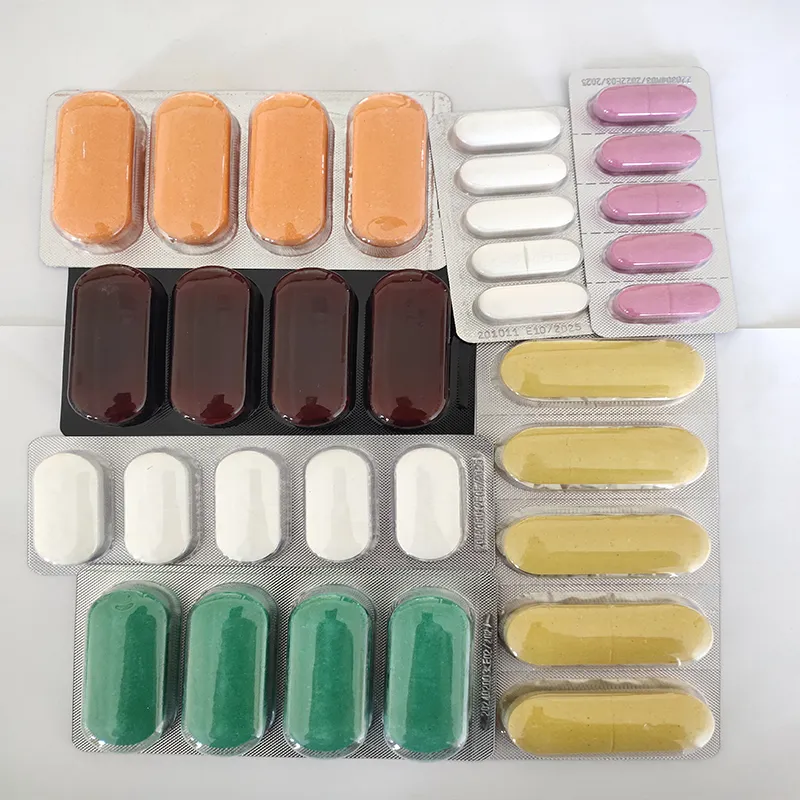
Dog multivitamin supplements represent a critical segment within the companion animal health market, functioning as nutritional insurance against dietary deficiencies and supporting overall canine wellbeing. Positioned downstream from raw ingredient sourcing and upstream of veterinary recommendations and retail distribution, these formulations are engineered to augment, not replace, a balanced diet. Core performance indicators include bioavailability of micronutrients, palatability for consistent consumption, and stability of active ingredients throughout the product’s shelf life. The increasing demand stems from heightened pet owner awareness of preventative healthcare, the prevalence of commercially processed dog foods that may lack complete nutritional profiles, and the growing recognition of the importance of specific nutrients for various life stages and health conditions. A primary industry pain point revolves around achieving consistent bioavailability of fat-soluble vitamins and trace minerals, alongside ensuring product integrity against oxidation and degradation. Furthermore, formulating for palatability without compromising nutritional value presents a significant challenge.
Material Science & Manufacturing
The manufacturing of dog multivitamin supplements necessitates a precise understanding of material science principles and rigorous process control. Key raw materials include Vitamin A (Retinol), Vitamin D3 (Cholecalciferol), Vitamin E (Tocopherol), Vitamin C (Ascorbic Acid), B-complex vitamins (Thiamine, Riboflavin, Niacin, Pantothenic Acid, Pyridoxine, Cobalamin), essential minerals (Calcium, Phosphorus, Magnesium, Potassium, Iron, Zinc, Manganese, Copper, Selenium, Iodine), and potentially omega-3 fatty acids (EPA and DHA). These materials exhibit varying chemical properties – vitamins are often sensitive to light, oxygen, and pH, while minerals can be hygroscopic. Manufacturing typically involves blending powdered ingredients, granulation to improve flowability, lubrication to prevent sticking during compression, and finally, tablet compression or encapsulation. Gelatin or vegetable-based capsules are common carriers. Critical parameters include particle size distribution of powders (affecting blending uniformity), compression force (influencing tablet hardness and disintegration rate), coating thickness (for taste masking or delayed release), and moisture content (impacting stability). Excipients like microcrystalline cellulose, lactose, and magnesium stearate are used as binders, diluents, and lubricants, respectively. Quality control measures utilize High-Performance Liquid Chromatography (HPLC) and Atomic Absorption Spectroscopy (AAS) to verify potency and purity. Raw material sourcing is heavily scrutinized to ensure absence of contaminants like heavy metals and mycotoxins.
Performance & Engineering
The performance of a dog multivitamin supplement is dictated by its bioavailability – the extent to which the nutrients are absorbed and utilized by the animal. This is profoundly influenced by the chemical form of the nutrient. For instance, chelated minerals (bound to amino acids) exhibit higher bioavailability than inorganic salts. Lipid-soluble vitamins (A, D, E, K) require dietary fat for optimal absorption, making formulation with a fat source or encapsulation within a lipid matrix crucial. Force analysis during tablet compression must balance hardness (preventing breakage during handling) with disintegration rate (ensuring rapid release of nutrients in the gastrointestinal tract). Environmental resistance is paramount; packaging must protect against moisture, oxygen, and UV light to prevent degradation of active ingredients. Compliance requirements are substantial. Regulations like those from the FDA Center for Veterinary Medicine (CVM) govern ingredient labeling, manufacturing practices (Good Manufacturing Practices - GMP), and permissible nutrient levels. Furthermore, ensuring the supplement doesn’t interact negatively with other medications or pre-existing health conditions is a key engineering consideration. Palatability engineering involves coating tablets with flavors appealing to dogs (e.g., chicken, beef) and optimizing the texture for ease of consumption.
Technical Specifications
| Vitamin A (IU/serving) | Vitamin D3 (IU/serving) | Vitamin E (IU/serving) | Vitamin C (mg/serving) |
|---|---|---|---|
| 5,000 | 500 | 100 | 50 |
| 10,000 | 1,000 | 200 | 100 |
| 2,500 | 250 | 50 | 25 |
| 7,500 | 750 | 150 | 75 |
| 15,000 | 1,500 | 300 | 150 |
| 2,000 | 200 | 40 | 20 |
Failure Mode & Maintenance
Dog multivitamin supplements are susceptible to several failure modes. Oxidation of fat-soluble vitamins and unsaturated fatty acids is a primary concern, leading to a decrease in potency. This is exacerbated by exposure to oxygen, light, and heat. Delamination of coated tablets can occur due to inadequate coating adhesion or moisture ingress, resulting in uneven nutrient distribution. Hydrolysis of ascorbic acid (Vitamin C) in the presence of moisture can render it ineffective. Physical degradation, such as tablet cracking or crumbling, can occur during handling or shipping, diminishing palatability and potentially altering dosage. Microbial contamination, although less common with proper manufacturing practices, can compromise product safety. Maintenance strategies involve storing supplements in a cool, dry, dark place, utilizing moisture-resistant packaging, and ensuring a robust quality control program with regular potency testing. Proper encapsulation techniques and the inclusion of antioxidants (e.g., Vitamin E, rosemary extract) can mitigate oxidation. For end-users, adhering to the recommended dosage and storage instructions is critical. Visual inspection of tablets for signs of damage or discoloration should be performed before administration.
Industry FAQ
Q: What is the significance of chelated minerals in a dog multivitamin?
A: Chelated minerals are bound to amino acids, which significantly enhances their bioavailability compared to inorganic forms. This means a greater percentage of the mineral is absorbed by the dog’s digestive system and utilized by the body. Inorganic minerals often form insoluble complexes, limiting their absorption. The chelation process protects the mineral from interactions with other dietary components that might hinder absorption.
Q: How does the formulation address the potential for oxidation of fat-soluble vitamins?
A: Oxidation is a major concern. Our formulations incorporate antioxidants like Vitamin E and rosemary extract to scavenge free radicals and prevent lipid peroxidation. Additionally, we utilize airtight, opaque packaging with desiccants to minimize exposure to oxygen and moisture. Microencapsulation of fat-soluble vitamins within a protective matrix is another strategy employed to enhance stability.
Q: What quality control measures are in place to ensure potency and purity?
A: We employ a rigorous quality control program that includes testing of all raw materials for identity, purity, and potency. Finished product testing utilizes High-Performance Liquid Chromatography (HPLC) to quantify vitamin levels and Atomic Absorption Spectroscopy (AAS) to determine mineral concentrations. We also conduct microbial testing to ensure product safety and adhere to Good Manufacturing Practices (GMP) throughout the production process.
Q: How do you ensure palatability, especially for picky eaters?
A: Palatability is a crucial factor. We use palatable coating ingredients like natural chicken or beef flavoring and optimize the tablet texture for ease of consumption. Smaller tablet sizes are also offered. We conduct palatability trials with a panel of dogs to assess acceptance rates and refine our formulations accordingly.
Q: What are the recommended storage conditions to maintain product efficacy?
A: To maximize product efficacy, we recommend storing the multivitamin supplement in a cool, dry, and dark place, away from direct sunlight and heat sources. The container should be tightly sealed to prevent moisture ingress. Avoid storing in the bathroom or other humid environments. Following these guidelines helps preserve the potency of the active ingredients and extends the shelf life of the product.
Conclusion
Dog multivitamin supplements, while seemingly simple, represent a sophisticated intersection of nutritional science, material engineering, and manufacturing precision. Achieving optimal bioavailability of nutrients, ensuring long-term stability, and maximizing palatability are the core technical challenges. Rigorous quality control, adherence to regulatory standards, and continuous innovation in formulation and packaging are essential for delivering effective and safe products.
The future of dog multivitamin supplements will likely focus on personalized nutrition, tailored to the specific breed, age, activity level, and health status of individual dogs. Advances in encapsulation technologies and the use of novel delivery systems will further enhance bioavailability and targeted nutrient release. Sustainability and traceability of ingredients will also become increasingly important considerations for both manufacturers and consumers.
Latest news
Copyright © 2026
Dingzhou Kangquan Pharmaceutical Co., Ltd. All Rights Reserved. Sitemap | Privacy
Policy


