
Apr . 01, 2024 17:55 Back to list
e coli poultry medicine Performance Analysis
Introduction
Escherichia coli ( E. coli ) infections represent a significant economic and welfare concern in the poultry industry. E. coli poultry medicine, in this context, refers to the multifaceted approach to preventing and treating colibacillosis, encompassing antibiotics, vaccines, biosecurity protocols, and supportive care. This guide provides a detailed technical overview of E. coli pathogenesis in poultry, the pharmaceutical interventions utilized, the underlying material science of drug delivery systems, performance metrics for efficacy assessment, potential failure modes in treatment, and relevant industry standards. E. coli infections are frequently associated with neonatal mortality and reduced growth rates, impacting profitability. The increasing prevalence of antibiotic resistance in E. coli strains further complicates treatment strategies, necessitating a comprehensive understanding of alternative and integrated approaches. Successful control relies not only on therapeutic intervention but also on preventing initial colonization and minimizing stress factors that predispose birds to infection. This guide will focus primarily on therapeutic interventions and related technical considerations.
Material Science & Manufacturing
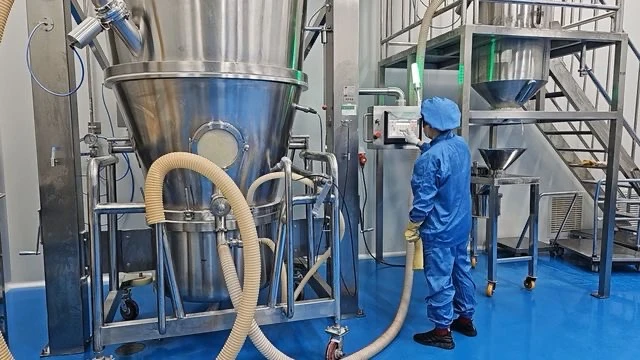
The manufacturing of E. coli poultry medicines, predominantly antibiotics, involves complex chemical synthesis and formulation processes. Raw materials include active pharmaceutical ingredients (APIs) – typically belonging to classes like aminoglycosides, fluoroquinolones, and cephalosporins – alongside excipients such as solvents, binders, disintegrants, and preservatives. API production requires stringent quality control adhering to Good Manufacturing Practices (GMP). The physical properties of APIs (particle size, crystallinity, polymorphism) directly influence bioavailability and dissolution rates. Manufacturing routes vary; some APIs are produced through fermentation processes utilizing engineered microbial strains, demanding precise control of bioreactor parameters (pH, temperature, oxygen levels). Formulation technologies are critical. Powdered medications utilize milling and micronization to achieve optimal particle size distribution for respiratory delivery or mixing with feed/water. Injectable solutions require sterilization techniques (autoclaving, filtration) and the addition of stabilizers to prevent API degradation. Sustained-release formulations employ polymer matrices (e.g., polylactic-co-glycolic acid - PLGA) to control drug release kinetics. Chemical compatibility between the API and excipients is paramount to prevent degradation or precipitation. Furthermore, the selection of packaging materials (glass vials, plastic containers) must ensure barrier properties to moisture and oxygen, preserving API stability. The coating of feed additives with protective layers utilizing materials like calcium carbonate or vegetable oils is also a common manufacturing step.

Performance & Engineering
Evaluating the performance of E. coli poultry medicines requires a multifaceted engineering approach. Pharmacokinetic studies (PK) determine the absorption, distribution, metabolism, and excretion (ADME) profile of the drug in poultry, providing data for dosage regimen optimization. Pharmacodynamic (PD) studies assess the relationship between drug concentration and bacterial killing, factoring in minimum inhibitory concentrations (MIC) and minimum bactericidal concentrations (MBC) determined via in vitro susceptibility testing. Force analysis is crucial in designing automated injection systems, ensuring accurate and consistent drug delivery without causing bird injury. Environmental resistance testing evaluates drug stability under varying temperature, humidity, and light conditions, vital for shelf-life determination. Compliance requirements, such as withdrawal periods mandated by regulatory agencies (e.g., FDA, EFSA), dictate the timeframe required before treated birds can enter the food chain. For vaccine development, immunogenicity studies assess antibody titers and cellular immune responses following vaccination. Biofilm formation by E. coli presents a significant challenge; engineering strategies focused on disrupting biofilm matrices or enhancing drug penetration are actively researched. Furthermore, the development of diagnostic assays (e.g., PCR-based detection) plays a crucial role in enabling targeted therapy and minimizing antibiotic use. The efficacy of drug delivery systems, like microencapsulation, depends on particle size, release rate and targeting ability which are all critical engineering parameters.
Technical Specifications
| API (Active Pharmaceutical Ingredient) | Dosage Form | Administration Route | Withdrawal Period (Days) |
|---|---|---|---|
| Enrofloxacin | Oral Solution | Drinking Water | 8 |
| Amikacin Sulfate | Sterile Powder | Intramuscular Injection | 3 |
| Ceftiofur Hydrochloride | Injectable Suspension | Subcutaneous Injection | 4 |
| Tylosin | Premix | Feed | 7 |
| Colistin Sulfate | Premix | Drinking Water | 7 |
| Apramycin Sulfate | Soluble Powder | Drinking Water | 5 |
Failure Mode & Maintenance
Failure modes in E. coli poultry medicine treatment are diverse. Antibiotic resistance development is a primary concern, stemming from horizontal gene transfer and selective pressure. Reduced drug bioavailability due to poor formulation, feed/water interactions, or gut microbiome interference can lead to sub-therapeutic concentrations. Incorrect dosage or administration technique compromises efficacy. Stress factors (poor ventilation, overcrowding, immunosuppression) hinder the bird's ability to mount an effective immune response, exacerbating infection. Biofilm formation protects E. coli from antibiotic penetration and immune clearance. Degradation of the API during storage or in the bird's system reduces potency. In the case of vaccines, improper storage or handling can compromise antigen integrity, leading to inadequate immunization. Maintenance strategies include implementing robust biosecurity measures to prevent initial infection. Regular antimicrobial susceptibility testing guides appropriate antibiotic selection. Optimizing formulation and delivery methods enhances bioavailability. Stress reduction through improved husbandry practices boosts immune competence. Prophylactic use of probiotics and prebiotics supports gut health and competitive exclusion of E. coli. Rotational antibiotic use minimizes resistance development. Rigorous quality control during manufacturing and storage ensures API stability. Vaccination programs provide preventative immunity. Monitoring treatment response via clinical signs and bacteriological culture is essential for timely intervention.
Industry FAQ
Q: What is the significance of determining the MIC and MBC values for E. coli isolates?
A: Minimum Inhibitory Concentration (MIC) represents the lowest concentration of an antibiotic that inhibits visible growth of the bacteria. Minimum Bactericidal Concentration (MBC) is the lowest concentration that kills 99.9% of the bacterial population. These values are crucial for selecting the most effective antibiotic and determining appropriate dosage regimens, particularly in the face of increasing antibiotic resistance. They guide clinicians and producers in ensuring therapeutic efficacy and minimizing the development of resistance.
Q: How does the formulation of an antibiotic impact its efficacy in poultry?
A: Formulation significantly influences drug absorption, distribution, metabolism, and excretion (ADME). Particle size, solubility, and the presence of excipients can all affect bioavailability. For example, microencapsulation can protect the API from degradation in the gut and facilitate targeted delivery. Improper formulation can lead to reduced efficacy, requiring higher dosages or more frequent administration.
Q: What are the challenges associated with treating E. coli infections in neonatal chicks?
A: Neonatal chicks have immature immune systems and limited gut microbiome development, making them highly susceptible to E. coli infections. They also have different pharmacokinetic profiles compared to older birds. Administering antibiotics to very young chicks can disrupt gut microbiome development, leading to dysbiosis. Stress from hatching and transport further compromises their immune defenses.
Q: How can biosecurity measures help prevent E. coli outbreaks in poultry farms?
A: Robust biosecurity protocols are essential for minimizing E. coli introduction and spread. This includes strict access control, disinfection of equipment and facilities, proper waste management, rodent and pest control, and vaccination of replacement flocks. Preventing contact with wild birds and other potential sources of infection is also critical.
Q: What is the role of probiotics in managing E. coli infections in poultry?
A: Probiotics, containing beneficial bacteria, can help establish a healthy gut microbiome, competitively excluding E. coli colonization. They also enhance immune function and improve gut barrier integrity. However, the efficacy of probiotics depends on strain selection, dosage, and the specific E. coli strain involved. They are generally considered an adjunct therapy rather than a standalone treatment.
Conclusion
Effective management of E. coli infections in poultry requires an integrated approach encompassing preventative biosecurity measures, judicious antibiotic use guided by susceptibility testing, optimized formulation and delivery of pharmaceuticals, and supportive care to enhance bird immune competence. The challenges posed by increasing antibiotic resistance necessitate a shift towards alternative strategies such as vaccination, probiotics, and phage therapy. Understanding the material science underlying drug delivery systems and the pharmacokinetic/pharmacodynamic principles governing antibiotic efficacy is crucial for optimizing treatment outcomes.
Future research should focus on developing novel antibiotics with improved activity against resistant strains, enhancing vaccine efficacy, and exploring innovative drug delivery technologies. A comprehensive understanding of the complex interplay between the host immune system, the gut microbiome, and E. coli pathogenesis is essential for developing sustainable and effective control strategies. The integration of precision livestock farming technologies will also enable real-time monitoring of bird health and early detection of infections, facilitating timely intervention and minimizing economic losses.
Latest news
Copyright © 2026
Dingzhou Kangquan Pharmaceutical Co., Ltd. All Rights Reserved. Sitemap | Privacy
Policy


