
Apr . 01, 2024 17:55 Back to list
injectable amoxicillin Formulation and Manufacturing
Introduction
Injectable amoxicillin is a sterile suspension of amoxicillin trihydrate for intramuscular or intravenous administration. It belongs to the penicillin family of antibiotics and is a beta-lactam antibiotic used to treat bacterial infections. Within the pharmaceutical manufacturing chain, it represents a finished dosage form, requiring stringent quality control from API sourcing to final sterile fill-finish. Its core performance characteristics center on achieving therapeutic antibiotic concentrations in vivo, demonstrating broad-spectrum bactericidal activity against susceptible organisms, and maintaining stability throughout its shelf life. The increasing prevalence of antibiotic resistance drives ongoing refinement in formulation and delivery to maximize efficacy. This guide details the material science, manufacturing processes, performance engineering, failure modes, and regulatory considerations critical to the production and application of injectable amoxicillin.
Material Science & Manufacturing
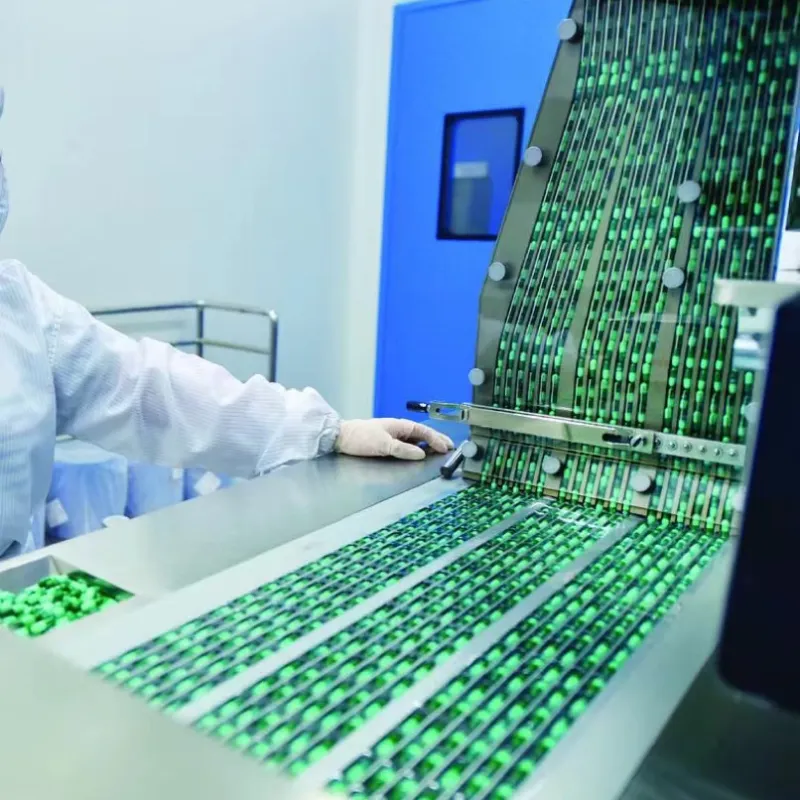
The primary raw material, amoxicillin trihydrate (C16H19N3O5S·3H2O), is a white to off-white crystalline powder. Its physical properties – molecular weight 365.40 g/mol, solubility in water (approximately 25 mg/mL at 25°C), and polymorphism – significantly influence formulation and stability. Other key excipients include sodium chloride for isotonicity, buffering agents like sodium phosphate or citric acid/sodium citrate to maintain pH (typically 7.0-8.0), and a suspending agent such as sodium carboxymethylcellulose to ensure uniform drug distribution. Manufacturing begins with API sourcing and rigorous quality testing per USP/EP monographs. The manufacturing process involves several critical stages: 1) API micronization to achieve optimal particle size distribution for suspension stability and injectability; 2) excipient dissolution in Water for Injection (WFI); 3) API suspension and mixing under controlled conditions to prevent particle aggregation; 4) sterile filtration through 0.22 µm filters to remove microbial contamination; 5) aseptic filling into sterile vials or ampoules under laminar airflow hoods; 6) lyophilization (freeze-drying) is often employed to enhance stability, requiring precise temperature and pressure control; 7) vial sealing and crimping; 8) final inspection and labeling. Critical process parameters include mixing speed, filtration rate, filling volume accuracy, lyophilization cycle parameters (freezing rate, primary drying temperature, secondary drying temperature), and sterilization validation. Deviation from these parameters can lead to particle settling, incomplete sterilization, or product degradation.

Performance & Engineering
The performance of injectable amoxicillin hinges on its pharmacokinetic and pharmacodynamic properties. Following administration, amoxicillin distributes widely into body tissues and fluids, although penetration into the central nervous system is limited. Its mechanism of action involves inhibiting bacterial cell wall synthesis by binding to penicillin-binding proteins (PBPs). Engineering considerations include ensuring complete dissolution and bioavailability after injection, minimizing pain on injection (dependent on formulation pH and sodium chloride concentration), and preventing local or systemic adverse reactions. The choice of vial/stopper material (typically Type I borosilicate glass with a butyl rubber stopper) is critical to prevent leaching of extractables into the formulation. The formulation’s osmolarity must be controlled to match physiological conditions to avoid hemolysis. Stability studies, conducted according to ICH guidelines, are essential to determine shelf life and storage conditions. These studies assess degradation products (amoxicillin degradation primarily yields penicilloic acid), potency loss, and changes in physical characteristics (pH, particle size). Compliance requirements dictated by regulatory bodies (FDA, EMA) mandate stringent adherence to Good Manufacturing Practices (GMP) and validation of all critical processes. Force analysis during filling and lyophilization is vital to ensure vial integrity and prevent cracking.
Technical Specifications
| Parameter | Specification (USP/EP) | Test Method | Acceptance Criteria |
|---|---|---|---|
| Amoxicillin Content | 90.0% - 110.0% on dried basis | HPLC | Within specified range |
| Water Content | NMT 3.0% | Karl Fischer Titration | ≤ 3.0% |
| pH | 7.0 - 8.0 | Potentiometry | Within specified range |
| Sterility | Sterile | USP <71> / EP 2.6.1 | No microbial growth |
| Endotoxins | < 0.5 EU/mL | LAL Test | ≤ 0.5 EU/mL |
| Particulate Matter | NMT 20 particles ≥ 10 µm per mL | Microscopic Particle Count | Within specified limit |
Failure Mode & Maintenance
Several failure modes can compromise the quality and efficacy of injectable amoxicillin. Particulate matter formation can occur due to API aggregation, excipient precipitation, or glass delamination. Hydrolytic degradation of amoxicillin yields penicilloic acid, reducing potency. Loss of sterility, through compromised vial seals or inadequate filtration, renders the product unusable. Lyophilization cycle deviations can lead to cake collapse or incomplete drying. Physical instability, manifesting as settling or caking, can affect dose accuracy. Maintenance strategies encompass strict adherence to GMP, regular equipment calibration and validation (autoclaves, sterilizers, lyophilizers, filling machines), rigorous raw material testing, and comprehensive stability monitoring. Preventative maintenance on filling lines and lyophilizers is crucial. Vial inspection systems should be regularly assessed for accuracy. Storage conditions (temperature, humidity, light exposure) must be strictly controlled to minimize degradation. For suspected failures, a thorough root cause analysis, including material analysis and process review, is essential to implement corrective and preventative actions (CAPA).
Industry FAQ
Q: What are the critical considerations for selecting a stopper material to minimize extractables and ensure compatibility with injectable amoxicillin?
A: Stopper material selection is paramount. Butyl rubber stoppers are commonly used, but require careful evaluation for extractable compounds. The stopper must be low in particulate matter, possess minimal reactivity with the formulation, and maintain a tight seal to prevent contamination. Regulatory compliance (USP <665> and EP 3.1.1) dictates extractables and leachables testing. Tungsten-coated stoppers are often preferred to reduce the risk of tungsten leaching, which can affect formulation stability.
Q: How does the lyophilization cycle impact the stability of injectable amoxicillin, and what parameters require tight control?
A: Lyophilization significantly impacts stability by reducing water activity and minimizing degradation. Critical parameters include freezing rate, annealing temperature (if used), primary drying temperature and pressure, and secondary drying temperature and time. Too rapid freezing can lead to ice crystal formation that damages the API structure. Incomplete drying can result in residual moisture, accelerating degradation. Optimized cycles are determined through extensive stability studies.
Q: What are the key differences in sterility assurance between terminal sterilization and aseptic processing for injectable amoxicillin?
A: Terminal sterilization (e.g., autoclaving) involves sterilizing the final sealed product. This is the preferred method when the formulation is heat-stable. Aseptic processing, used when heat sterilization is not feasible, relies on sterilizing components separately and assembling them under sterile conditions. Aseptic processing requires more rigorous controls, including extensive environmental monitoring and personnel training, to ensure sterility.
Q: How is particulate matter monitored and controlled during the manufacturing process of injectable amoxicillin?
A: Particulate matter is monitored at multiple stages: raw material testing, in-process filtration, and final product inspection. Automated particle counters are used to quantify particulate levels. Filtration processes are validated to demonstrate their ability to remove particles of a specified size. Manufacturing environments are maintained under controlled conditions to minimize particle generation. Regular visual inspection is also performed.
Q: What validation studies are essential for ensuring the consistent quality of injectable amoxicillin throughout its shelf life?
A: Essential validation studies include process validation (demonstrating the process consistently produces product meeting predetermined specifications), cleaning validation (ensuring equipment is free from residues), analytical method validation (verifying the accuracy and reliability of analytical tests), and sterilization validation (confirming the effectiveness of the sterilization process). Stability studies are also crucial for establishing shelf life and storage conditions.
Conclusion
Injectable amoxicillin’s efficacy and safety are intrinsically linked to meticulous control over its material properties, manufacturing processes, and quality assurance procedures. The inherent challenges of maintaining sterility, ensuring stability, and preventing degradation necessitate a robust, scientifically grounded approach to production. Rigorous adherence to pharmacopoeial standards (USP, EP) and regulatory guidelines (FDA, EMA) is paramount.
Future advancements in formulation technologies, such as novel excipients and lyophilization techniques, may further enhance the stability and bioavailability of injectable amoxicillin. Continuous monitoring of antibiotic resistance patterns will also drive ongoing refinement of dosing regimens and formulation strategies to maintain therapeutic effectiveness. Investing in advanced analytical capabilities and process analytical technology (PAT) will be crucial for real-time monitoring and control of critical process parameters, ultimately improving product quality and patient outcomes.
Latest news
Copyright © 2026
Dingzhou Kangquan Pharmaceutical Co., Ltd. All Rights Reserved. Sitemap | Privacy
Policy


