
2695018275@qq.com
+86
13780513619
- Afrikaans
- Albanian
- Amharic
- Arabic
- Armenian
- Azerbaijani
- Basque
- Belarusian
- Bengali
- Bosnian
- Bulgarian
- Catalan
- Cebuano
- Corsican
- Croatian
- Czech
- Danish
- Dutch
- English
- Esperanto
- Estonian
- Finnish
- French
- Frisian
- Galician
- Georgian
- German
- Greek
- Gujarati
- Haitian Creole
- hausa
- hawaiian
- Hebrew
- Hindi
- Miao
- Hungarian
- Icelandic
- igbo
- Indonesian
- irish
- Italian
- Japanese
- Javanese
- Kannada
- kazakh
- Khmer
- Rwandese
- Korean
- Kurdish
- Kyrgyz
- Lao
- Latin
- Latvian
- Lithuanian
- Luxembourgish
- Macedonian
- Malgashi
- Malay
- Malayalam
- Maltese
- Maori
- Marathi
- Mongolian
- Myanmar
- Nepali
- Norwegian
- Norwegian
- Occitan
- Pashto
- Persian
- Polish
- Portuguese
- Punjabi
- Romanian
- Russian
- Samoan
- Scottish Gaelic
- Serbian
- Sesotho
- Shona
- Sindhi
- Sinhala
- Slovak
- Slovenian
- Somali
- Spanish
- Sundanese
- Swahili
- Swedish
- Tagalog
- Tajik
- Tamil
- Tatar
- Telugu
- Thai
- Turkish
- Turkmen
- Ukrainian
- Urdu
- Uighur
- Uzbek
- Vietnamese
- Welsh
- Bantu
- Yiddish
- Yoruba
- Zulu
Apr . 01, 2024 17:55 Back to list
multivitamin for dog puppy Formulation Analysis

Introduction
Multivitamins for dog puppies represent a critical component of preventative healthcare, addressing the heightened nutritional demands associated with rapid growth and development. Positioned within the veterinary pharmaceutical and pet nutrition supply chain, these formulations aim to supplement dietary deficiencies and support optimal physiological function in young canines. Unlike adult canine supplements, puppy multivitamins are specifically calibrated to deliver precise ratios of vitamins, minerals, and trace elements vital for skeletal development, immune system maturation, and cognitive function. Core performance indicators include bioavailability of key nutrients, palatability to encourage compliance, and long-term stability of the formulation to maintain potency throughout its shelf life. This guide provides an in-depth exploration of the material science, manufacturing processes, performance characteristics, potential failure modes, and industry standards governing these essential supplements.
Material Science & Manufacturing
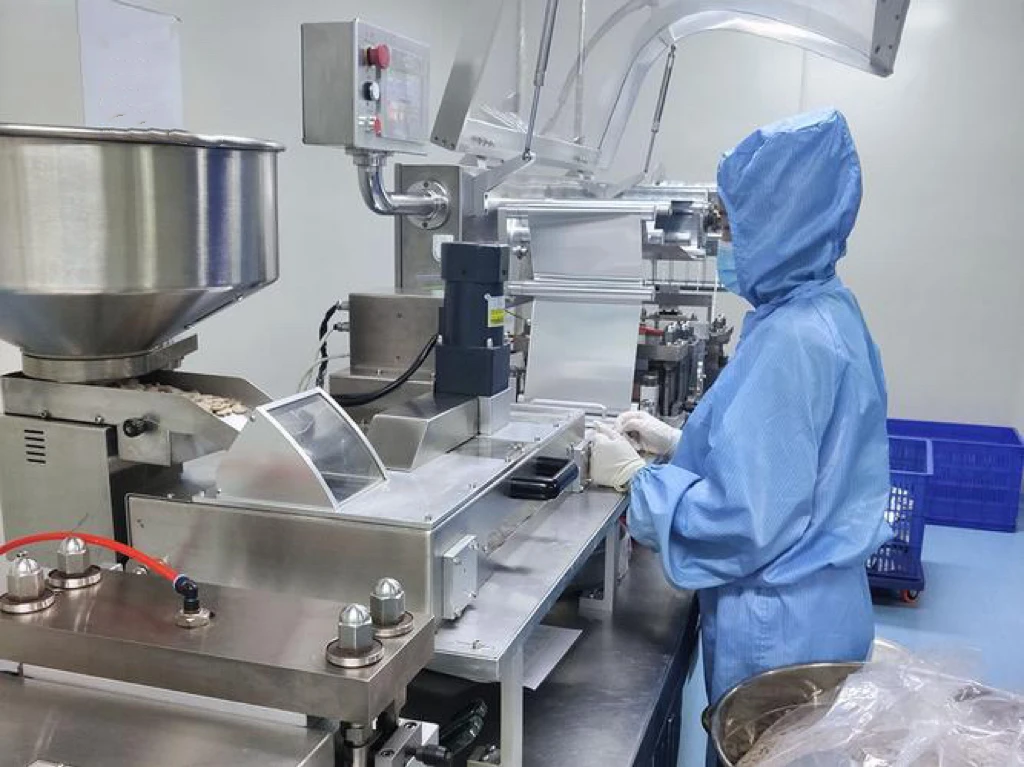
The production of puppy multivitamins relies on a complex interplay of material science and precision manufacturing. Key raw materials include Vitamin A (retinol palmitate), Vitamin D3 (cholecalciferol), Vitamin E (tocopherol), B-complex vitamins (thiamine, riboflavin, niacin, pantothenic acid, pyridoxine, biotin, folate, cobalamin), Vitamin C (ascorbic acid), essential minerals like calcium, phosphorus, magnesium, potassium, zinc, iron, copper, manganese, selenium, and iodine, along with amino acids and potentially omega-3 fatty acids. The purity and source of these ingredients are paramount, adhering to pharmacopoeial standards (USP, EP, BP). Manufacturing commonly involves several stages: micronization of ingredients to enhance bioavailability, blending to achieve homogenous distribution, granulation for improved flowability and compressibility, and finally, tableting, softgel encapsulation, or liquid formulation. Parameter control is crucial at each step. For example, tablet hardness must be within a defined range to ensure disintegration and nutrient release in the gastrointestinal tract. Moisture content must be carefully monitored to prevent degradation of sensitive vitamins. Encapsulation requires precise temperature and pressure control to maintain capsule integrity. Colorants and flavorings are often added to improve palatability, requiring strict adherence to safety regulations regarding acceptable levels of artificial additives. The selection of excipients – inactive ingredients that aid in formulation – is also critical, considering potential interactions with active ingredients and impact on bioavailability.
Performance & Engineering
The performance of puppy multivitamins is fundamentally linked to nutrient bioavailability and metabolic utilization. Bioavailability, the proportion of the administered dose that reaches systemic circulation, is influenced by factors such as particle size, chemical form, and interaction with other dietary components. Force analysis related to tablet compression strength is critical to ensure proper disintegration in the stomach. Environmental resistance is another key consideration. Vitamins are susceptible to degradation by oxidation, light, and heat. Packaging materials are therefore selected to minimize exposure to these elements. Formulations must adhere to stringent regulatory compliance requirements, including those established by the Food and Drug Administration (FDA) Center for Veterinary Medicine (CVM) in the US, and equivalent agencies in other countries. Specific requirements address label accuracy, ingredient purity, and manufacturing practices (Good Manufacturing Practices - GMP). Engineering considerations include ensuring uniform distribution of active ingredients within each dosage unit and maintaining product stability throughout its shelf life. Furthermore, palatability testing is conducted to optimize acceptance by puppies, often involving sensory panels and preference studies. The physiological impact centers on supporting optimal growth plate development through adequate Vitamin D3 and Calcium; bolstering immune function with Vitamins A, C, and E; and fostering cognitive development with B vitamins and essential fatty acids. Proper dosage is crucial, as excessive intake of certain vitamins (e.g., Vitamin A, Vitamin D) can lead to toxicity.
Technical Specifications
| Parameter | Units | Typical Value (Tablet Form) | Typical Value (Liquid Form) |
|---|---|---|---|
| Vitamin A (Retinol Palmitate) | IU | 5,000 IU | 600 IU/ml |
| Vitamin D3 (Cholecalciferol) | IU | 500 IU | 60 IU/ml |
| Vitamin E (Tocopherol) | IU | 50 IU | 6 IU/ml |
| Vitamin C (Ascorbic Acid) | mg | 75 mg | 9 mg/ml |
| B-Complex Vitamins (Total) | mg | 10 mg | 1.2 mg/ml |
| Calcium | mg | 125 mg | 15 mg/ml |
| Phosphorus | mg | 80 mg | 9.6 mg/ml |
Failure Mode & Maintenance
Failure modes in puppy multivitamin products can manifest in several ways. Degradation of vitamins due to exposure to oxygen, light, and moisture is a common issue, leading to reduced potency. This often presents as discoloration or a change in odor. Tablet friability (tendency to crumble) can occur due to insufficient binder content or improper compression. Softgel capsules may exhibit leaking or deformation due to inadequate seal integrity or temperature fluctuations during storage. Liquid formulations can experience phase separation or microbial contamination if preservatives are ineffective or storage conditions are suboptimal. Oxidation of fats (in formulations containing omega-3 fatty acids) can lead to rancidity, indicated by an unpleasant odor. From a maintenance perspective, proper storage is paramount: products should be kept in a cool, dry place, protected from direct sunlight. Packaging integrity must be routinely inspected. Batch tracking and quality control testing (HPLC, UV-Vis spectrophotometry) are essential to verify potency and identify any degradation. Consumer education regarding proper dosage and storage is also critical. Regular stability studies are conducted by manufacturers to determine shelf life and ensure product performance remains consistent over time. If a product exhibits signs of degradation (discoloration, odor change, crumbling), it should be discarded.
Industry FAQ
Q: What is the significance of chelated minerals in a puppy multivitamin?
A: Chelated minerals (e.g., zinc chelate, iron bisglycinate) are bound to amino acids, enhancing their bioavailability. This chelation process protects the mineral from interactions with other dietary components that could hinder absorption in the intestinal tract, resulting in greater systemic availability for supporting growth and development.
Q: How do you ensure the palatability of a multivitamin tablet for a puppy?
A: Palatability is enhanced through the addition of flavorings (e.g., chicken, beef, liver) and coatings. Sensory evaluation panels, including actual puppies, are used to assess acceptance rates. The tablet size and texture are also optimized for ease of chewing and swallowing. Microencapsulation of potentially bitter ingredients can further improve palatability.
Q: What role does Vitamin E play in a puppy multivitamin, beyond its antioxidant properties?
A: Vitamin E is crucial for immune function and helps protect cell membranes from oxidative damage. In puppies, it supports proper muscle development and neurological function. It also works synergistically with selenium, another essential mineral, to enhance antioxidant defense mechanisms and protect against cellular stress.
Q: What are the implications of using synthetic versus natural Vitamin E (tocopherols) in a puppy multivitamin?
A: Natural Vitamin E (d-alpha-tocopherol) is generally considered more bioavailable than synthetic Vitamin E (dl-alpha-tocopherol) due to differences in absorption and metabolism. However, synthetic forms are often more cost-effective. Manufacturers must clearly label the source of Vitamin E and ensure that the chosen form provides adequate biological activity.
Q: How does the manufacturing process affect the stability and shelf life of the multivitamin?
A: The manufacturing process significantly influences stability. Proper control of temperature, humidity, and light exposure during blending, granulation, and coating is essential. The use of appropriate packaging materials (e.g., blister packs, airtight containers with desiccants) is critical to protect against environmental factors. Accelerated stability studies are conducted to predict shelf life under various storage conditions.
Conclusion
Multivitamin supplementation for dog puppies represents a complex area requiring careful consideration of material science, manufacturing controls, and nutritional needs. Achieving optimal performance hinges on the bioavailability of key nutrients, the stability of the formulation, and adherence to stringent quality standards. The selection of appropriate raw materials, coupled with precise manufacturing processes, is fundamental to delivering a product that effectively supports the rapid growth and development of young canines.
Future development in this field will likely focus on personalized nutrition, tailoring multivitamin formulations to individual puppy breeds, sizes, and activity levels. Enhanced delivery systems, such as microencapsulation and liposomal encapsulation, may improve nutrient absorption and bioavailability. Continued research into the synergistic effects of vitamins, minerals, and other bioactive compounds will further refine formulations and optimize health outcomes. Prioritizing sustainable sourcing of ingredients and environmentally friendly manufacturing practices will also become increasingly important.
Latest news
Copyright © 2026
Dingzhou Kangquan Pharmaceutical Co., Ltd. All Rights Reserved. Sitemap | Privacy
Policy


