
Apr . 01, 2024 17:55 Back to list
oem poultry medicine Formulation and Manufacturing
Introduction
OEM poultry medicine refers to the formulation, manufacturing, and packaging of veterinary medicinal products specifically for poultry, conducted on behalf of another company – the original brand owner. This practice is prevalent within the animal health industry due to the complexities of regulatory compliance, specialized manufacturing requirements, and the need for cost optimization. These medicines encompass a broad spectrum of therapeutic categories, including antibiotics, coccidiostats, vitamins, vaccines, and parasiticides, designed to prevent and treat diseases in chickens, turkeys, ducks, and other fowl. The position within the supply chain is crucial; OEMs typically operate as contract development and manufacturing organizations (CDMOs), providing a comprehensive service from initial formulation development through to finished product, ready for branding and distribution by the client company. Core performance characteristics center on bioavailability, efficacy against target pathogens, safety profiles within the poultry species and absence of residues in edible tissues, and adherence to stringent quality control standards as defined by regulatory bodies.
Material Science & Manufacturing
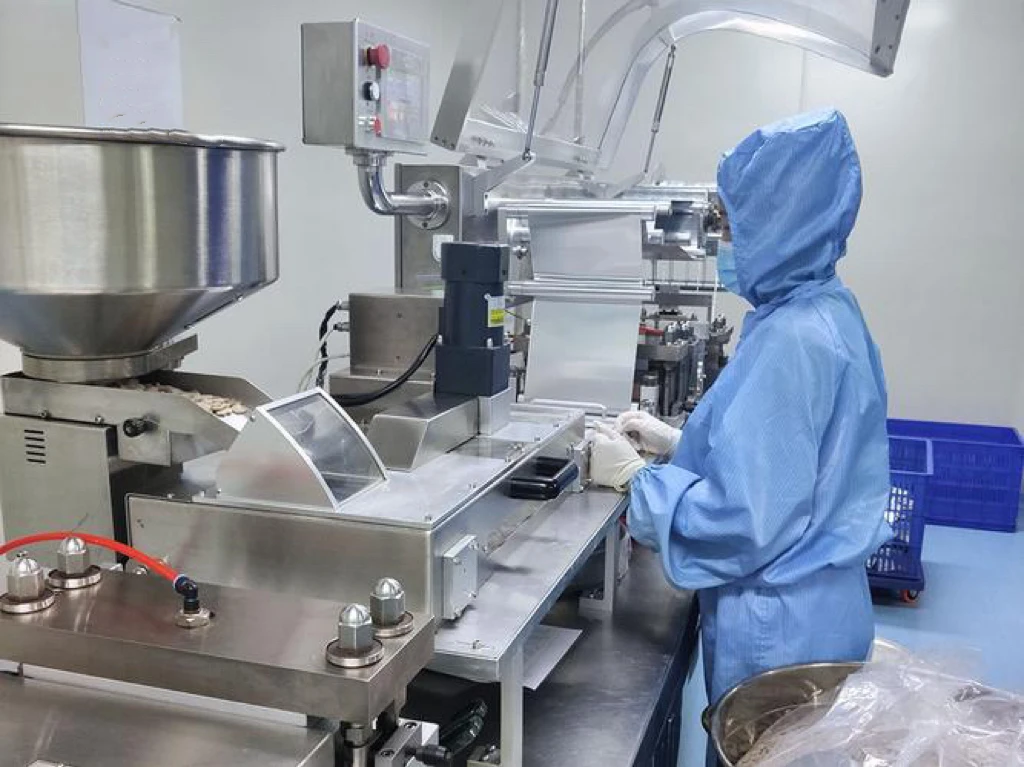
The formulation of poultry medicines relies heavily on understanding the physicochemical properties of Active Pharmaceutical Ingredients (APIs) and excipients. APIs commonly employed include ionophores (e.g., monensin, salinomycin), macrolide antibiotics (e.g., tylosin, erythromycin), fluoroquinolones (e.g., enrofloxacin), and anthelmintics (e.g., ivermectin, albendazole). Excipients are crucial for solubility, stability, palatability, and delivery. These include diluents (e.g., lactose, microcrystalline cellulose), binders (e.g., polyvinylpyrrolidone), disintegrants (e.g., croscarmellose sodium), lubricants (e.g., magnesium stearate), and flavoring agents. Manufacturing processes vary depending on the dosage form. Powdered premixes involve milling, blending, and sieving to ensure homogenous distribution of APIs within the carrier. Granulation, employing either wet or dry methods, enhances flowability and compressibility for tablet or pellet production. Liquid formulations require precise control of pH, viscosity, and osmolality. Injectable formulations demand sterile filtration and aseptic filling under controlled environmental conditions. Key parameter control includes particle size distribution of APIs (impacts bioavailability), moisture content (affects stability), blending uniformity (ensures dose accuracy), and sterilization validation (prevents contamination). The stability of APIs can be affected by light, temperature, and humidity, so specialized packaging materials are crucial. The manufacturing processes must comply with Good Manufacturing Practices (GMP) as outlined by veterinary regulatory agencies.
Performance & Engineering
Performance assessment of poultry medicines extends beyond basic efficacy. Bioavailability studies, typically conducted in broiler or layer chickens, determine the extent and rate at which the API reaches systemic circulation. This is influenced by factors like gut motility, feed composition, and the API’s physicochemical properties. Environmental resistance is critical, especially for products administered via feed or water. Factors like pH, temperature, and exposure to sunlight can degrade APIs, reducing their potency. Stability testing, performed under accelerated conditions (e.g., high temperature, humidity), predicts shelf life and ensures product integrity. Force analysis is relevant for tablet compression, ensuring adequate hardness and friability to withstand handling and transport. Compliance requirements are paramount, governed by regulations from agencies such as the FDA (USA), EMA (Europe), and regional veterinary authorities. These regulations dictate acceptable residue levels in poultry products (meat, eggs) to protect consumer health and establish withdrawal periods before slaughter. Formulation engineering focuses on optimizing drug delivery. For instance, microencapsulation can protect APIs from degradation in the harsh gastrointestinal environment and provide sustained release. Palatability is also a key engineering consideration, ensuring that poultry readily consume medicated feed or water.
Technical Specifications
| API Concentration | Dosage Form | Withdrawal Period (Meat) | Withdrawal Period (Eggs) |
|---|---|---|---|
| 50 g/kg | Premix | 5 days | 0 days |
| 100 mg/mL | Soluble Powder | 7 days | 7 days |
| 200 mg/tablet | Tablet | 3 days | 0 days |
| 10% w/v | Injectable Solution | 3 days | 0 days |
| 25 g/kg | Feed Additive | 4 days | 0 days |
| 500 ppm | Drinking Water Solution | 5 days | 3 days |
Failure Mode & Maintenance
Failure modes in poultry medicine can stem from several sources. API degradation, due to improper storage conditions (temperature, humidity, light exposure), reduces efficacy. Formulation instability, leading to phase separation or precipitation, compromises dosage accuracy. Manufacturing defects, such as inadequate mixing or tablet hardness, can result in inconsistent dosing. Packaging failures, allowing moisture ingress or contamination, shorten shelf life. In the field, antimicrobial resistance is a significant concern, arising from sub-therapeutic dosing or inappropriate use. Poor palatability can lead to reduced feed or water intake, diminishing drug exposure. Failure analysis often involves HPLC analysis to quantify API concentration, microscopic examination to assess particle size and distribution, and stability studies to determine degradation rates. Maintenance involves strict adherence to GMP, validated cleaning procedures for manufacturing equipment, robust quality control testing of raw materials and finished products, and proper storage and transportation conditions. Regular training of personnel on GMP principles and troubleshooting procedures is also essential. Preventative maintenance of manufacturing equipment minimizes the risk of defects, and a comprehensive change control system ensures that any modifications to formulations or processes are thoroughly evaluated and validated.
Industry FAQ
Q: What are the key differences between producing a soluble powder formulation versus a premix for poultry medication?
A: Soluble powders require precise control of particle size and wetting agents to ensure complete dissolution in water, alongside careful pH adjustment for stability. Premixes necessitate homogenous blending of the API with a carrier, focusing on minimizing segregation during transport and feed manufacturing. Soluble powders are prone to caking if exposed to moisture, while premixes can suffer from API loss during feed pelleting if not properly stabilized.
Q: How do you ensure sterility in injectable poultry medicines during the OEM manufacturing process?
A: Sterility is achieved through a multi-pronged approach: using sterile-filtered API and excipients, aseptic filling under laminar airflow hoods, terminal sterilization (if applicable), and rigorous sterility testing of each batch. Validation of the sterilization process, including cycle development and biological indicator testing, is paramount. Environmental monitoring of the manufacturing area is also crucial.
Q: What regulatory documentation is typically required for an OEM to supply poultry medicines to a client in the EU market?
A: EU compliance requires a detailed Drug Master File (DMF) including comprehensive information on the API, excipients, manufacturing process, quality control procedures, and stability data. GMP certification from an EU-recognized authority is mandatory, as is adherence to the requirements of the Veterinary Medicinal Products Directive. A Certificate of Suitability (CEP) for the API from the European Directorate for the Quality of Medicines & HealthCare (EDQM) is highly advantageous.
Q: What is the impact of varying feed formulations on the bioavailability of orally administered poultry medicines?
A: Feed composition significantly influences bioavailability. High fiber content can reduce drug absorption, while the presence of certain feed ingredients (e.g., phytates) can bind to APIs, rendering them inactive. Feed particle size also affects drug release and absorption. Formulation strategies, such as microencapsulation, can mitigate these effects by protecting the API from feed interactions.
Q: How do you address the growing concern of antimicrobial resistance when manufacturing poultry antibiotic formulations?
A: We prioritize responsible manufacturing practices, including accurate API dosing, thorough mixing to ensure homogenous distribution, and strict adherence to recommended withdrawal periods. We support client companies in promoting judicious antibiotic use through educational materials and formulation strategies that optimize efficacy and minimize the selective pressure for resistance development. Furthermore, we actively explore and develop alternative therapies to reduce reliance on antibiotics.
Conclusion
The OEM poultry medicine landscape demands a highly specialized understanding of pharmaceutical sciences, veterinary medicine, and regulatory compliance. Successful operation requires meticulous attention to detail throughout the entire process, from raw material sourcing and formulation development to manufacturing, quality control, and packaging. Ensuring bioavailability, stability, and safety are paramount, alongside adherence to stringent withdrawal periods to safeguard consumer health.
Looking forward, the industry will likely see increased demand for innovative drug delivery systems, such as nanotechnology-based formulations, and a greater emphasis on preventative medicine strategies, including vaccine development and immunostimulants. The role of the OEM will continue to evolve, requiring greater flexibility, technical expertise, and a commitment to sustainable and responsible manufacturing practices.
Latest news
Copyright © 2026
Dingzhou Kangquan Pharmaceutical Co., Ltd. All Rights Reserved. Sitemap | Privacy
Policy


