
2695018275@qq.com
+86
13780513619
- Afrikaans
- Albanian
- Amharic
- Arabic
- Armenian
- Azerbaijani
- Basque
- Belarusian
- Bengali
- Bosnian
- Bulgarian
- Catalan
- Cebuano
- Corsican
- Croatian
- Czech
- Danish
- Dutch
- English
- Esperanto
- Estonian
- Finnish
- French
- Frisian
- Galician
- Georgian
- German
- Greek
- Gujarati
- Haitian Creole
- hausa
- hawaiian
- Hebrew
- Hindi
- Miao
- Hungarian
- Icelandic
- igbo
- Indonesian
- irish
- Italian
- Japanese
- Javanese
- Kannada
- kazakh
- Khmer
- Rwandese
- Korean
- Kurdish
- Kyrgyz
- Lao
- Latin
- Latvian
- Lithuanian
- Luxembourgish
- Macedonian
- Malgashi
- Malay
- Malayalam
- Maltese
- Maori
- Marathi
- Mongolian
- Myanmar
- Nepali
- Norwegian
- Norwegian
- Occitan
- Pashto
- Persian
- Polish
- Portuguese
- Punjabi
- Romanian
- Russian
- Samoan
- Scottish Gaelic
- Serbian
- Sesotho
- Shona
- Sindhi
- Sinhala
- Slovak
- Slovenian
- Somali
- Spanish
- Sundanese
- Swahili
- Swedish
- Tagalog
- Tajik
- Tamil
- Tatar
- Telugu
- Thai
- Turkish
- Turkmen
- Ukrainian
- Urdu
- Uighur
- Uzbek
- Vietnamese
- Welsh
- Bantu
- Yiddish
- Yoruba
- Zulu
Apr . 01, 2024 17:55 Back to list
pet vitamins for cats Performance Analysis
Introduction
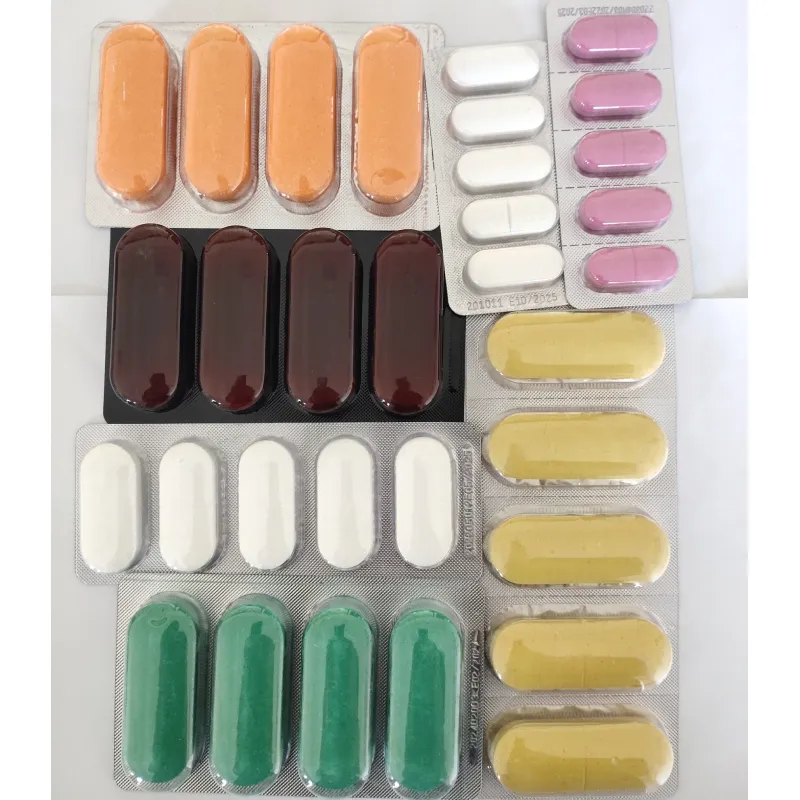
Feline vitamin supplements represent a critical segment within the companion animal healthcare industry. These products, available in formulations such as chews, liquids, and powders, are designed to augment the nutritional intake of domestic cats, addressing potential deficiencies arising from factors such as age, diet, health conditions, and lifestyle. The industry is driven by a growing trend towards preventative pet healthcare, with owners proactively seeking methods to enhance the longevity and quality of life for their feline companions. While commercial cat foods are generally formulated to meet minimum nutritional requirements, the bioavailability of nutrients, individual cat metabolic variations, and the presence of underlying medical issues often necessitate supplementation. Core performance parameters for these supplements encompass palatability (acceptance by the cat), bioavailability (the extent to which nutrients are absorbed and utilized), stability (shelf-life and degradation resistance), and safety (absence of toxic substances or adverse reactions). This guide provides a detailed technical overview of pet vitamins for cats, encompassing material science, manufacturing processes, performance characteristics, failure modes, and industry standards.
Material Science & Manufacturing
The formulation of feline vitamin supplements typically involves a complex interplay of organic and inorganic compounds. Primary active ingredients include vitamins (A, D, E, B-complex, C), minerals (calcium, phosphorus, taurine, iron), essential fatty acids (omega-3 and omega-6), and antioxidants. Raw materials are sourced from various suppliers and undergo rigorous quality control testing to verify purity and potency, often employing High-Performance Liquid Chromatography (HPLC) and Gas Chromatography-Mass Spectrometry (GC-MS). The excipients used significantly impact the product’s characteristics. Common excipients include binding agents (microcrystalline cellulose, polyvinylpyrrolidone), fillers (lactose, dicalcium phosphate), flavoring agents (animal digest, fish oil), and coatings (glycerin, carrageenan). Manufacturing processes vary depending on the final product form. Chewable tablets utilize dry granulation or direct compression, requiring precise control of particle size distribution and compression force to ensure tablet integrity and drug dissolution. Liquid formulations involve dissolving active ingredients and excipients in a suitable solvent (typically water or glycerol) followed by sterilization via filtration. Powder formulations employ spray drying or lyophilization to create a stable, free-flowing powder. Encapsulation, using materials like gelatin or hypromellose, is frequently employed to protect sensitive ingredients from degradation and improve palatability. Parameter control during manufacturing is crucial. Humidity, temperature, mixing speeds, and coating thickness are all carefully monitored to ensure product uniformity and consistency. The chemical compatibility of ingredients is a major consideration, preventing unwanted reactions that could reduce efficacy or create harmful byproducts.
Performance & Engineering
The efficacy of feline vitamin supplements hinges on several performance factors. Bioavailability is paramount; nutrients must be absorbed in the gastrointestinal tract and transported to target tissues. The chemical form of the vitamin significantly influences absorption rates. For example, fat-soluble vitamins (A, D, E, K) require dietary fat for optimal absorption, while water-soluble vitamins (B-complex, C) are generally absorbed more readily. Environmental resistance, specifically oxidation and degradation due to light and moisture exposure, affects shelf life and potency. Packaging materials with high barrier properties are utilized to mitigate these effects. Engineering considerations extend to dosage form design. Palatability is a critical determinant of owner compliance, as cats are notoriously selective eaters. Flavor masking techniques and the use of highly palatable ingredients are essential. The mechanical strength of chewable tablets must be sufficient to withstand handling and storage without crumbling. Supplement design also needs to consider potential drug interactions with concurrent medications the cat may be receiving. Force analysis during tablet compression is crucial to ensure consistent hardness and friability. Compliance requirements dictate stringent quality control procedures throughout the manufacturing process, adherence to Good Manufacturing Practices (GMP), and accurate labeling of ingredients and dosage instructions. Toxicological studies are necessary to ensure the safety of all ingredients at the intended dosage levels.
Technical Specifications
| Vitamin A (IU/kg) | Vitamin D3 (IU/kg) | Vitamin E (IU/kg) | Taurine (mg/kg) |
|---|---|---|---|
| 10,000 | 1,000 | 500 | 5,000 |
| 15,000 | 1,500 | 750 | 7,500 |
| 20,000 | 2,000 | 1,000 | 10,000 |
| 8,000 | 800 | 400 | 4,000 |
| 12,000 | 1,200 | 600 | 6,000 |
| 18,000 | 1,800 | 900 | 9,000 |
Failure Mode & Maintenance
Feline vitamin supplements are susceptible to various failure modes. Degradation of vitamins due to oxidation is a common issue, particularly for vitamins A, C, and E. This is accelerated by exposure to air, light, and heat. Loss of potency can occur during storage, rendering the supplement ineffective. Moisture absorption can lead to clumping in powder formulations and promote microbial growth in liquid formulations. Physical degradation, such as tablet cracking or crumbling, can compromise dosage accuracy and palatability. Delamination of coatings can expose sensitive ingredients to degradation. Manufacturing defects, such as inconsistent ingredient distribution or inadequate compression, can result in non-uniformity and reduced efficacy. Owner-related failure modes include improper storage (exposure to light, heat, or moisture), exceeding the recommended dosage, and administering the supplement to cats with underlying medical conditions that contraindicate its use. Maintenance strategies include storing supplements in a cool, dry, dark place, using airtight containers, and adhering to the recommended dosage guidelines. Regular inspection of the product for signs of degradation (discoloration, clumping, odor) is essential. Discarding expired or damaged supplements is critical. Employing preventative measures such as nitrogen flushing during packaging to minimize oxygen exposure and utilizing desiccants to control moisture levels extends shelf life. Routine quality control testing of finished products ensures consistent potency and safety.
Industry FAQ
Q: What is the significance of taurine in feline vitamin supplements?
A: Taurine is an essential amino acid for cats, meaning they cannot synthesize it in sufficient quantities and must obtain it from their diet. Deficiency can lead to dilated cardiomyopathy (DCM), a potentially fatal heart condition, as well as retinal degeneration and reproductive problems. Therefore, adequate taurine supplementation is crucial, particularly in cats fed diets that are not specifically formulated to meet their taurine requirements. The bioavailability of taurine in different supplement forms can vary.
Q: How does the bioavailability of fat-soluble vitamins differ from water-soluble vitamins in cats?
A: Fat-soluble vitamins (A, D, E, K) require dietary fat for absorption in the small intestine. Their absorption is less efficient than water-soluble vitamins and they are stored in the liver and fatty tissues. Excessive intake can lead to hypervitaminosis. Water-soluble vitamins (B-complex, C) are readily absorbed and excreted in urine, making toxicity less common. However, they are not stored to the same extent, necessitating regular supplementation.
Q: What types of packaging are best suited for maintaining the potency of vitamin supplements?
A: Packaging materials with low oxygen and moisture permeability are crucial. Aluminum foil pouches, amber glass bottles, and high-density polyethylene (HDPE) containers with airtight closures are commonly used. Nitrogen flushing during packaging helps to displace oxygen and further extend shelf life. Opaque packaging protects light-sensitive vitamins from degradation.
Q: What quality control measures are typically implemented during the manufacturing process?
A: Rigorous quality control measures include raw material testing for purity and potency, in-process monitoring of critical parameters (temperature, humidity, mixing speeds), finished product testing for vitamin content and contaminants, and adherence to Good Manufacturing Practices (GMP) regulations. HPLC and GC-MS are frequently employed analytical techniques.
Q: How should feline vitamin supplements be stored to maximize their shelf life?
A: Supplements should be stored in a cool, dry, dark place, away from direct sunlight and heat sources. Airtight containers should be used to prevent moisture absorption and oxidation. It's crucial to follow the storage instructions provided on the product label and to discard any supplements that show signs of degradation or have expired.
Conclusion
Feline vitamin supplementation is a complex field requiring a thorough understanding of nutrient bioavailability, manufacturing processes, and potential failure modes. Ensuring product efficacy and safety necessitates stringent quality control, appropriate packaging, and adherence to industry standards. The proactive use of these supplements, guided by veterinary advice, can significantly contribute to the health and well-being of feline companions.
Future development in this sector is likely to focus on enhancing bioavailability through novel delivery systems (e.g., liposomes, microencapsulation), personalized nutrient formulations based on individual cat genetics and health profiles, and improved analytical methods for quantifying vitamin levels in biological samples. Continual research and innovation are critical to addressing the evolving needs of the feline population and maintaining the highest standards of care.
Latest news
Copyright © 2026
Dingzhou Kangquan Pharmaceutical Co., Ltd. All Rights Reserved. Sitemap | Privacy
Policy


