
Apr . 01, 2024 17:55 Back to list
Poultry Feed Medicine Performance Analysis
Introduction
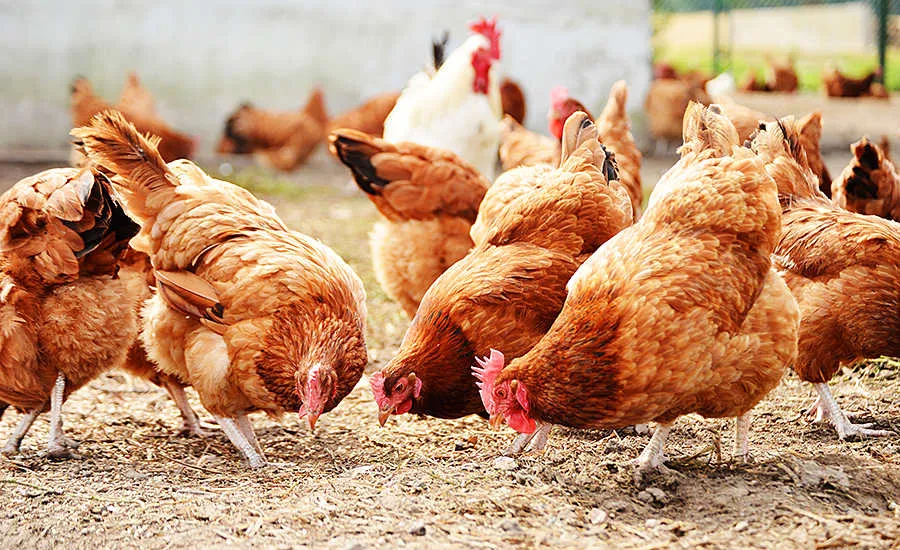
Poultry feed medicine, encompassing medicated feed additives and premixes, represents a critical component of modern poultry production. Positioned within the agricultural supply chain between raw feed ingredient manufacturers and poultry producers, its function is to proactively prevent disease, improve growth rates, enhance feed conversion ratios, and maintain overall flock health. The core performance indicators for these products are centered around bioavailability of the active pharmaceutical ingredient (API), palatability for bird consumption, stability during feed manufacturing and storage, and demonstrable efficacy in addressing specific poultry health challenges. This guide provides an in-depth technical examination of poultry feed medicine, covering material science, manufacturing processes, performance characteristics, potential failure modes, and relevant industry standards. A significant pain point within the industry revolves around ensuring consistent drug delivery and mitigating the development of antimicrobial resistance due to suboptimal dosing or improper formulation.
Material Science & Manufacturing
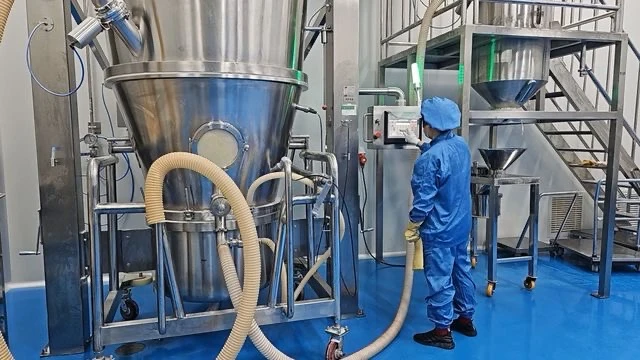
The foundation of poultry feed medicine lies in the careful selection and processing of raw materials. APIs, typically antibiotics, coccidiostats, vitamins, or minerals, require rigorous quality control and adherence to pharmacopeial standards (USP, EP, BP). Carriers, commonly comprised of calcium carbonate, wheat middlings, rice hulls, or soybean meal, are chosen for their inertness, flowability, and ability to uniformly disperse the API. Binders, such as bentonite or lignin sulfonates, improve pellet durability. Manufacturing processes typically involve precise weighing, blending (using ribbon blenders, paddle mixers, or planetary mixers), granulation (wet or dry), and finally, packaging. Key parameters needing stringent control include particle size distribution of both API and carrier (to ensure homogeneity), mixing time and speed (to avoid segregation), granulation moisture content (to optimize pellet hardness and flowability), and temperature control during drying (to prevent API degradation). The chemical compatibility between the API and carrier is paramount; incompatibility can lead to drug degradation or reduced bioavailability. For example, tetracycline antibiotics can chelate with divalent cations (Ca2+, Mg2+) present in some carriers, rendering them ineffective. Microencapsulation is increasingly employed to protect APIs from degradation during feed processing and to control their release in the bird’s digestive tract. Raw material sourcing must comply with Good Manufacturing Practices (GMP) to ensure purity and prevent contamination.
Performance & Engineering
Evaluating the performance of poultry feed medicine requires a multifaceted engineering approach. Bioavailability, the proportion of the API that reaches the systemic circulation, is crucial. Factors influencing bioavailability include particle size, solubility, formulation, and the bird’s physiological state. Force analysis during feed pelleting is critical; excessive pressure can damage APIs, while insufficient pressure leads to poor pellet durability. Environmental resistance, particularly moisture resistance, is paramount, as humidity can cause clumping and API degradation. Compliance requirements are stringent, dictated by regulatory bodies like the FDA (in the US) and EMA (in Europe). These regulations specify acceptable residue levels in poultry meat and eggs, requiring accurate dosage calculations and withdrawal times. Functional implementation relies on consistent mixing within the complete feed, ensuring each bird receives the intended dose. Feed flowability is engineered through careful selection of carrier particle size and binder addition. Dust control measures are essential to minimize worker exposure to APIs. Stability studies, conducted under accelerated aging conditions (elevated temperature and humidity), are vital to determine the shelf life of the medicated feed. Pharmacokinetic modeling is utilized to predict drug concentrations in target tissues over time, optimizing dosage regimens. The impact of feed ingredient interactions on API stability and bioavailability must also be considered.
Technical Specifications
| API Concentration | Carrier Particle Size (μm) | Pellet Durability Index (PDI) | Moisture Content (%) |
|---|---|---|---|
| 50 ppm Enramycin | 100-200 | 95-98 | < 12 |
| 100 ppm Salinomycin | 75-150 | 92-96 | < 11 |
| 20% Choline Chloride | 300-500 | N/A (liquid) | < 5 |
| 5000 IU/kg Vitamin A | 50-100 | 90-94 | < 10 |
| 100 ppm Zinc Oxide | 150-250 | 93-97 | < 13 |
| 25 ppm Nicarbazin | 80-180 | 96-99 | < 11.5 |
Failure Mode & Maintenance
Failure modes in poultry feed medicine manifest in several forms. Fatigue cracking of pellets, resulting from repeated handling and transport, leads to drug segregation and inconsistent dosing. Delamination, the separation of coating layers in microencapsulated products, reduces API protection and bioavailability. Degradation of APIs, due to exposure to heat, humidity, or incompatible ingredients, diminishes efficacy. Oxidation of fat-soluble vitamins (A, D, E) reduces their activity. Improper storage conditions, such as high temperature and humidity, accelerate these degradation processes. Contamination with molds or bacteria can render the feed unsafe. Maintenance strategies include regular inspection of storage facilities for temperature and humidity control, implementation of a First-In, First-Out (FIFO) inventory system, thorough cleaning and sanitation of manufacturing equipment, periodic testing of APIs for potency and purity, and employee training on GMP guidelines. Preventive maintenance on mixing and granulation equipment is critical to ensure consistent product quality. A robust quality control system, including statistical process control (SPC), is essential to identify and address potential issues before they impact product performance. Regular auditing of suppliers is necessary to verify adherence to quality standards.
Industry FAQ
Q: What is the impact of varying particle size of the carrier on API distribution within the final feed?
A: A wider particle size distribution of the carrier can lead to API segregation during mixing and pelleting. Smaller carrier particles generally result in more uniform API distribution, but can also increase dustiness. Optimal particle size distribution requires careful balancing of these factors, typically utilizing a combination of particle sizes to maximize homogeneity and minimize segregation.
Q: How does moisture content affect the stability of heat-sensitive antibiotics during feed manufacturing?
A: Higher moisture content accelerates the degradation of many heat-sensitive antibiotics. Careful control of drying temperatures during pelleting is essential. Excessive drying can also be detrimental, causing API denaturation. Proper packaging with moisture-resistant materials is crucial for maintaining stability during storage.
Q: What analytical methods are used to verify the potency of the API in a finished medicated feed product?
A: High-Performance Liquid Chromatography (HPLC) is the most common method for quantifying API concentration. Microbiological assays are used to determine antibiotic activity. Spectrophotometry can be used for certain vitamins and minerals. Method validation, including accuracy, precision, and linearity, is essential to ensure reliable results.
Q: What are the critical considerations when selecting a carrier for a specific API to ensure chemical compatibility?
A: Factors to consider include pH, ionic charge, and the presence of functional groups. Carriers containing divalent cations (Ca2+, Mg2+) should be avoided with tetracycline antibiotics. The carrier should be chemically inert and not interact with the API to form complexes or degradation products. Compatibility studies should be conducted before large-scale production.
Q: What role does pellet durability index (PDI) play in ensuring consistent drug delivery, and how is it measured?
A: PDI is a measure of pellet strength and resistance to breakage during handling and transport. A higher PDI indicates greater pellet durability and reduces the risk of drug segregation. It is typically measured by tumbling a known weight of pellets for a specified time and determining the percentage of fines (particles smaller than a specified size) generated. A typical PDI range is 90-98%.
Conclusion
Poultry feed medicine is a complex field requiring a thorough understanding of material science, manufacturing processes, and engineering principles. Ensuring the bioavailability, stability, and consistent delivery of APIs is paramount for maintaining poultry health and optimizing production efficiency. Addressing the growing concern of antimicrobial resistance necessitates careful formulation, precise dosing, and responsible usage practices.
Future advancements in this field will likely focus on novel drug delivery systems, such as nanoencapsulation, to further enhance API protection and targeted release. Increased emphasis on feed safety and traceability will drive the adoption of advanced analytical techniques and quality control measures. Furthermore, the development of alternative strategies to antibiotic growth promoters, such as probiotics and prebiotics, will play a crucial role in sustainable poultry production.
Latest news
Copyright © 2026
Dingzhou Kangquan Pharmaceutical Co., Ltd. All Rights Reserved. Sitemap | Privacy
Policy


