
Apr . 01, 2024 17:55 Back to list
Raffavit vitamins Formulation Analysis

Introduction
Raffavit vitamins represent a complex formulation of essential micronutrients intended for human and animal consumption, positioned within the broader nutraceutical and animal feed industries. These vitamins are typically delivered in encapsulated or powder form, requiring stringent quality control throughout the production process. The core performance characteristic of Raffavit vitamins lies in their bioavailability – the degree to which the administered dose is absorbed and utilized by the organism. Critical industry pain points surrounding vitamin formulations include maintaining stability during storage, ensuring consistent dosage accuracy, and complying with increasingly rigorous regulatory standards regarding purity and source traceability. Raffavit addresses these concerns through a multi-faceted approach encompassing advanced encapsulation techniques, rigorous raw material sourcing, and adherence to international quality benchmarks.
Material Science & Manufacturing
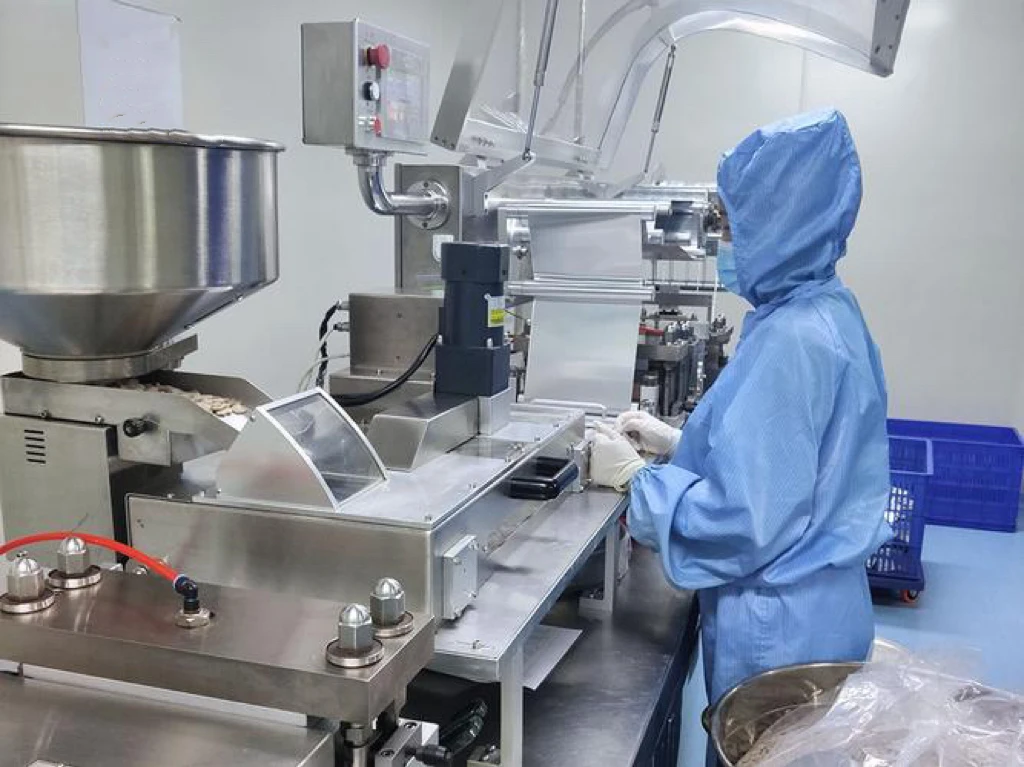
The production of Raffavit vitamins hinges on a foundation of carefully selected raw materials, primarily synthetic or naturally derived vitamins (A, D, E, C, B-complex) and excipients. Vitamin synthesis often involves complex organic chemistry, utilizing processes like oxidation, reduction, and esterification. Natural vitamin sourcing relies on extraction from plant or animal sources, requiring purification and concentration steps. Excipients – such as microcrystalline cellulose, starch, and magnesium stearate – are crucial for flowability, compressibility, and capsule shell integrity. Manufacturing typically involves several stages: raw material verification (HPLC, GC-MS for purity), pre-mixing, granulation (wet or dry), capsule filling (hard gelatin or HPMC capsules), and coating (for controlled release or taste masking). Key parameter control centers on maintaining consistent particle size distribution during granulation, ensuring accurate weight variation during capsule filling (within ±5% per USP guidelines), and optimizing coating thickness to achieve desired release profiles. Chemical compatibility between vitamins and excipients is paramount; for instance, ascorbic acid (Vitamin C) can react with certain metal ions, necessitating the use of chelating agents like EDTA. Thermal stability during processing is also critical, as excessive heat can degrade sensitive vitamins like thiamine (B1).
Performance & Engineering
The performance of Raffavit vitamins is fundamentally linked to their dissolution rate and subsequent absorption within the gastrointestinal tract. Dissolution is influenced by factors such as capsule shell permeability, particle size, and the presence of disintegrants. Bioavailability is further dictated by intestinal pH, the presence of dietary fats, and individual metabolic variations. Engineering considerations encompass the development of controlled-release formulations to optimize vitamin absorption over time and minimize metabolic degradation. Force analysis is relevant to capsule shell strength – ensuring resistance to breakage during handling and transportation. Environmental resistance is critical, particularly protecting vitamins from oxidation and moisture degradation. Packaging materials (e.g., HDPE bottles with desiccant inserts) are selected to provide a barrier against these elements. Compliance requirements under regulations like the Food and Drug Administration (FDA) in the US and the European Food Safety Authority (EFSA) mandate stringent quality control procedures, including Good Manufacturing Practices (GMP) and adherence to specified vitamin potency levels. Furthermore, the design of encapsulation materials must consider potential leachates and their toxicity profiles. The interaction of the vitamin formulation with the digestive system is modeled using pharmacokinetic principles to predict absorption rates and optimize dosage.
Technical Specifications
| Vitamin | Potency (mg/capsule) | Encapsulation Material | Dissolution Rate (USP Type II, % after 30 mins) |
|---|---|---|---|
| Vitamin A (Retinol Acetate) | 3000 mcg RE | Gelatin, Titanium Dioxide | 95% |
| Vitamin D3 (Cholecalciferol) | 2000 IU | HPMC, Sodium Lauryl Sulfate | 90% |
| Vitamin E (Alpha-Tocopherol) | 22.4 mg α-TE | Gelatin, Glycerol | 85% |
| Vitamin C (Ascorbic Acid) | 500 mg | HPMC, Microcrystalline Cellulose | 98% |
| Vitamin B1 (Thiamine HCl) | 1.1 mg | Gelatin, FD&C Yellow #5 | 80% |
| Vitamin B12 (Cyanocobalamin) | 6 mcg | Gelatin, Carmine | 92% |
Failure Mode & Maintenance
Raffavit vitamins are susceptible to several failure modes. Oxidation of vitamins A, C, and E is a common issue, accelerated by exposure to oxygen, light, and heat. This leads to potency loss and the formation of degradation products. Capsule shell brittleness due to moisture absorption can cause breakage and leakage. Delamination of coated tablets or capsules can alter the release profile, impacting bioavailability. Contamination with microorganisms during manufacturing or storage represents a severe failure mode, potentially leading to adverse health effects. Fatigue cracking in capsule shells can occur during handling and transportation, resulting in dosage inaccuracies. Maintenance involves proper storage conditions (cool, dry place, protected from light), adherence to expiry dates, and implementing robust quality control procedures during manufacturing. Regular monitoring of vitamin potency through analytical testing (HPLC, spectrophotometry) is crucial. Packaging integrity should be routinely inspected. Batch traceability systems are essential for identifying and recalling potentially defective products. Implementing a First-Expired-First-Out (FEFO) inventory management system minimizes the risk of using expired vitamins. Preventative maintenance of manufacturing equipment, particularly granulation and encapsulation machines, is vital to ensure consistent product quality.
Industry FAQ
Q: What are the primary differences between water-soluble and fat-soluble vitamins in terms of bioavailability and potential toxicity?
A: Water-soluble vitamins (B vitamins and Vitamin C) are readily absorbed into the bloodstream and excess amounts are typically excreted in urine, minimizing the risk of toxicity. However, their bioavailability can be affected by factors like cooking methods and intestinal absorption capacity. Fat-soluble vitamins (A, D, E, and K) require dietary fat for absorption and are stored in the liver and fatty tissues. This storage capacity increases the risk of hypervitaminosis (toxicity) if consumed in excessive amounts. Their bioavailability is dependent on efficient fat digestion and absorption.
Q: How does the choice of encapsulation material impact the stability and release characteristics of the vitamin formulation?
A: Gelatin capsules offer good permeability but are susceptible to moisture absorption and temperature fluctuations. HPMC (hydroxypropyl methylcellulose) capsules provide a more robust barrier against moisture and offer greater control over dissolution rates. Enteric coatings can be applied to protect vitamins from stomach acid and release them in the intestine, enhancing absorption for acid-sensitive vitamins. The molecular weight and grade of the polymer used in the encapsulation material also significantly influence the release profile.
Q: What analytical techniques are used to verify the potency and purity of Raffavit vitamins?
A: High-Performance Liquid Chromatography (HPLC) is the primary technique for quantifying vitamin concentrations. Gas Chromatography-Mass Spectrometry (GC-MS) is used to identify and quantify volatile impurities. Spectrophotometry can be employed for certain vitamins (e.g., Vitamin C). Titration methods may be used for specific analyses. Microbiological testing ensures the absence of harmful microorganisms. Heavy metal analysis (ICP-MS) confirms compliance with regulatory limits.
Q: What is the role of excipients in a vitamin formulation, and how are they selected to ensure compatibility?
A: Excipients serve multiple functions: improving flowability, enhancing compressibility, providing structural integrity, controlling dissolution, and masking taste. Selection criteria include chemical inertness (no reaction with vitamins), physical compatibility (no phase separation), and absence of toxicity. Compatibility studies are conducted to assess potential interactions between vitamins and excipients under various storage conditions. Common excipients include microcrystalline cellulose, lactose, starch, magnesium stearate, and silicon dioxide.
Q: How does Raffavit vitamins comply with international regulations concerning allowable daily intake (ADI) and maximum limits for vitamin contaminants?
A: Raffavit vitamins adhere to the ADI and maximum contaminant levels established by regulatory bodies such as the FDA (US), EFSA (Europe), and WHO (international). Raw material sourcing is carefully vetted to ensure compliance with purity standards. Batch testing is performed to verify that vitamin concentrations fall within specified limits. Contaminant levels are monitored through rigorous analytical testing. Documentation and traceability systems are maintained to demonstrate compliance during audits and inspections.
Conclusion
Raffavit vitamins represent a sophisticated application of material science and pharmaceutical engineering, demanding precise control over raw material sourcing, manufacturing processes, and quality assurance. Maintaining bioavailability, ensuring stability, and complying with stringent regulatory standards are central to their efficacy and safety. The multi-faceted approach adopted by Raffavit, encompassing advanced encapsulation techniques and rigorous analytical testing, addresses the core pain points within the nutraceutical and animal feed industries.
Future development will likely focus on personalized vitamin formulations tailored to individual genetic profiles and dietary needs, as well as exploring novel delivery systems (e.g., liposomes, nanoparticles) to further enhance bioavailability and targeted delivery. Continued investment in research and development will be crucial to optimize vitamin formulations and address emerging challenges in the field.
Latest news
Copyright © 2026
Dingzhou Kangquan Pharmaceutical Co., Ltd. All Rights Reserved. Sitemap | Privacy
Policy


