
2695018275@qq.com
+86
13780513619
- Afrikaans
- Albanian
- Amharic
- Arabic
- Armenian
- Azerbaijani
- Basque
- Belarusian
- Bengali
- Bosnian
- Bulgarian
- Catalan
- Cebuano
- Corsican
- Croatian
- Czech
- Danish
- Dutch
- English
- Esperanto
- Estonian
- Finnish
- French
- Frisian
- Galician
- Georgian
- German
- Greek
- Gujarati
- Haitian Creole
- hausa
- hawaiian
- Hebrew
- Hindi
- Miao
- Hungarian
- Icelandic
- igbo
- Indonesian
- irish
- Italian
- Japanese
- Javanese
- Kannada
- kazakh
- Khmer
- Rwandese
- Korean
- Kurdish
- Kyrgyz
- Lao
- Latin
- Latvian
- Lithuanian
- Luxembourgish
- Macedonian
- Malgashi
- Malay
- Malayalam
- Maltese
- Maori
- Marathi
- Mongolian
- Myanmar
- Nepali
- Norwegian
- Norwegian
- Occitan
- Pashto
- Persian
- Polish
- Portuguese
- Punjabi
- Romanian
- Russian
- Samoan
- Scottish Gaelic
- Serbian
- Sesotho
- Shona
- Sindhi
- Sinhala
- Slovak
- Slovenian
- Somali
- Spanish
- Sundanese
- Swahili
- Swedish
- Tagalog
- Tajik
- Tamil
- Tatar
- Telugu
- Thai
- Turkish
- Turkmen
- Ukrainian
- Urdu
- Uighur
- Uzbek
- Vietnamese
- Welsh
- Bantu
- Yiddish
- Yoruba
- Zulu
Apr . 01, 2024 17:55 Back to list
vegan dog vitamins Performance Analysis
Introduction
Vegan dog vitamins represent a specialized segment within the broader pet supplement industry, driven by increasing pet owner interest in plant-based nutrition for their animals. These formulations, distinct from traditional meat-based vitamin sources, utilize synthetic or plant-derived vitamins, minerals, and other nutrients. Their technical position in the supply chain involves sourcing of raw materials – typically vitamin precursors, plant extracts, and binding agents – followed by blending, encapsulation (tablet, chewable, or powder), and packaging. Core performance characteristics center around bioavailability of nutrients, palatability for canine acceptance, shelf-life stability, and demonstrable efficacy in supporting canine health. A key industry pain point is ensuring complete and balanced nutrition without animal-derived products, specifically addressing canine requirements for amino acids, Vitamin D, and Iron, which are traditionally sourced from animal tissues. The increasing demand necessitates rigorous quality control and transparent sourcing to combat concerns over ingredient purity and nutrient delivery.
Material Science & Manufacturing
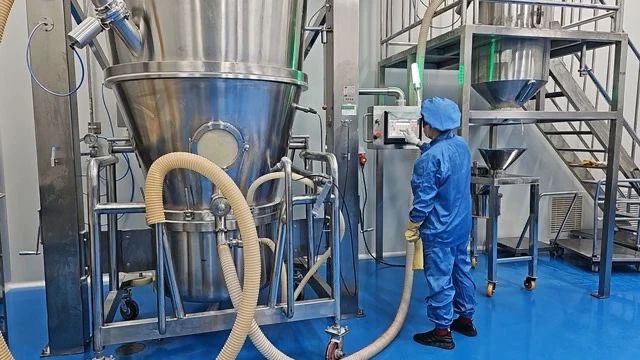
The foundational materials in vegan dog vitamins are primarily synthetic vitamins (ascorbic acid, tocopherol, etc.), plant extracts (seaweed for iodine, algae for DHA/EPA, fruit/vegetable powders for antioxidants), mineral chelates (iron bisglycinate, zinc amino acid chelate), and binding/encapsulation agents. Raw material physical properties are critical: particle size distribution impacts blending homogeneity; hygroscopicity affects shelf life and tablet compression; and purity dictates bioavailability. Manufacturing typically involves several stages. First, micronization and sieving ensure uniform particle size. Second, dry blending combines the various ingredients. Third, granulation – either wet or dry – forms cohesive particles for tableting or encapsulation. Wet granulation uses a liquid binder (e.g., modified starch, gum arabic) controlled for viscosity and solid content. Dry granulation utilizes compaction techniques. Finally, encapsulation (tablet compression, softgel formation, or powder filling into capsules) and coating (for palatability or delayed release) complete the process. Key parameter control includes blending time/speed, granulation liquid-to-solid ratio, compression force, coating weight, and environmental control (temperature, humidity) to prevent degradation. Chemical compatibility between ingredients is paramount; for example, Vitamin C can degrade in the presence of certain metal ions. Quality control utilizes HPLC and GC-MS to verify nutrient content and assess for contaminants.
Performance & Engineering
Performance of vegan dog vitamins hinges on bioavailability, meaning the extent to which nutrients are absorbed and utilized by the canine body. Bioavailability is affected by several factors: chemical form of the nutrient (chelated minerals are generally better absorbed), particle size, presence of enhancers (e.g., fats for fat-soluble vitamins), and gut health of the dog. Force analysis is pertinent during tablet compression; ensuring sufficient hardness to withstand handling and shipping without crumbling, while maintaining disintegration in the digestive tract. Environmental resistance – particularly moisture and oxidation – is crucial for shelf-life stability. Packaging materials with low oxygen transmission rates (OTR) and low water vapor transmission rates (WVTR) are employed. Compliance requirements are governed by regulations like the Food and Drug Administration (FDA) in the US, which mandates Good Manufacturing Practices (GMP) and accurate labeling. Functional implementation often involves palatability enhancers (e.g., yeast extract, vegetable flavors) to promote voluntary consumption. Dosage calculation requires precise knowledge of canine nutritional requirements based on age, breed, activity level, and health status. Degradation pathways of vitamins are important to understand. Vitamin C, for example, is susceptible to oxidation, and B vitamins are light sensitive.
Technical Specifications
| Nutrient | Typical Concentration (per serving) | Bioavailability (Relative to standard form) | Stability (Shelf Life at 25°C, % remaining after 12 months) |
|---|---|---|---|
| Vitamin B12 (Cyanocobalamin) | 5 mcg | 90% | 85% |
| Vitamin D3 (Vegan Source - Lichen) | 250 IU | 80% | 90% |
| Vitamin E (Tocopherol) | 10 IU | 75% | 80% |
| Iron (Bisglycinate) | 5 mg | 95% | 92% |
| Omega-3 Fatty Acids (Algae-derived DHA/EPA) | 100 mg | 85% | 70% |
| Zinc (Amino Acid Chelate) | 3 mg | 92% | 88% |
Failure Mode & Maintenance
Failure modes in vegan dog vitamins can be broadly categorized into degradation, disintegration/dissolution issues, and palatability rejection. Degradation, primarily due to oxidation and hydrolysis, leads to a loss of potency. Oxidation is accelerated by exposure to oxygen, light, and heat, particularly affecting fat-soluble vitamins. Hydrolysis impacts water-soluble vitamins. Disintegration/dissolution problems, stemming from insufficient compression force or improper binder selection, result in incomplete nutrient release in the digestive tract. Palatability rejection leads to wasted product and non-compliance. Fatigue cracking in tablets can occur due to repeated handling or inadequate formulation. Delamination, or layer separation, in coated tablets indicates poor coating adhesion. Maintenance involves proper storage – cool, dry, and dark conditions – to minimize degradation. Packaging with desiccants and oxygen absorbers further enhances shelf life. Periodic testing (HPLC, GC-MS) is crucial to verify nutrient content and identify degradation products. For chewable tablets, maintaining sufficient moisture content prevents excessive hardness and crumbling. Regular quality audits of manufacturing processes are essential to prevent inconsistencies and ensure adherence to GMP standards. Investigating customer complaints regarding palatability or lack of efficacy is vital for continuous improvement.
Industry FAQ
Q: What are the primary challenges in formulating a complete and balanced vegan vitamin for dogs, specifically regarding amino acid provision?
A: The primary challenge lies in replicating the amino acid profile naturally obtained from animal proteins. Dogs require ten essential amino acids that they cannot synthesize. Vegan formulations necessitate careful blending of plant-based protein sources (e.g., pea protein, rice protein) and potentially the addition of supplemental amino acids like L-Lysine, L-Threonine, and DL-Methionine to ensure adequate levels of each essential amino acid, mirroring the ratios found in digestible animal protein. Bioavailability of plant-based amino acids can be lower than animal-based sources, requiring higher inclusion rates and potentially enzymatic pretreatment to enhance digestion.
Q: How does the bioavailability of iron from plant-based sources (e.g., ferrous bisglycinate chelate) compare to that from traditional animal sources (e.g., heme iron)?
A: Bioavailability of iron from plant-based sources is generally lower than from heme iron found in animal products. Non-heme iron, like ferrous bisglycinate chelate, requires vitamin C for optimal absorption. Chelation with glycine improves absorption compared to other iron salts. However, phytates in plant materials can inhibit iron absorption. Formulating with phytase enzymes can help reduce phytate levels. The bisglycinate chelate form mitigates some of the absorption challenges inherent in non-heme iron by enhancing solubility and reducing interaction with inhibitory compounds.
Q: What analytical methods are used to verify the authenticity and potency of vegan vitamin ingredients, particularly regarding sourcing from non-GMO and sustainable sources?
A: Authenticity and potency verification utilize several analytical techniques. HPLC (High-Performance Liquid Chromatography) and GC-MS (Gas Chromatography-Mass Spectrometry) are used to quantify vitamin content and identify potential adulterants. PCR (Polymerase Chain Reaction) is employed to detect GMOs. Isotope ratio mass spectrometry (IRMS) can verify the geographic origin of ingredients and detect potential mislabeling. Third-party certifications (e.g., Non-GMO Project Verified, Certified Sustainable Palm Oil) provide independent verification of sourcing claims. Supplier audits are essential to assess manufacturing processes and traceability.
Q: What are the implications of ingredient hygroscopicity on the manufacturing and storage stability of vegan dog vitamin formulations?
A: High ingredient hygroscopicity (the tendency to absorb moisture from the air) presents significant challenges. Moisture absorption can lead to caking, reduced flowability during manufacturing, decreased tablet hardness, and accelerated degradation of moisture-sensitive vitamins. Manufacturing in a low-humidity environment is crucial. Using hydrophobic excipients and coating tablets with moisture-protective films can mitigate moisture uptake. Packaging with desiccants and employing moisture-barrier packaging materials (e.g., aluminum foil laminates) are essential for long-term storage stability.
Q: How do regulatory standards for pet supplements differ between the US, EU, and other major markets, and what implications do these differences have for international distribution?
A: Regulatory standards vary significantly. In the US, the FDA regulates pet supplements under the Center for Veterinary Medicine (CVM), primarily focusing on safety and labeling. The EU has stricter pre-market authorization requirements under Regulation (EC) No 767/2009, requiring safety and efficacy data. Other markets, such as Japan and Australia, have their own unique registration and labeling requirements. These differences necessitate careful formulation and labeling adjustments for international distribution. Compliance with local regulations requires thorough documentation, ingredient traceability, and potentially local manufacturing or partnerships.
Conclusion
Vegan dog vitamins represent a sophisticated intersection of nutritional science, material engineering, and manufacturing process control. Ensuring complete and balanced nutrition for canines without relying on animal-derived ingredients requires meticulous ingredient selection, optimized formulation techniques, and rigorous quality assurance. The bioavailability of plant-based nutrients remains a key challenge, necessitating the use of chelated minerals, enhanced vitamin forms, and appropriate co-factors to maximize absorption and efficacy.
Future developments in this field will likely focus on advanced encapsulation technologies for improved nutrient delivery, personalized nutrition based on canine genomic profiles, and the utilization of novel plant-based ingredients with enhanced bioavailability. Continued research into canine nutrient requirements and the development of standardized analytical methods for verifying vegan vitamin potency will be crucial for ensuring the long-term success and reliability of these products.
Latest news
Copyright © 2026
Dingzhou Kangquan Pharmaceutical Co., Ltd. All Rights Reserved. Sitemap | Privacy
Policy


