
2695018275@qq.com
+86
13780513619
- Afrikaans
- Albanian
- Amharic
- Arabic
- Armenian
- Azerbaijani
- Basque
- Belarusian
- Bengali
- Bosnian
- Bulgarian
- Catalan
- Cebuano
- Corsican
- Croatian
- Czech
- Danish
- Dutch
- English
- Esperanto
- Estonian
- Finnish
- French
- Frisian
- Galician
- Georgian
- German
- Greek
- Gujarati
- Haitian Creole
- hausa
- hawaiian
- Hebrew
- Hindi
- Miao
- Hungarian
- Icelandic
- igbo
- Indonesian
- irish
- Italian
- Japanese
- Javanese
- Kannada
- kazakh
- Khmer
- Rwandese
- Korean
- Kurdish
- Kyrgyz
- Lao
- Latin
- Latvian
- Lithuanian
- Luxembourgish
- Macedonian
- Malgashi
- Malay
- Malayalam
- Maltese
- Maori
- Marathi
- Mongolian
- Myanmar
- Nepali
- Norwegian
- Norwegian
- Occitan
- Pashto
- Persian
- Polish
- Portuguese
- Punjabi
- Romanian
- Russian
- Samoan
- Scottish Gaelic
- Serbian
- Sesotho
- Shona
- Sindhi
- Sinhala
- Slovak
- Slovenian
- Somali
- Spanish
- Sundanese
- Swahili
- Swedish
- Tagalog
- Tajik
- Tamil
- Tatar
- Telugu
- Thai
- Turkish
- Turkmen
- Ukrainian
- Urdu
- Uighur
- Uzbek
- Vietnamese
- Welsh
- Bantu
- Yiddish
- Yoruba
- Zulu
Apr . 01, 2024 17:55 Back to list
vitamin tablets for dogs Manufacturing and Performance
Introduction
Vitamin tablets for dogs represent a critical component of preventative and supplemental canine healthcare. Positioned within the animal health and nutrition industry, these formulated tablets deliver essential micronutrients – vitamins, minerals, and sometimes amino acids – designed to address deficiencies, support physiological functions, and enhance overall well-being. Unlike complete dietary formulations (dog food), vitamin tablets serve as targeted supplementation, often tailored to life stage, breed predispositions, or specific health concerns. Core performance characteristics center on bioavailability of active ingredients, palatability for voluntary consumption, stability during storage, and accurate dosage delivery. The increasing prevalence of processed dog food, age-related nutrient absorption decline, and specialized dietary needs (e.g., performance dogs, pregnant females) drive demand for these supplements, presenting both opportunities and challenges regarding quality control and regulatory compliance.
Material Science & Manufacturing
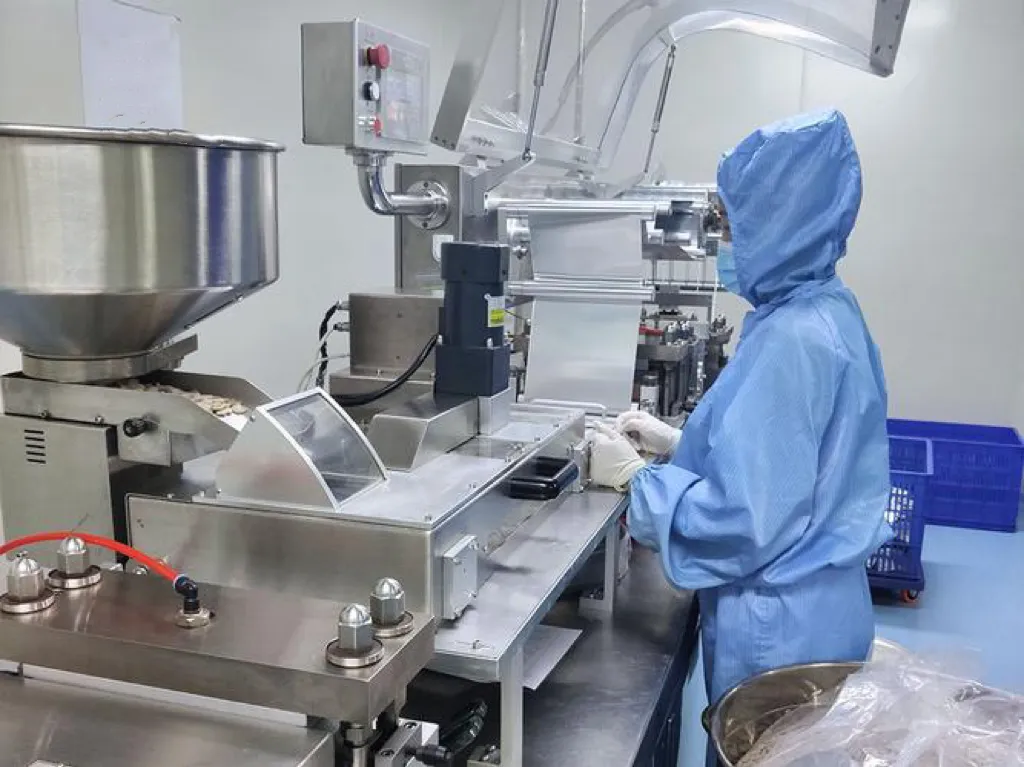
The manufacturing of vitamin tablets for dogs hinges on the careful selection of excipients and active pharmaceutical ingredients (APIs). APIs typically include Vitamin A (retinol), Vitamin D (cholecalciferol), Vitamin E (tocopherol), B-complex vitamins (thiamine, riboflavin, niacin, etc.), Vitamin C (ascorbic acid), and key minerals such as calcium, phosphorus, and zinc. Excipients, constituting the bulk of the tablet, play crucial roles in compressibility, disintegration, and palatability. Common excipients include microcrystalline cellulose (MCC) – providing compressibility – dicalcium phosphate (binder), magnesium stearate (lubricant), and flavor coatings (beef, chicken, or peanut butter flavorings). Manufacturing primarily employs direct compression, wet granulation, or dry granulation techniques. Direct compression, favored for its simplicity, requires APIs and excipients with inherent flowability and compressibility. Granulation methods (wet and dry) enhance these properties, involving the formation of agglomerates before compression. Key parameter control includes API particle size (influencing dissolution rate), blending homogeneity (ensuring uniform dosage), compression force (affecting hardness and disintegration), and coating uniformity (for palatability and stability). Raw material purity, confirmed via HPLC and spectrophotometry, is paramount to avoid toxicity and ensure efficacy. Moisture content throughout the process is meticulously monitored to prevent degradation and maintain tablet integrity.
Performance & Engineering
The performance of vitamin tablets is fundamentally linked to their bioavailability – the extent and rate at which the API is absorbed into the dog’s bloodstream. This is heavily influenced by the tablet’s disintegration and dissolution characteristics. Disintegration, the breakdown of the tablet into smaller particles, is affected by excipient composition and compression force. Dissolution, the release of the API from the disintegrated particles, is influenced by API solubility, particle size, and gastrointestinal pH. Force analysis during tablet compression is critical to ensure mechanical strength and prevent friability (tablet crumbling). Environmental resistance, particularly moisture sensitivity, is addressed through coating technologies and appropriate packaging. Compliance requirements, dictated by veterinary pharmaceutical regulations (varying by region – see Standards & Regulations section), demand rigorous testing for potency, purity, and absence of harmful contaminants. Functional implementation also considers palatability; dogs are inherently selective eaters, and unpalatable tablets will be rejected. Flavor coatings, combined with appropriate tablet size and shape, are engineered to maximize voluntary consumption. Bioavailability studies, often employing pharmacokinetic models, are essential to validate product efficacy and determine optimal dosage regimens.
Technical Specifications
| API (Vitamin A, IU/tablet) | API (Vitamin D3, IU/tablet) | API (Vitamin E, IU/tablet) | Tablet Hardness (kgf) |
|---|---|---|---|
| 500 | 400 | 50 | 8-12 |
| 1000 | 800 | 100 | 10-15 |
| 1500 | 1200 | 150 | 12-18 |
| 2000 | 1600 | 200 | 15-20 |
| 2500 | 2000 | 250 | 18-25 |
| 3000 | 2400 | 300 | 20-30 |
Failure Mode & Maintenance
Failure modes in vitamin tablets typically relate to degradation of APIs, loss of physical integrity, or manufacturing defects. Common issues include: API Degradation: Oxidation of Vitamin C and Vitamin E is a significant concern, requiring antioxidant excipients and protective packaging. Hydrolysis of vitamins (especially B-complex) can occur in humid environments. Tablet Friability/Crumbling: Insufficient binder or excessive compression force can lead to brittle tablets prone to crumbling during handling and administration. Disintegration Failure: Coating irregularities or excessive hardness can impede tablet disintegration in the dog’s gastrointestinal tract, reducing bioavailability. Loss of Palatability: Degradation of flavor coatings or absorption of moisture can diminish palatability, leading to rejection. Manufacturing Defects: Inconsistent API distribution within the tablet can result in dosage variations. Maintenance primarily focuses on proper storage: tablets should be kept in a cool, dry place, protected from light and moisture. Packaging should be airtight and impermeable to oxygen. Regular quality control testing (potency, disintegration, friability) is crucial to ensure product stability and efficacy throughout its shelf life. Expiration dates must be strictly adhered to.
Industry FAQ
Q: What is the importance of chelated minerals in dog vitamin tablets?
A: Chelated minerals are bound to amino acids, enhancing their bioavailability compared to non-chelated forms. This means a higher percentage of the mineral is absorbed by the dog’s body, improving efficacy. Chelation protects the mineral from interacting with other substances in the gut that might hinder absorption.
Q: How do you ensure consistent dosage accuracy in each tablet?
A: We employ rigorous blending procedures using validated mixing equipment to ensure homogeneous distribution of APIs and excipients. Automated tablet presses with precise weight control systems minimize dosage variation. Batch testing, including weight uniformity analysis, is conducted to verify compliance with specified dosage ranges.
Q: What is the role of coatings in vitamin tablet manufacturing?
A: Coatings serve multiple purposes. Film coatings improve palatability by masking the taste of the APIs. They also protect the APIs from degradation due to moisture, light, and oxygen. Enteric coatings can be used to delay release of the tablet until it reaches the small intestine, optimizing absorption and preventing stomach upset.
Q: How are vitamin tablets tested for quality and safety?
A: We perform comprehensive testing, including API potency assays (HPLC, UV-Vis spectrophotometry), heavy metal analysis, microbial limit testing, and disintegration/dissolution testing. We adhere to Good Manufacturing Practices (GMP) and conduct stability studies to determine shelf life.
Q: Can vitamin tablets interact with medications a dog is already taking?
A: Yes, interactions are possible. For example, high doses of Vitamin K can interfere with anticoagulant medications. It’s crucial for pet owners to inform their veterinarian about all supplements their dog is receiving to avoid potential adverse interactions.
Conclusion
Vitamin tablets for dogs represent a sophisticated application of pharmaceutical science tailored to canine health needs. Their effective formulation and manufacturing rely on meticulous control of material properties, process parameters, and quality control measures. The bioavailability of APIs, influenced by disintegration, dissolution, and chelation, is paramount to achieving therapeutic benefit. Understanding potential failure modes and implementing appropriate storage and handling practices are essential for maintaining product integrity and efficacy.
Future advancements will likely focus on novel delivery systems (e.g., rapidly dissolving tablets, chewable formulations) to enhance palatability and bioavailability. Personalized nutrition, driven by genetic profiling and individual health assessments, may lead to customized vitamin formulations tailored to specific canine requirements. Continued adherence to stringent regulatory standards and rigorous quality control protocols will remain critical to ensuring the safety and efficacy of these essential supplements.
Latest news
Copyright © 2026
Dingzhou Kangquan Pharmaceutical Co., Ltd. All Rights Reserved. Sitemap | Privacy
Policy


