
Vitamins in dog food represent a critical component of canine nutritional science, functioning as essential organic compounds necessary in trace amounts to regulate various metabolic processes. Unlike macronutrients (proteins, fats, carbohydrates), vitamins do not provide energy directly; however, they are indispensable for the utilization of those macronutrients. Their role extends across numerous physiological functions, including immune response, nerve transmission, bone development, and antioxidant defense. Within the pet food industry supply chain, vitamin premixes are typically manufactured by specialized ingredient suppliers, then incorporated into complete and balanced dog food formulations by pet food manufacturers. The efficacy of these vitamins is dependent on bioavailability – their ability to be absorbed and utilized by the canine digestive system – influenced by factors such as chemical form, interactions with other nutrients, and the dog’s individual physiological state. A core industry challenge centers around maintaining vitamin stability throughout the shelf life of the product, often necessitating microencapsulation or the addition of antioxidants.
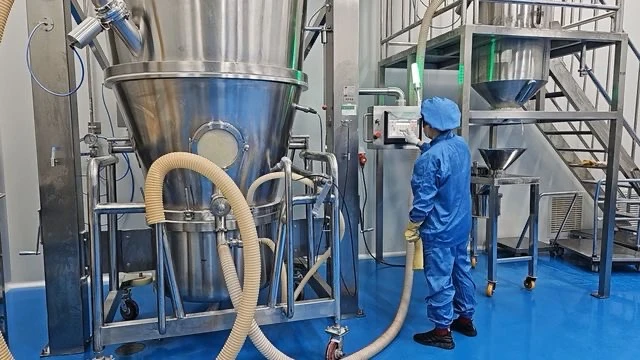
The raw materials for vitamins in dog food are derived from both synthetic and natural sources. Synthetic vitamins, produced via chemical synthesis, generally offer higher purity and lower cost, exemplified by ascorbic acid (Vitamin C) manufactured through the Reichstein process. Natural vitamins are extracted from plant or animal sources, like Vitamin A from fish liver oil, or Vitamin E from vegetable oils. Key physical properties influencing handling and formulation include particle size, hygroscopicity (tendency to absorb moisture), and thermal stability. Vitamin A, for instance, is fat-soluble and susceptible to oxidation, requiring encapsulation to prevent degradation. Manufacturing processes involve meticulous premixing of vitamins with carriers like cellulose or silicon dioxide to ensure uniform distribution in the final dog food. Microencapsulation, utilizing techniques like spray drying or fluid bed coating, encapsulates vitamins within a protective matrix (e.g., vegetable oil, modified starch) enhancing stability against heat, light, and oxidation. Precise control of temperature and humidity during encapsulation is paramount. Extrusion, a common dog food manufacturing method, presents a significant challenge due to high temperatures; therefore, heat-stable vitamin forms and post-extrusion coating are frequently employed. Quality control involves rigorous HPLC (High-Performance Liquid Chromatography) and spectrophotometric analysis to verify vitamin content and ensure compliance with established standards.
The performance of vitamins in dog food is intrinsically linked to bioavailability and the physiological needs of the target canine life stage. Puppies, for example, require higher levels of Vitamin D for proper bone development, while senior dogs may benefit from increased antioxidant vitamins (C and E) to combat oxidative stress. Force analysis isn't directly applicable to vitamins themselves, but considerations relating to the overall kibble integrity and vitamin retention during handling and consumption are critical. Environmental resistance—specifically, resistance to oxidation and degradation from light exposure—is a major engineering concern. Packaging materials with high barrier properties (low oxygen and light permeability) are essential. Compliance requirements are dictated by AAFCO (Association of American Feed Control Officials) standards, specifying minimum and maximum vitamin levels for complete and balanced dog food formulations. Functional implementation necessitates understanding vitamin interactions; for instance, high calcium levels can interfere with Vitamin D absorption. The stability of vitamins in the presence of trace minerals (e.g., iron, copper) must also be carefully evaluated, often requiring the addition of chelating agents to prevent oxidative degradation. Bioavailability studies, employing techniques like fecal analysis to determine vitamin excretion rates, are crucial for validating the effectiveness of vitamin formulations.
| Vitamin | Chemical Form | Typical Inclusion Rate (Dry Matter Basis) | Bioavailability (%) | Stability (Shelf Life at 25°C) |
|---|---|---|---|---|
| Vitamin A | Retinyl Acetate | 1,000 – 5,000 IU/kg | 80-90 | >90% after 12 months |
| Vitamin D3 | Cholecalciferol | 500 – 2,000 IU/kg | 70-80 | >85% after 12 months |
| Vitamin E | Alpha-Tocopheryl Acetate | 50 – 200 IU/kg | 60-70 | >75% after 6 months |
| Vitamin C | Ascorbic Acid (Coated) | 50 – 150 mg/kg | 40-50 | >60% after 3 months |
| Vitamin B1 (Thiamine) | Thiamine Mononitrate | 2 – 10 mg/kg | 70-80 | >95% after 12 months |
| Vitamin B2 (Riboflavin) | Riboflavin | 1 – 5 mg/kg | 60-70 | >80% after 12 months |
Failure modes of vitamins in dog food primarily center around degradation leading to reduced efficacy. Oxidation is a significant concern, particularly for fat-soluble vitamins (A, D, E) and Vitamin C. Exposure to light, heat, and trace metals accelerates oxidation, resulting in vitamin loss. Hydrolysis, caused by moisture, can degrade water-soluble vitamins (B vitamins). Delamination of microencapsulated vitamins can occur due to improper coating application or mechanical stress during handling. Physical separation of vitamins from the kibble matrix during storage or transit is another failure mode. Maintenance involves implementing strict quality control measures throughout the manufacturing process. This includes using antioxidants (e.g., ethoxyquin, BHT) to inhibit oxidation, employing appropriate packaging materials with low permeability to oxygen and light, and maintaining optimal storage conditions (cool, dry, dark). Regularly monitoring vitamin levels during shelf-life studies is critical. Proper handling of raw materials—minimizing exposure to air and light—is also essential. For coated vitamins, ensuring coating integrity through visual inspection and particle size analysis is vital. Preventative maintenance of encapsulation equipment reduces the risk of coating defects.
A: Ingredient sourcing significantly impacts bioavailability. Vitamins from natural sources are often complexed with other compounds, potentially enhancing or inhibiting absorption. Synthetic vitamins, while highly purified, may lack these natural complexes. Sourcing from reputable suppliers with documented quality control processes is paramount, including certificates of analysis verifying vitamin potency and purity.
A: The high temperatures and shear forces involved in extrusion can significantly degrade heat-sensitive vitamins. Mitigation strategies include using heat-stable vitamin forms (e.g., coated vitamins), reducing extrusion temperature and residence time, and employing post-extrusion coating techniques to replenish vitamins lost during processing.
A: Adequate dietary fat is essential for the absorption of fat-soluble vitamins. These vitamins are incorporated into micelles formed during fat digestion, facilitating their transport across the intestinal wall. Low-fat diets can impair the absorption of these vitamins, potentially leading to deficiencies. Proper fat quality and digestibility are also crucial.
A: Yes. Phytates found in plant-based ingredients can bind to minerals like calcium and zinc, reducing their bioavailability and potentially impacting vitamin utilization. Oxalates can also interfere with calcium absorption. Strategies include using phytase enzymes to break down phytates, ensuring adequate mineral levels, and optimizing ingredient ratios to minimize antagonistic interactions.
A: HPLC (High-Performance Liquid Chromatography) is the primary method for quantifying vitamin content. Spectrophotometry is used for certain vitamins. Bioavailability is assessed through fecal analysis (measuring vitamin excretion rates) and, in some cases, blood level measurements. Stability studies conducted over time, under controlled conditions, are also essential for determining vitamin retention.
The incorporation of vitamins into dog food is a complex undertaking requiring a thorough understanding of nutritional science, material properties, manufacturing processes, and potential degradation pathways. Maintaining vitamin stability and bioavailability is paramount to ensuring the health and well-being of canine companions. A holistic approach—from sourcing high-quality raw materials to implementing robust quality control measures and optimizing formulation strategies—is essential for producing efficacious and safe dog food products.
Future trends in vitamin supplementation for dog food are likely to focus on enhanced bioavailability through novel delivery systems (e.g., liposomes, nanoparticles), personalized nutrition tailored to individual canine needs, and the exploration of synergistic vitamin combinations for optimized health outcomes. Continued research and development in these areas will be crucial for advancing canine nutritional science and improving the quality of pet food formulations.


