
2695018275@qq.com
+86
13780513619
- Afrikaans
- Albanian
- Amharic
- Arabic
- Armenian
- Azerbaijani
- Basque
- Belarusian
- Bengali
- Bosnian
- Bulgarian
- Catalan
- Cebuano
- Corsican
- Croatian
- Czech
- Danish
- Dutch
- English
- Esperanto
- Estonian
- Finnish
- French
- Frisian
- Galician
- Georgian
- German
- Greek
- Gujarati
- Haitian Creole
- hausa
- hawaiian
- Hebrew
- Hindi
- Miao
- Hungarian
- Icelandic
- igbo
- Indonesian
- irish
- Italian
- Japanese
- Javanese
- Kannada
- kazakh
- Khmer
- Rwandese
- Korean
- Kurdish
- Kyrgyz
- Lao
- Latin
- Latvian
- Lithuanian
- Luxembourgish
- Macedonian
- Malgashi
- Malay
- Malayalam
- Maltese
- Maori
- Marathi
- Mongolian
- Myanmar
- Nepali
- Norwegian
- Norwegian
- Occitan
- Pashto
- Persian
- Polish
- Portuguese
- Punjabi
- Romanian
- Russian
- Samoan
- Scottish Gaelic
- Serbian
- Sesotho
- Shona
- Sindhi
- Sinhala
- Slovak
- Slovenian
- Somali
- Spanish
- Sundanese
- Swahili
- Swedish
- Tagalog
- Tajik
- Tamil
- Tatar
- Telugu
- Thai
- Turkish
- Turkmen
- Ukrainian
- Urdu
- Uighur
- Uzbek
- Vietnamese
- Welsh
- Bantu
- Yiddish
- Yoruba
- Zulu
Apr . 01, 2024 17:55 Back to list
abz albendazole tablet Pharmaceutical Manufacturing
Introduction
abz Albendazole Tablet is a broad-spectrum anthelmintic medication used for the treatment of parasitic worm infestations. Its technical position within the pharmaceutical supply chain resides as a finished dosage form, representing the culmination of active pharmaceutical ingredient (API) synthesis, excipient blending, tablet compression, and quality control processes. The core performance of the tablet is defined by its bioavailability – the rate and extent to which the active ingredient, albendazole, is absorbed into the systemic circulation, enabling effective targeting and elimination of parasitic worms. This guide will comprehensively detail the material science, manufacturing processes, performance characteristics, failure modes, and regulatory considerations associated with abz Albendazole Tablets, providing a resource for pharmaceutical professionals, procurement managers, and quality assurance personnel.
Material Science & Manufacturing
The primary active pharmaceutical ingredient (API) in abz Albendazole Tablets is albendazole (C12H15N3O2S), a benzimidazole derivative. Albendazole exhibits very low aqueous solubility, which significantly impacts its bioavailability. The raw material sourcing must comply with stringent pharmacopoeial standards (USP, EP, BP) regarding purity, polymorphism, and particle size distribution. Common excipients used in formulation include microcrystalline cellulose (MCC – a diluent imparting compressibility), lactose monohydrate (another diluent), sodium starch glycolate (a disintegrant promoting tablet breakup), magnesium stearate (a lubricant facilitating tablet ejection), and colloidal silicon dioxide (a flow aid improving powder homogeneity).
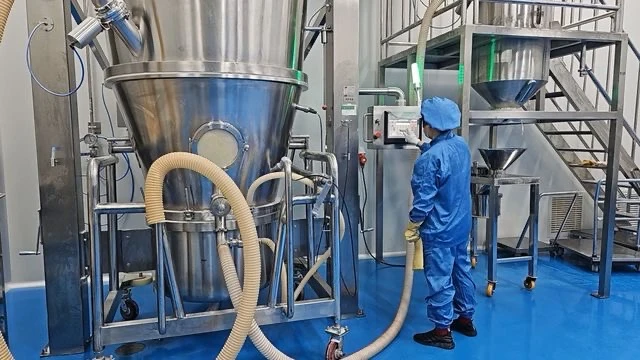
Manufacturing involves several critical stages: blending of API and excipients to achieve homogeneity; granulation (wet or dry) to enhance flowability and compressibility; tablet compression using a rotary tablet press under controlled pressure to achieve the target weight and hardness; and finally, coating (typically film coating with polymers like hypromellose) to improve stability, taste masking, and modify drug release. Key parameter control during compression is crucial: compression force directly impacts tablet hardness, porosity, and ultimately, drug dissolution rate. Tablet weight variation (within ±5% of the nominal weight) and drug content uniformity (generally within ±2% of the label claim) are critical quality attributes monitored during production.

Performance & Engineering
The performance of abz Albendazole Tablet is fundamentally linked to its in vitro dissolution profile and in vivo bioavailability. Albendazole’s limited solubility necessitates formulation strategies to enhance dissolution. Dissolution testing, conducted under standardized conditions (USP Apparatus 1 or 2), measures the rate at which albendazole is released from the tablet matrix. Pharmacokinetic studies determine the absorption, distribution, metabolism, and excretion (ADME) characteristics of the drug. Factors affecting performance include tablet hardness (impacts disintegration rate), coating thickness (affects drug release), and the presence of excipients that can enhance solubility (e.g., surfactants).
Environmental resistance considerations include humidity and temperature. Albendazole is susceptible to degradation in the presence of moisture, potentially leading to decreased potency. Tablets are typically packaged in blister packs or tightly sealed containers with desiccants to minimize moisture ingress. Stability studies, conducted under accelerated and long-term storage conditions (per ICH guidelines), evaluate the tablet’s chemical and physical stability over its shelf life. Compliance requirements are dictated by national pharmacopoeias and regulatory agencies (FDA, EMA, etc.), necessitating adherence to Good Manufacturing Practices (GMP) throughout the manufacturing process.
Technical Specifications
| Parameter | Specification | Test Method | Acceptance Criteria |
|---|---|---|---|
| Assay (Albendazole Content) | 98.0% - 102.0% | HPLC | Complies |
| Dissolution (15 minutes) | ≥ 60% | USP Apparatus 2 | Complies |
| Tablet Hardness | 40-80 N | Tablet Hardness Tester | Complies |
| Tablet Weight Variation | ±5% | Analytical Balance | Complies |
| Water Content | ≤ 2.0% | Karl Fischer Titration | Complies |
| Related Substances | ≤ 0.5% (Individual Impurity) | HPLC | Complies |
Failure Mode & Maintenance
Common failure modes for abz Albendazole Tablets include: friability (tablet crumbling due to mechanical stress during handling and shipping), resulting from insufficient binder content or inadequate compression force; capping/lamination (separation of tablet layers) caused by air entrapment during compression or excessive compression speed; sticking (tablet adhering to the die wall) due to insufficient lubrication; cracking due to rapid moisture loss or excessive compression; and degradation (loss of potency) due to exposure to heat, humidity, or light.
Maintenance strategies involve robust process control during manufacturing (consistent blending, granulation, and compression parameters), proper packaging to protect against environmental factors, and implementation of a comprehensive stability program. Regular monitoring of critical quality attributes (tablet hardness, weight variation, dissolution) is essential. Corrective and Preventative Actions (CAPA) should be implemented to address any deviations from established specifications. Storage recommendations typically involve cool, dry places, protected from light, and within specified temperature ranges (usually 20-25°C).
Industry FAQ
Q: What is the impact of polymorphism on albendazole bioavailability?
A: Albendazole can exist in multiple polymorphic forms, each exhibiting different physical properties, including solubility and dissolution rate. Different polymorphs can lead to varying bioavailability. Manufacturers must rigorously control the polymorphic form of albendazole used in the formulation to ensure consistent product performance.
Q: How do you ensure uniform drug distribution during blending of the API and excipients?
A: Uniform drug distribution is achieved through optimized blending parameters (mixing speed, blending time, and blender load) and validated blending procedures. Process Analytical Technology (PAT) tools, such as Near-Infrared Spectroscopy (NIR), can be used to monitor blend homogeneity in real-time.
Q: What is the role of the coating process and what types of coating polymers are typically used?
A: The coating process serves multiple functions: taste masking, protection from environmental factors (moisture, light), and modification of drug release. Common coating polymers include hypromellose (HPMC), polyvinyl alcohol (PVA), and ethylcellulose. The choice of polymer depends on the desired release profile.
Q: How is the moisture sensitivity of albendazole addressed during tablet manufacturing and packaging?
A: Manufacturing is conducted in controlled humidity environments. Tablets are packaged in moisture-resistant materials (e.g., blister packs with aluminum foil) and often include desiccants to absorb residual moisture. Regular monitoring of water content during storage is also essential.
Q: What validation studies are required to demonstrate the robustness of the manufacturing process?
A: Process validation studies (including process design, process qualification, and continued process verification) are required to demonstrate that the manufacturing process consistently produces tablets meeting pre-defined quality attributes. This involves challenging the process with variations in critical process parameters to establish its robustness.
Conclusion
abz Albendazole Tablet, as a critical anthelmintic medication, requires meticulous control throughout its lifecycle, from raw material sourcing and formulation development to manufacturing, packaging, and storage. The inherent challenges associated with albendazole’s low solubility demand sophisticated formulation strategies and robust process control to ensure consistent bioavailability and therapeutic efficacy. Adherence to stringent regulatory guidelines (GMP, pharmacopoeial standards) is paramount to guarantee product quality and patient safety.
Future advancements may focus on novel formulation technologies, such as solid dispersions or nano-suspensions, to further enhance albendazole’s solubility and bioavailability. Continued investment in process analytical technology (PAT) and real-time release testing (RTRT) will contribute to improved process understanding and more efficient quality control. Ongoing stability studies and post-market surveillance are essential to maintain the long-term integrity and effectiveness of abz Albendazole Tablets.
Latest news
Copyright © 2026
Dingzhou Kangquan Pharmaceutical Co., Ltd. All Rights Reserved. Sitemap | Privacy
Policy


