
2695018275@qq.com
+86
13780513619
- Afrikaans
- Albanian
- Amharic
- Arabic
- Armenian
- Azerbaijani
- Basque
- Belarusian
- Bengali
- Bosnian
- Bulgarian
- Catalan
- Cebuano
- Corsican
- Croatian
- Czech
- Danish
- Dutch
- English
- Esperanto
- Estonian
- Finnish
- French
- Frisian
- Galician
- Georgian
- German
- Greek
- Gujarati
- Haitian Creole
- hausa
- hawaiian
- Hebrew
- Hindi
- Miao
- Hungarian
- Icelandic
- igbo
- Indonesian
- irish
- Italian
- Japanese
- Javanese
- Kannada
- kazakh
- Khmer
- Rwandese
- Korean
- Kurdish
- Kyrgyz
- Lao
- Latin
- Latvian
- Lithuanian
- Luxembourgish
- Macedonian
- Malgashi
- Malay
- Malayalam
- Maltese
- Maori
- Marathi
- Mongolian
- Myanmar
- Nepali
- Norwegian
- Norwegian
- Occitan
- Pashto
- Persian
- Polish
- Portuguese
- Punjabi
- Romanian
- Russian
- Samoan
- Scottish Gaelic
- Serbian
- Sesotho
- Shona
- Sindhi
- Sinhala
- Slovak
- Slovenian
- Somali
- Spanish
- Sundanese
- Swahili
- Swedish
- Tagalog
- Tajik
- Tamil
- Tatar
- Telugu
- Thai
- Turkish
- Turkmen
- Ukrainian
- Urdu
- Uighur
- Uzbek
- Vietnamese
- Welsh
- Bantu
- Yiddish
- Yoruba
- Zulu
Apr . 01, 2024 17:55 Back to list
Albendazol tabletas para perros dosis Formulation Analysis
Introduction
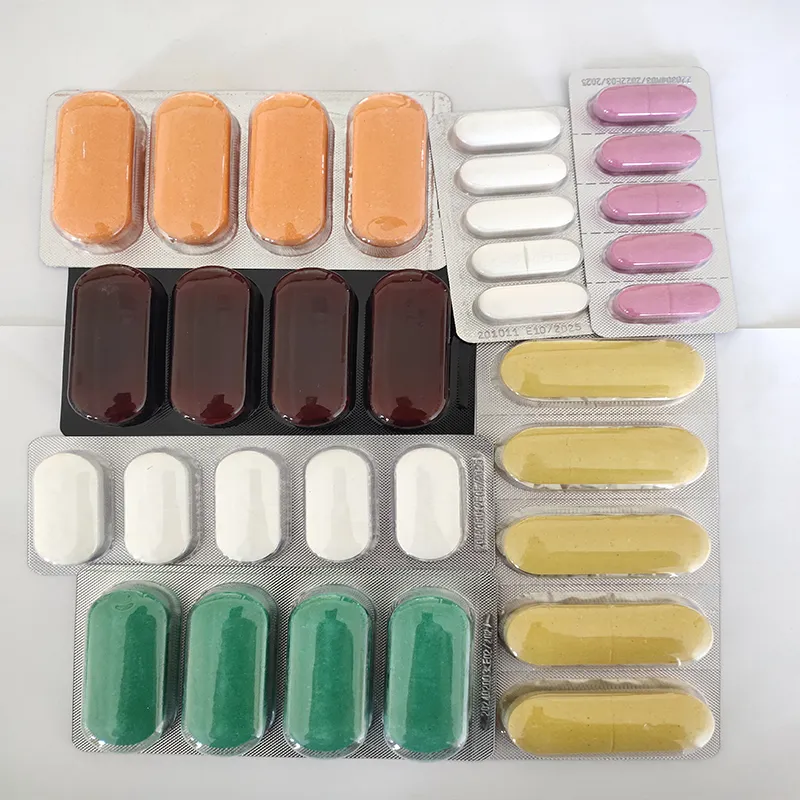
Albendazole tablets for dogs (albendazol tabletas para perros dosis) represent a crucial anthelmintic medication within veterinary medicine, utilized for the treatment of a wide spectrum of parasitic infections in canine populations. The product's technical position falls within the broader pharmaceutical supply chain targeting animal health, specifically addressing both gastrointestinal nematodes and tissue parasites. Albendazole operates as a benzimidazole derivative, functioning by selectively inhibiting microtubule polymerization within the parasitic cells, leading to impaired glucose uptake and ultimately, parasite immobilization and death. Core performance metrics include bioavailability, spectrum of efficacy against specific parasites (including Toxocara canis, Ancylostoma caninum, Trichuris vulpis, and various cestodes), and pharmacokinetic properties influencing dosage regimens. A significant industry pain point revolves around the increasing prevalence of anthelmintic resistance, necessitating a nuanced understanding of drug efficacy, dosage optimization, and rotational anthelmintic strategies. Maintaining consistent formulation quality and ensuring accurate dosage delivery are also critical concerns.
Material Science & Manufacturing
The manufacturing of albendazole tablets for dogs begins with the sourcing of high-purity albendazole as the active pharmaceutical ingredient (API). Albendazole itself is a synthetic benzimidazole carbamate, exhibiting a molecular formula of C12H15N3O2S. Raw material characterization, including particle size distribution and polymorphic form, is critical as these properties directly influence dissolution rate and bioavailability. Excipients commonly employed include microcrystalline cellulose (MCC) as a diluent and binder, croscarmellose sodium as a disintegrant, magnesium stearate as a lubricant, and potentially colloidal silicon dioxide as a flow aid. The manufacturing process typically involves wet granulation to enhance flowability and compressibility. Granulation is followed by drying, milling, and blending with lubricants. Tableting is performed using rotary tablet presses under carefully controlled compression forces. Key parameters include tablet hardness, friability (resistance to chipping and abrasion), disintegration time, and drug content uniformity. Quality control measures throughout the process incorporate HPLC analysis for API quantification, particle size analysis, and dissolution testing to ensure compliance with pharmacopoeial standards. Chemical compatibility studies are conducted to confirm the stability of albendazole in the presence of excipients. Degradation pathways, primarily involving oxidation and hydrolysis, are closely monitored. Proper packaging in moisture-resistant materials is vital to maintain product stability throughout its shelf life.

Performance & Engineering
The performance of albendazole tablets is intrinsically linked to its pharmacokinetic profile in dogs. Albendazole exhibits low aqueous solubility, leading to variable absorption. Bioavailability is significantly enhanced when administered with food, as increased lipid content promotes drug solubilization. Following absorption, albendazole undergoes extensive hepatic metabolism, primarily via sulfoxidation, yielding albendazole sulfoxide, which is the primary active metabolite. Albendazole sulfoxide demonstrates higher plasma concentrations and a longer half-life compared to the parent drug. Force analysis considers the mechanical strength of the tablet during handling and administration. Environmental resistance, specifically humidity and temperature, are critical factors influencing drug stability. Compliance requirements adhere to veterinary pharmacopoeial standards (e.g., USP, EP), outlining purity, potency, and dissolution specifications. Functional implementation centers around accurate dosage calculation based on the dog’s weight, ensuring therapeutic efficacy while minimizing the risk of adverse effects. The formulation is engineered to provide a palatable and easily administered dosage form. The design considerations also incorporate minimizing dust generation during manufacturing to prevent operator exposure and maintain process cleanliness. A crucial engineering aspect is ensuring batch-to-batch consistency in drug release profiles.
Technical Specifications
| Parameter | Specification | Test Method | Units |
|---|---|---|---|
| Albendazole Content | 95.0 – 105.0% | HPLC | % w/w |
| Related Substances | ≤ 0.5% (Individual Impurity) | HPLC | % w/w |
| Disintegration Time | ≤ 30 minutes | USP <701> | minutes |
| Tablet Hardness | 4 – 8 kg | Tablet Hardness Tester | kg |
| Friability | ≤ 1.0% | USP <1216> | % |
| Water Content | ≤ 2.0% | Karl Fischer Titration | % w/w |
Failure Mode & Maintenance
Potential failure modes for albendazole tablets include chipping or breakage during handling (due to insufficient hardness), disintegration failure (leading to delayed or incomplete drug release), and degradation of the API during storage (resulting in reduced potency). Fatigue cracking can occur due to repeated mechanical stress during packaging and transportation. Delamination of the tablet layers can occur if binder distribution is uneven during granulation. Oxidation of albendazole can lead to the formation of degradation products, compromising efficacy. Moisture ingress can accelerate hydrolysis and reduce product stability. To mitigate these failures, proper storage conditions (cool, dry place, protected from light) are essential. Regular stability testing (accelerated and long-term) is crucial to monitor product quality throughout its shelf life. Preventative maintenance of tableting equipment (including die cleaning and lubrication) is vital to ensure consistent tablet quality. Packaging should utilize moisture-resistant materials (e.g., blister packs or sealed containers). If tablets exhibit visible signs of damage (e.g., cracks, discoloration), they should not be administered. Quality control procedures should include routine verification of tablet weight, hardness, and disintegration time. A robust change control system should be in place to assess the impact of any formulation or manufacturing process modifications.
Industry FAQ
Q: What is the impact of varying particle size of Albendazole API on tablet dissolution?
A: A smaller particle size of the Albendazole API generally leads to a faster dissolution rate due to the increased surface area exposed to the dissolution medium. However, excessively fine particles can pose processing challenges, such as increased electrostatic charge and poor flowability. Therefore, an optimized particle size distribution is crucial for achieving both good dissolution and efficient manufacturing.
Q: How does the presence of food affect the bioavailability of Albendazole in dogs?
A: Albendazole exhibits poor aqueous solubility and its bioavailability is significantly enhanced when administered with food, particularly those containing fats. The increased lipid content in the gastrointestinal tract promotes the solubilization of Albendazole, facilitating its absorption. Therefore, administering the tablet with a meal is recommended.
Q: What are the common degradation pathways of Albendazole and how can they be prevented?
A: Common degradation pathways include oxidation and hydrolysis. Oxidation can be minimized by packaging the tablets in airtight containers with antioxidants. Hydrolysis is accelerated by moisture; therefore, proper storage in a dry environment and the use of moisture-resistant packaging are essential. Protecting the tablets from light exposure also helps prevent degradation.
Q: What quality control tests are essential for ensuring the consistency of Albendazole tablet production?
A: Essential quality control tests include assay (HPLC for Albendazole content), related substances (HPLC for impurities), disintegration time, tablet hardness, friability, weight variation, and water content. Regular testing according to established specifications ensures batch-to-batch consistency and compliance with pharmacopoeial standards.
Q: How does the type of excipient influence the stability and dissolution profile of the tablets?
A: The choice of excipients significantly impacts tablet stability and dissolution. Microcrystalline cellulose (MCC) provides good compressibility and binding properties. Croscarmellose sodium acts as a disintegrant, promoting rapid tablet breakup. Magnesium stearate, while essential for lubrication, can retard dissolution if used in excessive amounts. The compatibility of excipients with Albendazole is crucial to prevent chemical degradation.
Conclusion
Albendazole tablets for dogs (albendazol tabletas para perros dosis) represent a cornerstone in veterinary parasiticidal therapy. The effectiveness of this medication is critically dependent upon meticulous control over raw material quality, manufacturing processes, and formulation parameters. Understanding the material science underpinning albendazole’s properties – its solubility, polymorphic forms, and susceptibility to degradation – is paramount to ensuring product stability and bioavailability. Optimizing the manufacturing process, including granulation techniques, compression forces, and excipient selection, directly impacts tablet hardness, disintegration time, and drug content uniformity.
Looking ahead, advancements in drug delivery systems, such as nanoparticle formulations or solid dispersions, may offer avenues to improve albendazole’s bioavailability and address the challenges of anthelmintic resistance. Continuous monitoring of drug resistance patterns and adherence to stringent quality control standards are essential to maintain the efficacy of this vital veterinary pharmaceutical. Further research into novel excipients and optimized manufacturing techniques will continue to refine the production of high-quality albendazole tablets, safeguarding canine health.
Latest news
Copyright © 2026
Dingzhou Kangquan Pharmaceutical Co., Ltd. All Rights Reserved. Sitemap | Privacy
Policy


