
2695018275@qq.com
+86
13780513619
- Afrikaans
- Albanian
- Amharic
- Arabic
- Armenian
- Azerbaijani
- Basque
- Belarusian
- Bengali
- Bosnian
- Bulgarian
- Catalan
- Cebuano
- Corsican
- Croatian
- Czech
- Danish
- Dutch
- English
- Esperanto
- Estonian
- Finnish
- French
- Frisian
- Galician
- Georgian
- German
- Greek
- Gujarati
- Haitian Creole
- hausa
- hawaiian
- Hebrew
- Hindi
- Miao
- Hungarian
- Icelandic
- igbo
- Indonesian
- irish
- Italian
- Japanese
- Javanese
- Kannada
- kazakh
- Khmer
- Rwandese
- Korean
- Kurdish
- Kyrgyz
- Lao
- Latin
- Latvian
- Lithuanian
- Luxembourgish
- Macedonian
- Malgashi
- Malay
- Malayalam
- Maltese
- Maori
- Marathi
- Mongolian
- Myanmar
- Nepali
- Norwegian
- Norwegian
- Occitan
- Pashto
- Persian
- Polish
- Portuguese
- Punjabi
- Romanian
- Russian
- Samoan
- Scottish Gaelic
- Serbian
- Sesotho
- Shona
- Sindhi
- Sinhala
- Slovak
- Slovenian
- Somali
- Spanish
- Sundanese
- Swahili
- Swedish
- Tagalog
- Tajik
- Tamil
- Tatar
- Telugu
- Thai
- Turkish
- Turkmen
- Ukrainian
- Urdu
- Uighur
- Uzbek
- Vietnamese
- Welsh
- Bantu
- Yiddish
- Yoruba
- Zulu
Apr . 01, 2024 17:55 Back to list
albendazole capsules Bioavailability Analysis
Introduction
Albendazole capsules represent a critical anthelmintic medication widely employed in both human and veterinary medicine for the treatment of a broad spectrum of parasitic worm infections. Positioned within the pharmaceutical manufacturing chain as a finished dosage form, these capsules are the culmination of complex organic synthesis and precise formulation. The core performance characteristics center around bioavailability – the extent and rate at which the active pharmaceutical ingredient (API), albendazole, is absorbed into the systemic circulation – and subsequent efficacy against target parasitic organisms. This guide will provide a detailed technical overview of albendazole capsules, encompassing material science, manufacturing processes, performance parameters, potential failure modes, and relevant industry standards. A key industry pain point lies in maintaining consistent bioavailability across manufacturing batches, given albendazole’s inherently low water solubility, and ensuring adherence to increasingly stringent regulatory requirements regarding impurity profiles and dissolution testing.
Material Science & Manufacturing
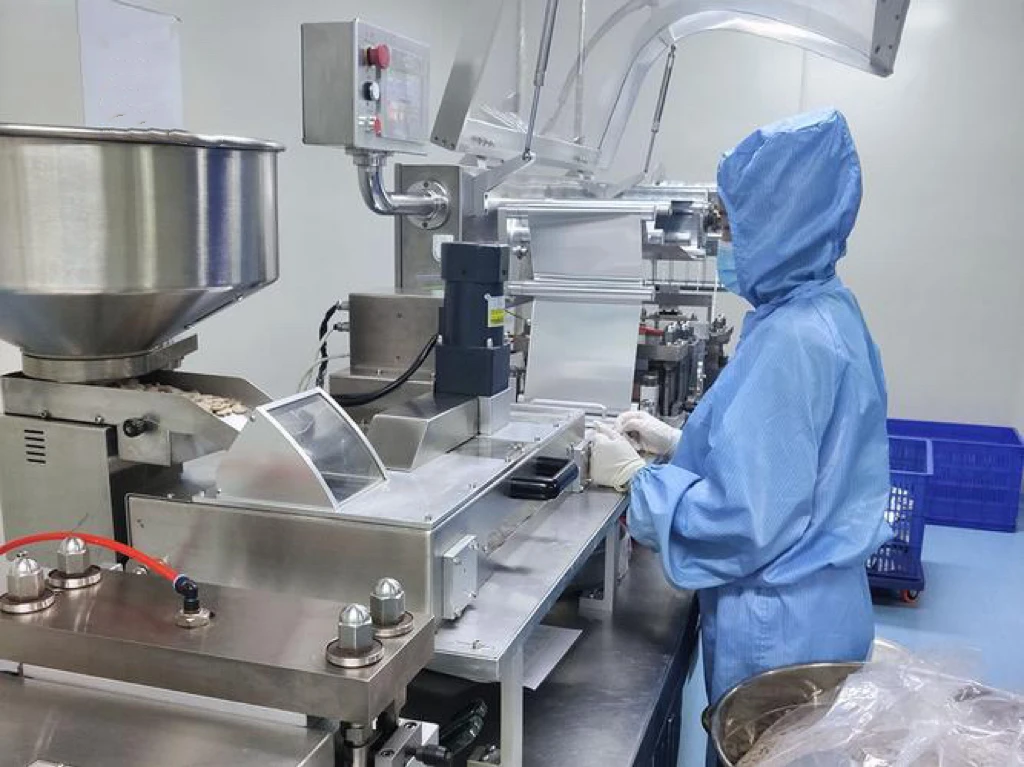
Albendazole (C12H15N3O2S) itself is a benzimidazole derivative, a crystalline solid with a molecular weight of 265.33 g/mol. Its low water solubility (approximately 0.03 mg/mL at 25°C) presents significant formulation challenges. Raw material quality is paramount; the API must meet stringent pharmacopeial standards regarding purity, polymorphic form, and particle size distribution. Capsule shell materials are typically composed of gelatin (sourced from animal collagen) or hydroxypropyl methylcellulose (HPMC, a vegetarian alternative). Gelatin provides excellent film-forming properties and dissolution characteristics but requires careful control of bloom strength and viscosity. HPMC offers advantages in terms of consistent performance and reduced risk of BSE transmission. Manufacturing involves several key steps: 1) Micronization of the albendazole API to increase surface area and improve dissolution rate. This is typically achieved via jet milling or microfluidization. 2) Blending the micronized API with excipients – including diluents (e.g., microcrystalline cellulose, lactose), disintegrants (e.g., croscarmellose sodium, sodium starch glycolate), and lubricants (e.g., magnesium stearate). Homogeneous blending is critical to ensure uniform drug content. 3) Capsule filling, performed using automated capsule filling machines. Precise dosing and consistent fill weight are essential. 4) Quality control testing, including API identification, assay, dissolution testing, uniformity of dosage units, and impurity profiling, performed according to established pharmacopeial methods (USP, EP, JP). Key parameter control during manufacturing includes maintaining humidity levels to prevent gelatin shell embrittlement, controlling blending speeds to avoid segregation, and calibrating capsule filling equipment to ensure accurate dosing.
Performance & Engineering
The primary performance metric for albendazole capsules is in vivo bioavailability, directly correlating to therapeutic efficacy. In vitro dissolution testing serves as a surrogate marker for bioavailability and is a critical component of quality control. Albendazole exhibits pH-dependent solubility; dissolution is enhanced at lower pH values (e.g., gastric fluid). Engineering considerations focus on optimizing capsule formulation to overcome its limited aqueous solubility. Strategies include: 1) Utilizing solid dispersions – dispersing albendazole within a hydrophilic polymer matrix (e.g., polyethylene glycol, polyvinylpyrrolidone) to enhance its dissolution rate. 2) Employing micronization or nanotechnology to reduce particle size and increase surface area. 3) Incorporating surfactants to improve wetting and solubilization. 4) Investigating amorphous solid dispersions to enhance solubility beyond that of crystalline forms. Environmental resistance is also a concern. Capsules must maintain their integrity under varying temperature and humidity conditions during storage and transport. Packaging materials (e.g., blister packs, HDPE bottles) must provide adequate protection against moisture ingress and light exposure. Compliance requirements include adherence to Good Manufacturing Practices (GMP) regulations and pharmacopeial monographs, ensuring the consistent production of high-quality, safe, and effective albendazole capsules. Stability studies, conducted under accelerated and long-term storage conditions, are essential to determine the shelf life and appropriate storage conditions.
Technical Specifications
| Parameter | Specification | Test Method | Acceptance Criteria |
|---|---|---|---|
| Albendazole Assay (API content) | 98.0% - 102.0% | HPLC-UV | Complies |
| Dissolution (at 60 minutes) | ≥ 75% | USP Apparatus II (Paddle) | Complies |
| Water Content (API) | ≤ 0.5% | Karl Fischer Titration | Complies |
| Related Substances (Impurities) | Individual Impurity ≤ 0.1%, Total Impurities ≤ 0.5% | HPLC-UV | Complies |
| Capsule Fill Weight Variation | Within ± 5% of nominal fill weight | Automated Weighing | Complies |
| Uniformity of Dosage Units | Acceptance Value (AV) within specified limits | USP <905> | Complies |
Failure Mode & Maintenance
Several failure modes can compromise the quality and efficacy of albendazole capsules. Physical Instability: Capsule shell cracking or embrittlement due to excessive dryness or humidity exposure. Chemical Degradation: Albendazole degradation via oxidation or hydrolysis, leading to decreased API content and formation of degradation products. This is exacerbated by exposure to light, heat, and moisture. Dissolution Failure: Poor drug release due to inadequate micronization, excipient incompatibility, or capsule shell coating issues. Contamination: Microbial contamination during manufacturing or packaging. Dosage Uniformity Issues: Inconsistent fill weight or drug content due to equipment malfunction or improper formulation. Maintenance involves strict adherence to GMP guidelines, regular equipment calibration and validation, environmental control (temperature, humidity, light), and robust quality control testing. Storage recommendations include keeping capsules in a tightly closed container, protected from light and moisture, at room temperature (15-30°C). Periodic stability testing should be conducted to monitor product quality and ensure compliance with regulatory requirements. For cracked or damaged capsules, quarantine and investigation are necessary. Root cause analysis should identify the source of the failure and implement corrective and preventative actions (CAPA).
Industry FAQ
Q: What are the primary challenges in formulating albendazole due to its biopharmaceutical properties?
A: The major challenge is its extremely low aqueous solubility, leading to poor bioavailability. This necessitates employing formulation strategies like micronization, solid dispersions, or nanotechnology to enhance dissolution and absorption. Furthermore, its pH-dependent solubility requires careful consideration in the formulation design to ensure adequate drug release throughout the gastrointestinal tract.
Q: How does the choice of capsule shell material (gelatin vs. HPMC) impact product stability and performance?
A: Gelatin capsules offer excellent dissolution but are susceptible to moisture-induced embrittlement. HPMC capsules are more stable under varying humidity conditions and offer a vegetarian alternative, but may exhibit slightly slower dissolution rates. The optimal choice depends on the specific formulation and desired product characteristics.
Q: What quality control tests are most critical for ensuring the consistent bioavailability of albendazole capsules?
A: Dissolution testing is paramount, serving as a surrogate for in vivo bioavailability. Additionally, API assay, uniformity of dosage units, and impurity profiling are crucial to ensure consistent drug content and quality.
Q: What are the key considerations for packaging to protect albendazole capsules from degradation?
A: Packaging materials should provide a barrier against moisture, light, and oxygen. Blister packs are generally preferred over HDPE bottles due to their superior moisture protection. Desiccants may be included within the packaging to further minimize moisture exposure.
Q: What are the regulatory requirements for impurity profiling in albendazole API and finished dosage forms?
A: Regulatory agencies (e.g., FDA, EMA) require rigorous impurity profiling, adhering to ICH guidelines. Impurities must be identified, characterized, and quantified. Limits are established for individual and total impurities to ensure patient safety.
Conclusion
Albendazole capsules, while a highly effective anthelmintic, present significant formulation and manufacturing challenges due to the inherent physicochemical properties of the API. Maintaining consistent bioavailability requires meticulous control over particle size, formulation excipients, and manufacturing processes. A thorough understanding of potential failure modes and implementation of robust quality control measures are essential to ensure product stability, efficacy, and patient safety.
Future developments may focus on novel drug delivery systems, such as nanoformulations or lipid-based formulations, to further enhance albendazole solubility and bioavailability. Continuous improvement in analytical techniques for impurity profiling and formulation optimization will also be critical to meet evolving regulatory expectations and enhance the therapeutic benefits of this essential medication.
Latest news
Copyright © 2026
Dingzhou Kangquan Pharmaceutical Co., Ltd. All Rights Reserved. Sitemap | Privacy
Policy


