
2695018275@qq.com
+86
13780513619
- Afrikaans
- Albanian
- Amharic
- Arabic
- Armenian
- Azerbaijani
- Basque
- Belarusian
- Bengali
- Bosnian
- Bulgarian
- Catalan
- Cebuano
- Corsican
- Croatian
- Czech
- Danish
- Dutch
- English
- Esperanto
- Estonian
- Finnish
- French
- Frisian
- Galician
- Georgian
- German
- Greek
- Gujarati
- Haitian Creole
- hausa
- hawaiian
- Hebrew
- Hindi
- Miao
- Hungarian
- Icelandic
- igbo
- Indonesian
- irish
- Italian
- Japanese
- Javanese
- Kannada
- kazakh
- Khmer
- Rwandese
- Korean
- Kurdish
- Kyrgyz
- Lao
- Latin
- Latvian
- Lithuanian
- Luxembourgish
- Macedonian
- Malgashi
- Malay
- Malayalam
- Maltese
- Maori
- Marathi
- Mongolian
- Myanmar
- Nepali
- Norwegian
- Norwegian
- Occitan
- Pashto
- Persian
- Polish
- Portuguese
- Punjabi
- Romanian
- Russian
- Samoan
- Scottish Gaelic
- Serbian
- Sesotho
- Shona
- Sindhi
- Sinhala
- Slovak
- Slovenian
- Somali
- Spanish
- Sundanese
- Swahili
- Swedish
- Tagalog
- Tajik
- Tamil
- Tatar
- Telugu
- Thai
- Turkish
- Turkmen
- Ukrainian
- Urdu
- Uighur
- Uzbek
- Vietnamese
- Welsh
- Bantu
- Yiddish
- Yoruba
- Zulu
Apr . 01, 2024 17:55 Back to list
Albendazole one tablet price Pharmaceutical Formulation Analysis
Introduction
Albendazole, a broad-spectrum anthelmintic medication, is critically utilized in human and veterinary medicine for the treatment of parasitic worm infections. While often encountered as a single-dose tablet, the "one tablet price" represents a critical cost consideration within global healthcare supply chains, especially in endemic regions. This technical guide will provide a deep dive into the pharmaceutical formulation, manufacturing process, quality control parameters, performance characteristics, potential failure modes, and relevant industry standards governing albendazole tablets. Its position in the pharmaceutical supply chain is crucial, impacting accessibility and affordability of essential medicines. Core performance metrics center around bioavailability, dissolution rate, and parasiticidal efficacy, alongside maintaining stringent purity and stability profiles. The economic factors driving the “one tablet price” are also interwoven with large-scale manufacturing efficiencies, raw material sourcing, and logistical complexities.
Material Science & Manufacturing
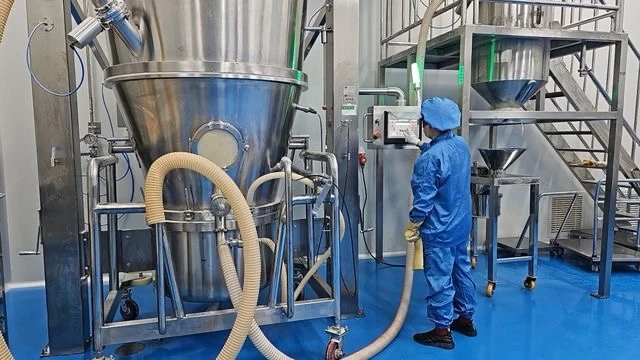
Albendazole (C12H15N3O2S) itself is a benzimidazole derivative, exhibiting extremely low aqueous solubility, a key factor impacting its bioavailability. Raw material sourcing typically involves complex organic synthesis routes. The manufacturing process of a standard albendazole tablet involves several crucial stages: micronization (reducing particle size to enhance dissolution), blending with excipients (microcrystalline cellulose, lactose monohydrate, sodium starch glycolate, magnesium stearate, colloidal silicon dioxide, and povidone K30 are common), granulation (wet or dry granulation to improve flowability and compressibility), tablet compression (using rotary tablet presses with precise force control), and finally, coating (film coating for taste masking, protection, and controlled release). Critical process parameters (CPPs) during compression include tablet hardness, friability, disintegration time, and weight variation. The coating material, often a hypromellose-based formulation, must demonstrate optimal adhesion, permeability, and resistance to degradation. Raw material purity is assessed through High-Performance Liquid Chromatography (HPLC) and spectroscopic techniques. Excipient compatibility studies are vital to prevent chemical interactions that could compromise drug stability. Control of humidity and temperature during granulation and coating are paramount to maintaining product quality. Polymorphism of albendazole is a key consideration; different crystalline forms exhibit varying dissolution rates and bioavailability.

Performance & Engineering
The primary engineering challenge with albendazole lies in overcoming its poor aqueous solubility to achieve adequate bioavailability. Particle size reduction via micronization is crucial, increasing the surface area available for dissolution. Dissolution testing (using USP apparatus 1 or 2) is a fundamental performance indicator. Formulations employing solid dispersions or complexation with cyclodextrins are employed to enhance solubility. Bioavailability is assessed through pharmacokinetic studies, measuring plasma concentrations of albendazole and its metabolites (albendazole sulfoxide and albendazole sulfone). The drug’s efficacy relies on inhibiting microtubule polymerization in parasitic worms, disrupting their cellular transport and ultimately leading to their death. Resistance to albendazole is a growing concern, often linked to β-tubulin gene mutations in parasites. Environmental resistance considerations include stability under varying temperature and humidity conditions. Packaging materials (typically blister packs using aluminum foil and PVC) must provide adequate barrier protection against moisture and light. Compliance requirements necessitate adherence to Good Manufacturing Practices (GMP) and pharmacopoeial standards (USP, EP, BP). Force analysis during tablet compression is optimized to achieve the desired hardness and disintegration characteristics without causing capping or lamination.
Technical Specifications
| Parameter | Specification | Test Method | Acceptance Criteria |
|---|---|---|---|
| Assay (Albendazole Content) | 98.0% - 102.0% | HPLC | Complies |
| Dissolution (USP Apparatus 2, 60 minutes) | ≥ 75% | HPLC | Complies |
| Water Content | ≤ 2.0% | Karl Fischer Titration | Complies |
| Hardness | 40-80 N | Tablet Hardness Tester | Complies |
| Friability | ≤ 1.0% | Friabilator | Complies |
| Weight Variation | ± 5.0% | Analytical Balance | Complies |
Failure Mode & Maintenance
Potential failure modes for albendazole tablets include: tablet chipping or capping during handling (due to insufficient binder or improper compression force), disintegration failure (due to excessive hardness or insufficient disintegrant), dissolution failure (due to polymorphism changes or poor particle size), and degradation during storage (due to moisture ingress or exposure to light). Chemical degradation products can reduce potency and potentially introduce toxicity. Blister pack integrity is critical; compromised packaging can lead to moisture absorption and drug instability. Maintenance strategies involve strict adherence to GMP guidelines, regular monitoring of environmental conditions (temperature, humidity), and proper storage procedures. Stability studies (accelerated and long-term) are essential to determine shelf life and recommended storage conditions. Retesting of expired batches is not recommended. Corrective and Preventative Actions (CAPA) should be implemented to address any identified quality deviations. Proper equipment calibration and validation are also crucial for maintaining consistent product quality. Analysis of failed batches utilizing Failure Mode and Effects Analysis (FMEA) helps pinpoint root causes and prevent recurrence.
Industry FAQ
Q: What impact does the micronization process have on the final product cost and efficacy?
A: Micronization, while crucial for improving bioavailability, adds to the manufacturing cost due to specialized equipment and energy consumption. However, the increased efficacy resulting from improved dissolution often outweighs the cost increase, particularly in regions where parasitic infections are prevalent and retreatment rates are high.
Q: How are polymorphic changes of albendazole controlled during manufacturing?
A: Polymorphic control is achieved through careful control of crystallization parameters during synthesis and formulation. Process parameters such as temperature, solvent composition, and cooling rate are rigorously monitored and controlled. X-ray powder diffraction (XRD) is used to confirm the desired crystalline form.
Q: What role do excipients play in ensuring tablet stability and performance?
A: Excipients are not merely fillers; they play a vital role in tablet performance. Microcrystalline cellulose provides compressibility, sodium starch glycolate facilitates disintegration, magnesium stearate acts as a lubricant, and colloidal silicon dioxide enhances flowability. Careful selection and compatibility studies are crucial to prevent interactions that could compromise stability or bioavailability.
Q: How is the "one tablet price" affected by fluctuations in raw material costs?
A: Fluctuations in the cost of key raw materials (albendazole API, excipients, packaging materials) directly impact the “one tablet price.” Manufacturers often employ strategies such as long-term supply contracts and sourcing from multiple suppliers to mitigate price volatility. Generic competition also plays a significant role in price stabilization.
Q: What quality control tests are essential for ensuring the authenticity and preventing counterfeiting of albendazole tablets?
A: Essential quality control tests include HPLC assay to verify albendazole content, dissolution testing to confirm bioavailability, and visual inspection for physical defects. Implementing robust serialization and track-and-trace systems can help prevent counterfeiting and ensure product authenticity.
Conclusion
Albendazole tablet manufacturing is a complex process requiring stringent control over material science, engineering parameters, and quality assurance protocols. The “one tablet price” is a function of these factors, alongside raw material sourcing, production scale, and market dynamics. Maintaining consistent quality and bioavailability is paramount to ensuring therapeutic efficacy and combating the global burden of parasitic infections.
Future advancements in formulation technology, such as nanocrystals and lipid-based drug delivery systems, hold the potential to further enhance the bioavailability of albendazole and reduce dosage requirements. Continuous monitoring of parasitic resistance patterns and adaptation of treatment strategies are also crucial for preserving the effectiveness of this essential medicine. Collaboration between pharmaceutical manufacturers, regulatory agencies, and healthcare providers is vital for ensuring the sustainable accessibility of affordable and high-quality albendazole tablets.
Latest news
Copyright © 2026
Dingzhou Kangquan Pharmaceutical Co., Ltd. All Rights Reserved. Sitemap | Privacy
Policy


