
2695018275@qq.com
+86
13780513619
- Afrikaans
- Albanian
- Amharic
- Arabic
- Armenian
- Azerbaijani
- Basque
- Belarusian
- Bengali
- Bosnian
- Bulgarian
- Catalan
- Cebuano
- Corsican
- Croatian
- Czech
- Danish
- Dutch
- English
- Esperanto
- Estonian
- Finnish
- French
- Frisian
- Galician
- Georgian
- German
- Greek
- Gujarati
- Haitian Creole
- hausa
- hawaiian
- Hebrew
- Hindi
- Miao
- Hungarian
- Icelandic
- igbo
- Indonesian
- irish
- Italian
- Japanese
- Javanese
- Kannada
- kazakh
- Khmer
- Rwandese
- Korean
- Kurdish
- Kyrgyz
- Lao
- Latin
- Latvian
- Lithuanian
- Luxembourgish
- Macedonian
- Malgashi
- Malay
- Malayalam
- Maltese
- Maori
- Marathi
- Mongolian
- Myanmar
- Nepali
- Norwegian
- Norwegian
- Occitan
- Pashto
- Persian
- Polish
- Portuguese
- Punjabi
- Romanian
- Russian
- Samoan
- Scottish Gaelic
- Serbian
- Sesotho
- Shona
- Sindhi
- Sinhala
- Slovak
- Slovenian
- Somali
- Spanish
- Sundanese
- Swahili
- Swedish
- Tagalog
- Tajik
- Tamil
- Tatar
- Telugu
- Thai
- Turkish
- Turkmen
- Ukrainian
- Urdu
- Uighur
- Uzbek
- Vietnamese
- Welsh
- Bantu
- Yiddish
- Yoruba
- Zulu
Apr . 01, 2024 17:55 Back to list
Albendazole Tablet cost of goods analysis
Introduction
Albendazole is a broad-spectrum anthelmintic medication widely utilized in both human and veterinary medicine for the treatment of parasitic worm infections. This technical guide focuses on the multifaceted factors influencing the cost of albendazole tablets, extending beyond simple raw material pricing to encompass manufacturing complexities, quality control standards, regulatory compliance, supply chain dynamics, and formulation-specific considerations. Understanding these components is critical for pharmaceutical procurement managers, manufacturers, and healthcare professionals aiming to optimize cost-effectiveness while maintaining therapeutic efficacy. The global market for anthelmintics is substantial, driven by prevalent parasitic infections, particularly in developing nations. Cost considerations directly impact accessibility to treatment and public health outcomes. This document provides a detailed technical overview of the elements contributing to the ultimate cost of the final product, with a focus on pharmaceutical grade albendazole tablets.
Material Science & Manufacturing
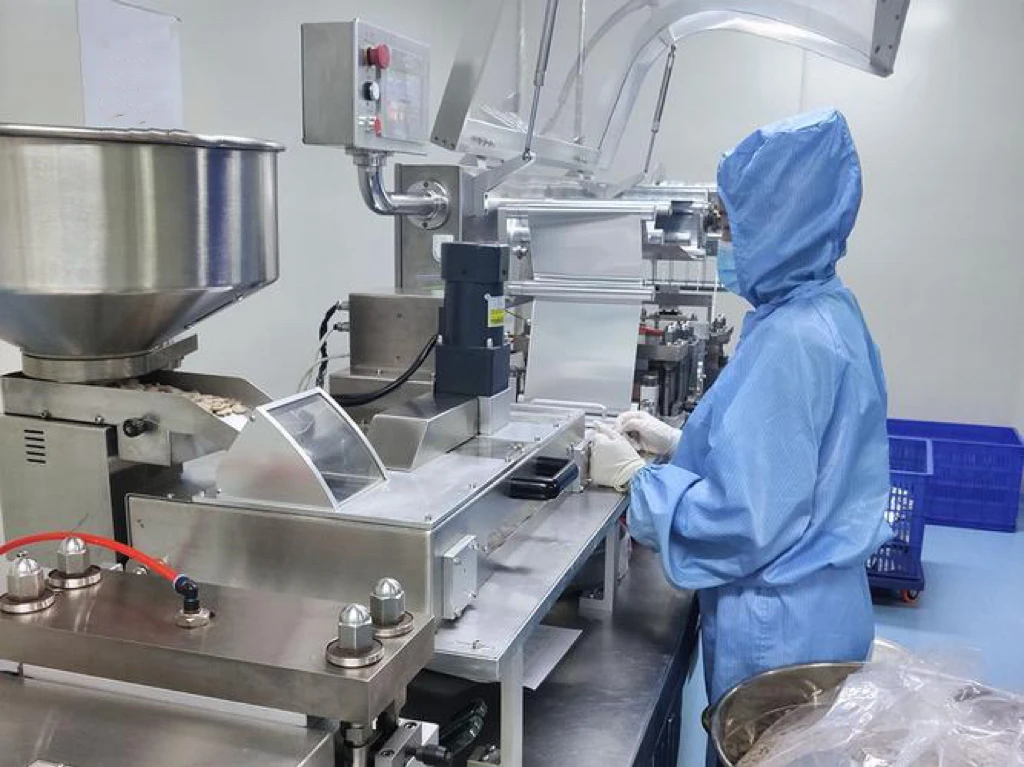
The primary active pharmaceutical ingredient (API) is albendazole (C₁₂H₁₅N₃O₂S), a benzimidazole derivative. Its synthesis typically involves multiple steps starting from o-phenylenediamine and ethyl chlorothioacetate, followed by cyclization and subsequent functionalization. The purity of the API is paramount, demanding stringent quality control measures throughout the synthesis process. Impurities can significantly impact efficacy and safety, consequently increasing manufacturing costs. Formulation involves combining the API with excipients such as microcrystalline cellulose (MCC), sodium starch glycolate, povidone (PVP), magnesium stearate, and colloidal silicon dioxide. MCC provides bulk and compressibility; sodium starch glycolate acts as a disintegrant to facilitate tablet breakdown; PVP serves as a binder; magnesium stearate is a lubricant to prevent sticking to manufacturing equipment; and colloidal silicon dioxide enhances flowability. Manufacturing processes typically involve wet granulation, drying, blending, tableting (compression), and coating. Critical process parameters (CPPs) during granulation – mixing time, binder solution concentration, and drying temperature – directly affect granule size distribution and tablet hardness. Tablet compression requires precise control of compression force, dwell time, and tablet weight to ensure uniformity and consistent drug content. Coating is often applied to improve stability, mask taste, and control drug release. The type of coating (e.g., film coating with polymers like hydroxypropyl methylcellulose – HPMC) impacts both cost and performance. Quality control testing at each stage – API purity analysis (HPLC), excipient characterization, in-process controls (granule size, tablet hardness, weight variation), and finished product testing (dissolution, assay, impurity profiling) – adds significantly to the overall manufacturing cost. Variations in raw material sourcing and synthetic routes directly affect the cost of the API, creating fluctuations in overall production expenditure.

Performance & Engineering
The therapeutic performance of albendazole tablets is critically dependent on bioavailability, which is influenced by its low aqueous solubility. Formulation strategies, such as micronization of the API and the use of solubilizers (e.g., surfactants), aim to enhance dissolution and absorption in the gastrointestinal tract. Engineering considerations center on achieving a robust and scalable manufacturing process that consistently delivers tablets meeting pre-defined quality attributes. The tablet's mechanical strength (hardness) must withstand handling and transportation without fracturing. Dissolution testing, conducted according to pharmacopoeial standards (USP, EP, JP), assesses the rate and extent of drug release, a key indicator of bioequivalence. Stability studies, conducted under accelerated and long-term storage conditions (temperature, humidity), determine the shelf life of the product and identify potential degradation pathways. Degradation products must be identified and quantified to ensure they remain within acceptable limits. Environmental resistance considerations include packaging material selection to protect the tablets from moisture, light, and oxygen. Compliance requirements stipulated by regulatory agencies (FDA, EMA) necessitate comprehensive documentation, validation of analytical methods, and adherence to Good Manufacturing Practices (GMP). Formulation optimization must consider the interplay between particle size, excipient ratios, compression force, and coating characteristics to achieve optimal drug release and bioavailability, influencing the effectiveness of treatment and ultimately affecting the perceived value and acceptable cost of the product.
Technical Specifications
| Parameter | Specification (Pharmaceutical Grade) | Testing Method | Impact on Cost |
|---|---|---|---|
| Albendazole Assay (API Purity) | ≥ 99.0% | HPLC-UV | Higher purity requires more refined synthesis and purification steps, increasing API cost. |
| Tablet Hardness | 40-80 N | Tablet Hardness Tester | Achieving consistent hardness requires precise compression force control and suitable excipients; deviation increases rejection rates. |
| Dissolution Rate (Q60) | ≥ 75% within 60 minutes | USP Apparatus II | Optimization of formulation and manufacturing process to meet dissolution criteria can be expensive. |
| Water Content (Tablet) | ≤ 2.0% | Karl Fischer Titration | Stringent water content control requires controlled drying processes and packaging. |
| Impurities (Total) | ≤ 0.5% | HPLC-MS | Lower impurity limits necessitate more rigorous purification and analytical testing. |
| Tablet Weight Variation | ± 5% | Analytical Balance | Consistent tablet weight requires precise dosing and blending procedures. |
Failure Mode & Maintenance
Albendazole tablets are susceptible to several failure modes. Physical degradation includes chipping, cracking, and friability during handling and transportation, often linked to insufficient tablet hardness or improper packaging. Chemical degradation encompasses oxidation, hydrolysis, and photolysis, accelerated by exposure to moisture, oxygen, and light. This can lead to a reduction in API content and the formation of potentially toxic degradation products. Microbial contamination, although less common in solid dosage forms, can occur if packaging is compromised or manufacturing environments are not adequately controlled. Maintaining product integrity requires robust packaging (blister packs or tightly sealed containers with desiccant), storage under controlled temperature and humidity, and adherence to strict GMP guidelines during manufacturing. Preventive maintenance of manufacturing equipment (granulators, tablet presses, coating machines) is crucial to ensure consistent performance and minimize defects. Regular calibration of analytical instruments (HPLC, dissolution testers) is essential for accurate quality control testing. Stability monitoring programs, involving periodic testing of retained samples, help identify potential degradation trends and enable proactive interventions to extend shelf life. Effective change control procedures are necessary to manage any modifications to the manufacturing process or formulation, ensuring that product quality is not compromised.
Industry FAQ
Q: What is the primary driver of cost variability in albendazole API production?
A: The cost of raw materials, specifically o-phenylenediamine and ethyl chlorothioacetate, significantly impacts API production costs. Fluctuations in the availability and pricing of these precursors, coupled with the complexity of the multi-step synthesis and purification process, contribute to cost variability. Furthermore, adherence to stringent purity standards drives up production expenditure.
Q: How does formulation choice impact the overall cost of the final tablet product?
A: Formulation significantly affects cost. Utilizing excipients that enhance bioavailability (e.g., solubilizers) can increase cost, but may reduce the required API dosage, potentially offsetting the expense. The coating process, particularly the type of polymer used, also adds to the overall cost. Furthermore, complex formulations require more extensive stability testing and quality control procedures.
Q: What role do regulatory compliance requirements play in the cost of albendazole tablets?
A: Meeting stringent regulatory requirements (GMP, FDA, EMA) demands substantial investment in quality control infrastructure, documentation, validation studies, and personnel training. These compliance costs are passed on to the final product price. Maintaining compliance is not optional, as it is essential for market access.
Q: How can pharmaceutical companies mitigate the cost of albendazole tablet production without compromising quality?
A: Strategies include optimizing the synthesis route of the API to improve yield and reduce waste, negotiating favorable pricing with excipient suppliers, streamlining the manufacturing process to enhance efficiency, and implementing robust quality control systems to minimize rejection rates. Process Analytical Technology (PAT) can aid in real-time monitoring and control.
Q: What is the impact of packaging materials on the overall cost, and what considerations are important?
A: Packaging materials, particularly blister packs with aluminum foil and PVC, contribute significantly to the cost. Choosing packaging materials that provide adequate protection against moisture, light, and oxygen is crucial for maintaining product stability and shelf life. However, costs can be optimized through careful material selection and efficient packaging design, while still adhering to regulatory requirements.
Conclusion
The cost of albendazole tablets is a complex interplay of factors spanning raw material sourcing, intricate manufacturing processes, stringent quality control measures, and rigorous regulatory compliance. Optimizing this cost requires a holistic approach encompassing process optimization, efficient supply chain management, and a deep understanding of the critical process parameters affecting both product quality and manufacturing efficiency. Maintaining therapeutic efficacy and patient safety remain paramount, demanding unwavering adherence to established pharmaceutical standards.
Future trends may involve the exploration of continuous manufacturing processes to reduce costs and improve scalability, as well as the development of novel formulations employing advanced drug delivery systems to enhance bioavailability and reduce API dosage. Further advancements in analytical techniques and real-time process monitoring will also contribute to improved quality control and cost reduction, ultimately increasing access to this essential medication for populations in need.
Latest news
Copyright © 2026
Dingzhou Kangquan Pharmaceutical Co., Ltd. All Rights Reserved. Sitemap | Privacy
Policy


