
2695018275@qq.com
+86
13780513619
- Afrikaans
- Albanian
- Amharic
- Arabic
- Armenian
- Azerbaijani
- Basque
- Belarusian
- Bengali
- Bosnian
- Bulgarian
- Catalan
- Cebuano
- Corsican
- Croatian
- Czech
- Danish
- Dutch
- English
- Esperanto
- Estonian
- Finnish
- French
- Frisian
- Galician
- Georgian
- German
- Greek
- Gujarati
- Haitian Creole
- hausa
- hawaiian
- Hebrew
- Hindi
- Miao
- Hungarian
- Icelandic
- igbo
- Indonesian
- irish
- Italian
- Japanese
- Javanese
- Kannada
- kazakh
- Khmer
- Rwandese
- Korean
- Kurdish
- Kyrgyz
- Lao
- Latin
- Latvian
- Lithuanian
- Luxembourgish
- Macedonian
- Malgashi
- Malay
- Malayalam
- Maltese
- Maori
- Marathi
- Mongolian
- Myanmar
- Nepali
- Norwegian
- Norwegian
- Occitan
- Pashto
- Persian
- Polish
- Portuguese
- Punjabi
- Romanian
- Russian
- Samoan
- Scottish Gaelic
- Serbian
- Sesotho
- Shona
- Sindhi
- Sinhala
- Slovak
- Slovenian
- Somali
- Spanish
- Sundanese
- Swahili
- Swedish
- Tagalog
- Tajik
- Tamil
- Tatar
- Telugu
- Thai
- Turkish
- Turkmen
- Ukrainian
- Urdu
- Uighur
- Uzbek
- Vietnamese
- Welsh
- Bantu
- Yiddish
- Yoruba
- Zulu
Apr . 01, 2024 17:55 Back to list
Albendazole Tablet Price Manufacturing Analysis
Introduction
Albendazole tablets are anthelmintic medications utilized in both human and veterinary medicine to treat a broad spectrum of parasitic worm infections. The ‘price’ of albendazole tablets is a critical consideration for healthcare providers, procurement specialists, and patients, particularly within public health programs focused on helminth control in developing nations. This technical guide provides an in-depth analysis of albendazole tablet manufacturing, encompassing material science, formulation engineering, quality control, degradation pathways, and supply chain dynamics influencing cost. Understanding these factors is crucial for ensuring access to effective and affordable medication. The industry context places albendazole within a fiercely competitive generic pharmaceutical landscape, demanding rigorous process optimization and adherence to stringent regulatory standards (USP, BP, EP) to maintain profitability and efficacy. This analysis will address the key drivers behind albendazole tablet price fluctuations and offer insights into maintaining cost-effectiveness without compromising therapeutic quality.
Material Science & Manufacturing
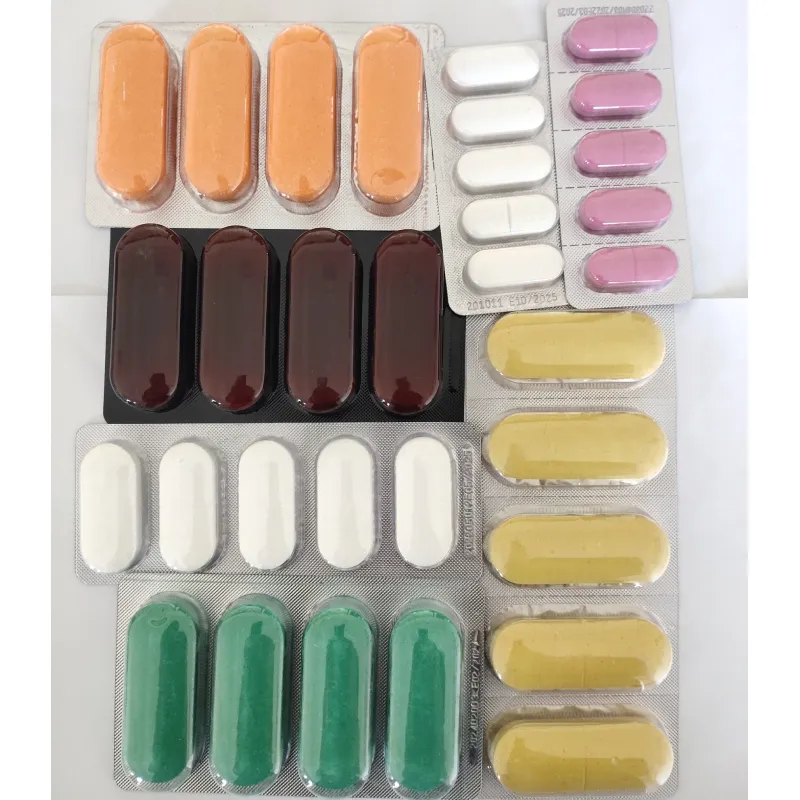
Albendazole (C12H15N3O2S) itself is a benzimidazole derivative, exhibiting very low aqueous solubility – a key challenge in formulation. Raw material sourcing primarily involves complex organic synthesis, with key precursors including o-phenylenediamine and ethyl chlorothioformate. The polymorphic form of albendazole impacts dissolution rates and bioavailability; therefore, meticulous control over crystallization processes during API (Active Pharmaceutical Ingredient) manufacture is essential. Tablet manufacturing typically employs direct compression, wet granulation, or dry granulation techniques. Direct compression, while cost-effective, requires excipients with excellent flowability and compressibility. Wet granulation improves drug content uniformity and dissolution but introduces process variables like granulation liquid composition (typically water or alcohol-water mixtures), drying temperatures, and milling parameters. Dry granulation, involving slugging or roller compaction, is suitable for moisture-sensitive APIs. Key excipients include microcrystalline cellulose (binder/diluent), sodium starch glycolate (disintegrant), magnesium stearate (lubricant), and colloidal silicon dioxide (flow aid). Tablet hardness, friability, and disintegration time are tightly controlled parameters, directly linked to excipient ratios and compression force. Manufacturing parameter control involves real-time monitoring of blend uniformity, tablet weight, thickness, and hardness using in-process controls and statistical process control (SPC) techniques. Ensuring consistent particle size distribution of both the API and excipients is paramount for uniform drug release.
Performance & Engineering
The primary performance criterion for albendazole tablets is bioavailability, dictated by dissolution rate and permeability across the intestinal barrier. Albendazole’s low solubility necessitates formulation strategies to enhance dissolution. Particle size reduction via micronization or nanonization is a common approach, increasing the surface area available for dissolution. The inclusion of surfactants (e.g., sodium lauryl sulfate) or complexing agents (e.g., cyclodextrins) can also improve solubility. Environmental resistance is another critical consideration. Albendazole tablets must maintain stability under varying temperature and humidity conditions. Packaging materials (blister packs, HDPE bottles) must provide adequate protection against moisture ingress and UV degradation. Stability studies, conducted according to ICH guidelines, are essential to determine shelf life and storage conditions. Mechanical strength is crucial for withstanding handling and transportation stresses. Tablet crushing strength is typically specified within a defined range, and tablets are subjected to vibration and drop tests to assess robustness. Pharmacokinetic studies determine the absorption, distribution, metabolism, and excretion (ADME) profile of albendazole, informing dosage regimen optimization. Compliance with USP dissolution testing requirements is mandatory to demonstrate batch-to-batch consistency.
Technical Specifications
| Parameter | Specification | Test Method | Impact on Price/Quality |
|---|---|---|---|
| Assay (Albendazole content) | 98.0% – 102.0% | HPLC | Directly impacts efficacy; stringent control increases raw material and QC costs. |
| Dissolution (Q15 min) | ≥ 75% | USP Apparatus II | Influences bioavailability; formulation adjustments to improve dissolution add to manufacturing complexity. |
| Related Substances | ≤ 0.2% (Individual Impurity) | HPLC | Indicates API quality; higher impurity levels necessitate more rigorous purification, increasing cost. |
| Water Content | ≤ 1.0% | Karl Fischer Titration | Affects tablet stability; excessive moisture can lead to degradation, impacting shelf life. |
| Hardness | 40 – 80 N | Tablet Hardness Tester | Ensures tablet integrity; maintaining a consistent hardness range requires precise compression control. |
| Friability | ≤ 0.8% | Friabilator | Measures tablet abrasion resistance; low friability ensures minimal product loss during handling. |
Failure Mode & Maintenance
Common failure modes for albendazole tablets include cracking (due to improper formulation or compression), capping/laminating (caused by air entrapment during compression or insufficient binder), sticking/picking (resulting from moisture absorption or inadequate lubricant), and disintegration failure (due to insufficient disintegrant or over-granulation). Degradation of albendazole can occur through oxidation, hydrolysis, and photolysis. Maintaining controlled storage conditions (cool, dry, and protected from light) is crucial to minimize degradation. Blister packaging provides superior protection compared to HDPE bottles. Failure analysis involves visual inspection, disintegration testing, dissolution testing, and HPLC analysis to identify the root cause of the failure. Preventive maintenance of manufacturing equipment (granulators, tablet presses, coating machines) is essential to ensure consistent product quality. Regular calibration of analytical instruments (HPLC, dissolution apparatus) is also critical. A robust change control system is necessary to manage any modifications to the manufacturing process or formulation, minimizing the risk of introducing new failure modes. Recalls due to sub-potency or contamination represent significant cost implications, highlighting the importance of comprehensive quality control systems.
Industry FAQ
Q: What factors contribute most significantly to the cost of albendazole tablets?
A: The cost is primarily driven by the API price (dependent on complex synthesis and supplier competition), excipient costs (quality and sourcing), manufacturing overhead (labor, utilities, equipment depreciation), quality control expenses (HPLC analysis, stability studies), and regulatory compliance costs (documentation, audits). Economies of scale play a crucial role; larger production volumes generally lead to lower unit costs.
Q: How does the choice of excipients impact tablet stability and, subsequently, price?
A: Excipients significantly affect stability. Using higher-grade, more stable excipients (e.g., anhydrous microcrystalline cellulose) can improve shelf life but increases material costs. Incompatible excipients can accelerate degradation. The correct ratio of excipients also impacts processability and tablet quality. Choosing cost-effective yet compatible excipients requires careful formulation development.
Q: What are the key quality control tests performed on albendazole tablets, and what is their cost implication?
A: Key tests include assay (HPLC), dissolution testing, related substances (HPLC), water content (Karl Fischer), hardness, friability, and disintegration testing. HPLC analysis is the most expensive test due to the cost of solvents, columns, and instrument maintenance. Implementing robust in-process controls can reduce the need for extensive end-product testing.
Q: How does adherence to different pharmacopoeial standards (USP, BP, EP) affect manufacturing costs?
A: Adhering to stringent pharmacopoeial standards (USP, BP, EP) requires rigorous quality control systems, validated analytical methods, and comprehensive documentation. This increases manufacturing costs but ensures product quality and regulatory compliance. Different pharmacopoeias may have slightly different specifications, necessitating adjustments to manufacturing processes and testing protocols.
Q: What role does packaging play in maintaining albendazole tablet quality and impacting the overall price?
A: Packaging protects the tablets from moisture, light, and physical damage. Blister packs offer superior protection compared to HDPE bottles but are more expensive. The choice of packaging material impacts shelf life and, consequently, the cost of goods. Proper packaging also minimizes product loss during transportation and storage.
Conclusion
Albendazole tablet price is a multifaceted issue influenced by raw material sourcing, complex manufacturing processes, stringent quality control measures, and regulatory compliance. Optimizing formulation to enhance dissolution, utilizing cost-effective yet compatible excipients, implementing robust process controls, and employing appropriate packaging strategies are critical for maintaining cost-effectiveness without compromising therapeutic efficacy. Continuous monitoring of supply chain dynamics and adherence to international quality standards are also essential.
Future trends in albendazole tablet manufacturing will likely focus on continuous manufacturing technologies, advanced formulation techniques (e.g., solid dispersions, nanosuspensions), and improved analytical methods for real-time process monitoring. These advancements have the potential to reduce manufacturing costs, improve product quality, and enhance access to this essential medication, particularly in resource-limited settings. Furthermore, exploring alternative API synthesis routes with higher yields and lower environmental impact can contribute to long-term cost sustainability.
Latest news
Copyright © 2026
Dingzhou Kangquan Pharmaceutical Co., Ltd. All Rights Reserved. Sitemap | Privacy
Policy


