
2695018275@qq.com
+86
13780513619
- Afrikaans
- Albanian
- Amharic
- Arabic
- Armenian
- Azerbaijani
- Basque
- Belarusian
- Bengali
- Bosnian
- Bulgarian
- Catalan
- Cebuano
- Corsican
- Croatian
- Czech
- Danish
- Dutch
- English
- Esperanto
- Estonian
- Finnish
- French
- Frisian
- Galician
- Georgian
- German
- Greek
- Gujarati
- Haitian Creole
- hausa
- hawaiian
- Hebrew
- Hindi
- Miao
- Hungarian
- Icelandic
- igbo
- Indonesian
- irish
- Italian
- Japanese
- Javanese
- Kannada
- kazakh
- Khmer
- Rwandese
- Korean
- Kurdish
- Kyrgyz
- Lao
- Latin
- Latvian
- Lithuanian
- Luxembourgish
- Macedonian
- Malgashi
- Malay
- Malayalam
- Maltese
- Maori
- Marathi
- Mongolian
- Myanmar
- Nepali
- Norwegian
- Norwegian
- Occitan
- Pashto
- Persian
- Polish
- Portuguese
- Punjabi
- Romanian
- Russian
- Samoan
- Scottish Gaelic
- Serbian
- Sesotho
- Shona
- Sindhi
- Sinhala
- Slovak
- Slovenian
- Somali
- Spanish
- Sundanese
- Swahili
- Swedish
- Tagalog
- Tajik
- Tamil
- Tatar
- Telugu
- Thai
- Turkish
- Turkmen
- Ukrainian
- Urdu
- Uighur
- Uzbek
- Vietnamese
- Welsh
- Bantu
- Yiddish
- Yoruba
- Zulu
Apr . 01, 2024 17:55 Back to list
Albendazole tabletas dosis Formulation Analysis
Introduction
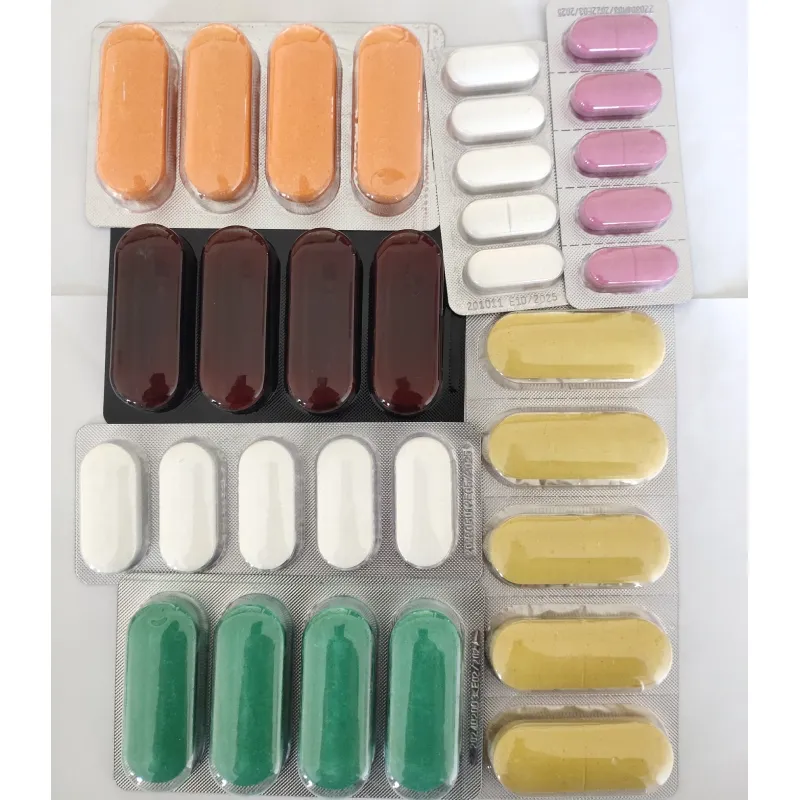
Albendazole tablets, formulated as ‘albendazol tabletas dosis,’ represent a cornerstone in the treatment of parasitic worm infections. This pharmaceutical product falls within the anthelmintic drug class, critically positioned within the human and veterinary healthcare supply chains. Albendazole acts by inhibiting tubulin polymerization in parasitic worms, disrupting their cellular structures and ultimately leading to their immobilization and elimination. Core performance characteristics hinge on its bioavailability, spectrum of activity against various nematodes and cestodes, and the precise dosage regimen required for effective treatment. The pharmaceutical formulation and manufacturing quality directly impact these characteristics and, crucially, patient outcomes. This guide provides an in-depth technical assessment of albendazole tablets, covering material science, manufacturing processes, performance parameters, potential failure modes, and relevant industry standards. Understanding these factors is paramount for pharmaceutical manufacturers, quality control personnel, regulatory bodies, and healthcare professionals.
Material Science & Manufacturing
Albendazole (C12H15N3O2S) exists as a white to off-white powder, practically insoluble in water, but soluble in organic solvents like dimethylsulfoxide (DMSO). Its crystalline form significantly influences dissolution rate and bioavailability. Polymorphism can occur, impacting the drug's stability and absorption characteristics; therefore, crystalline form control is a critical manufacturing parameter. Manufacturing typically begins with the synthesis of albendazole through a multi-step chemical process involving condensation, cyclization, and oxidation reactions. Raw material quality (sulfur, benzimidazoles, etc.) is rigorously controlled using techniques such as High-Performance Liquid Chromatography (HPLC) and Gas Chromatography-Mass Spectrometry (GC-MS) to ensure purity and compliance with pharmacopoeial standards. Tablet formulation involves blending albendazole with excipients: diluents (microcrystalline cellulose, lactose), binders (polyvinylpyrrolidone or PVP), disintegrants (croscarmellose sodium, sodium starch glycolate), lubricants (magnesium stearate), and potentially glidants (colloidal silicon dioxide). Blending is typically done via tumble blending to ensure homogeneity. Compression is performed using rotary tablet presses, with careful control of compression force, dwell time, and tablet weight to achieve desired hardness, friability, and disintegration time. Coating, if applied (e.g., film coating for taste masking or controlled release), introduces another layer of complexity. Coating formulations often include polymers (hydroxypropyl methylcellulose - HPMC), plasticizers, and pigments. Parameters such as coating weight gain, film thickness, and adhesion are carefully monitored.

Performance & Engineering
The primary performance attribute of albendazol tabletas dosis is its anthelmintic efficacy, directly linked to the drug’s concentration reaching the parasitic infection site. Bioavailability is a major engineering challenge due to albendazole's low aqueous solubility. Factors affecting bioavailability include particle size, crystalline form, gastric pH, and food intake. Albendazole is a BCS Class II drug (low solubility, high permeability). Formulation strategies like micronization, solid dispersions, and lipid-based formulations are employed to enhance dissolution rate and improve bioavailability. Mechanical strength (hardness, friability) is critical to prevent tablet damage during handling and transportation. Hardness is typically measured using a tablet hardness tester (expressed in kgf) and friability using a friabilator (expressed as percentage weight loss). Disintegration time, measured according to USP/EP methods, determines the rate at which the tablet breaks down in a simulated gastric environment. Chemical stability is paramount. Albendazole is susceptible to degradation via oxidation and hydrolysis. Stability studies (accelerated and long-term) are conducted under controlled temperature and humidity conditions to determine shelf life and appropriate storage conditions. Packaging materials (blister packs, bottles) must provide adequate protection against moisture, light, and oxygen. Compliance requirements include adherence to Good Manufacturing Practices (GMP) and stringent quality control testing at each stage of production. Pharmacokinetic studies are crucial to determine the drug’s absorption, distribution, metabolism, and excretion (ADME) profile.
Technical Specifications
| Parameter | Specification (USP/BP Compliant) | Test Method | Acceptance Criteria |
|---|---|---|---|
| Assay (Albendazole Content) | 98.0% - 102.0% | HPLC | Within specified range |
| Identification | Positive for Albendazole | IR Spectroscopy, HPLC Retention Time | Matches reference standard |
| Related Substances | ≤ 0.2% (each individual impurity) | HPLC | Below specified limits |
| Dissolution (15 minutes) | ≥ 75% | USP Apparatus 1 or 2 | Meets dissolution profile |
| Water Content | ≤ 0.5% | Karl Fischer Titration | Within specified range |
| Hardness | 4-8 kgf | Tablet Hardness Tester | Within specified range |
Failure Mode & Maintenance
Failure modes for albendazol tabletas dosis include physical defects (capping, lamination, chipping, sticking) arising from insufficient binder, improper compression force, or inadequate lubricant. Chemical degradation, primarily oxidation and hydrolysis, leads to a decrease in drug potency over time. This is exacerbated by exposure to heat, moisture, and light. Microbial contamination is another potential failure mode, particularly if GMP standards are not strictly followed. Packaging failure (compromised blister packs or bottle seals) can expose the tablets to environmental factors, accelerating degradation. Incorrect dosage resulting from manufacturing errors or labeling inaccuracies poses a significant risk to patient safety. Preventive maintenance strategies include regular calibration of manufacturing equipment (tablet presses, coating machines, HPLC systems), stringent environmental control (temperature, humidity, cleanliness), implementation of robust quality control procedures (in-process and finished product testing), and adherence to strict storage and handling guidelines. Regular stability studies are essential to monitor degradation products and establish appropriate retest periods. Batch traceability is crucial for identifying and isolating potential quality issues. Corrective Action and Preventive Action (CAPA) systems should be in place to address any deviations from established specifications.
Industry FAQ
Q: What is the impact of polymorph variations of Albendazole on the final product’s efficacy?
A: Polymorphic variations can significantly impact Albendazole’s dissolution rate and, consequently, its bioavailability. Different polymorphs exhibit varying solubility profiles, with some forms dissolving more readily than others. A less soluble polymorph may result in reduced drug absorption and decreased therapeutic efficacy. Therefore, controlling the polymorphic form during manufacturing is critical, typically achieved through careful control of crystallization parameters (solvent, temperature, cooling rate).
Q: How does the choice of excipients affect the stability of Albendazole tablets?
A: Excipient selection plays a critical role in Albendazole’s stability. Certain excipients can catalyze degradation reactions. For example, some fillers may contain trace metal ions that promote oxidation. The presence of moisture can accelerate hydrolysis. Therefore, excipients should be carefully chosen for compatibility with Albendazole and their inertness. Stabilizers and antioxidants may be incorporated into the formulation to mitigate degradation.
Q: What analytical methods are crucial for quality control of Albendazole tablets beyond assay and identification?
A: Beyond assay and identification, critical analytical methods include dissolution testing, water content determination (Karl Fischer titration), related substances analysis (HPLC), disintegration testing, hardness testing, friability testing, and potentially particle size analysis (if micronized Albendazole is used). Residual solvent analysis (GC-MS) is important if organic solvents are used during manufacturing.
Q: What are the critical parameters to monitor during the coating process of Albendazole tablets?
A: Critical parameters during coating include coating solution viscosity, spray rate, pan speed, inlet air temperature, and exhaust air temperature. These parameters directly influence coating uniformity, film thickness, adhesion, and the overall appearance of the coated tablets. Monitoring coating weight gain is also essential to ensure consistent drug layering.
Q: How do storage conditions impact the long-term stability of Albendazole tablets?
A: Albendazole tablets are sensitive to heat, light, and moisture. Long-term stability is best preserved by storing them in tightly closed containers, protected from light, at controlled room temperature (typically 20-25°C). Humidity control is essential to prevent hydrolysis. Adherence to recommended storage conditions as specified on the product label is crucial to maintain potency and prevent degradation.
Conclusion
Albendazole tablets, or ‘albendazol tabletas dosis’, represent a vital pharmaceutical intervention in the treatment of parasitic infections. Effective manufacturing demands meticulous control over material science, including crystalline form and raw material purity, coupled with stringent adherence to GMP guidelines. Optimizing formulation to overcome bioavailability limitations and ensuring long-term chemical and physical stability are paramount engineering challenges.
Future developments may focus on novel drug delivery systems, such as nano-formulations or lipid-based carriers, to further enhance bioavailability and efficacy. Continuous monitoring of industry standards and regulatory updates is critical for ensuring product quality and patient safety. Ongoing investment in robust quality control procedures and process analytical technology (PAT) will be essential for maintaining the integrity and effectiveness of albendazole tablets.
Latest news
Copyright © 2026
Dingzhou Kangquan Pharmaceutical Co., Ltd. All Rights Reserved. Sitemap | Privacy
Policy


