
2695018275@qq.com
+86
13780513619
- Afrikaans
- Albanian
- Amharic
- Arabic
- Armenian
- Azerbaijani
- Basque
- Belarusian
- Bengali
- Bosnian
- Bulgarian
- Catalan
- Cebuano
- Corsican
- Croatian
- Czech
- Danish
- Dutch
- English
- Esperanto
- Estonian
- Finnish
- French
- Frisian
- Galician
- Georgian
- German
- Greek
- Gujarati
- Haitian Creole
- hausa
- hawaiian
- Hebrew
- Hindi
- Miao
- Hungarian
- Icelandic
- igbo
- Indonesian
- irish
- Italian
- Japanese
- Javanese
- Kannada
- kazakh
- Khmer
- Rwandese
- Korean
- Kurdish
- Kyrgyz
- Lao
- Latin
- Latvian
- Lithuanian
- Luxembourgish
- Macedonian
- Malgashi
- Malay
- Malayalam
- Maltese
- Maori
- Marathi
- Mongolian
- Myanmar
- Nepali
- Norwegian
- Norwegian
- Occitan
- Pashto
- Persian
- Polish
- Portuguese
- Punjabi
- Romanian
- Russian
- Samoan
- Scottish Gaelic
- Serbian
- Sesotho
- Shona
- Sindhi
- Sinhala
- Slovak
- Slovenian
- Somali
- Spanish
- Sundanese
- Swahili
- Swedish
- Tagalog
- Tajik
- Tamil
- Tatar
- Telugu
- Thai
- Turkish
- Turkmen
- Ukrainian
- Urdu
- Uighur
- Uzbek
- Vietnamese
- Welsh
- Bantu
- Yiddish
- Yoruba
- Zulu
Apr . 01, 2024 17:55 Back to list
calcium powder for veterinary Performance Analysis

Introduction
Calcium powder for veterinary applications refers to finely milled calcium compounds – primarily calcium carbonate (CaCO3), calcium phosphate (Ca3(PO4)2), and calcium citrate – formulated for animal supplementation. Its technical position within the veterinary healthcare chain is as a crucial mineral supplement addressing deficiencies, supporting bone health, optimizing physiological functions, and aiding in the treatment of specific conditions like hypocalcemia, eclampsia in lactating animals, and metabolic bone diseases. Core performance characteristics are defined by bioavailability, particle size distribution, purity, and palatability. Bioavailability dictates the proportion of calcium absorbed and utilized by the animal, directly impacting its therapeutic efficacy. Particle size affects dispersion and absorption rates, while purity ensures the absence of harmful contaminants. Palatability is critical for ensuring adequate intake, especially in preventative supplementation programs. The industry currently faces challenges related to sourcing consistently high-quality calcium sources, optimizing bioavailability through novel formulations, and addressing regulatory pressures surrounding ingredient safety and labeling accuracy.
Material Science & Manufacturing
The primary raw materials for veterinary calcium powder are sourced from geological deposits (limestone, chalk for CaCO3) or produced synthetically (calcium phosphate via precipitation reactions). Calcium carbonate exhibits a rhombohedral crystal structure, influencing its reactivity and dissolution rate. Calcium phosphate exists in various crystalline forms (alpha, beta, amorphous), with hydroxyapatite (a calcium phosphate mineral) being particularly relevant for bone regeneration due to its structural similarity to natural bone mineral. Chemical compatibility is vital; calcium compounds generally exhibit low reactivity but can be affected by acidic environments, potentially leading to decomposition and reduced bioavailability.
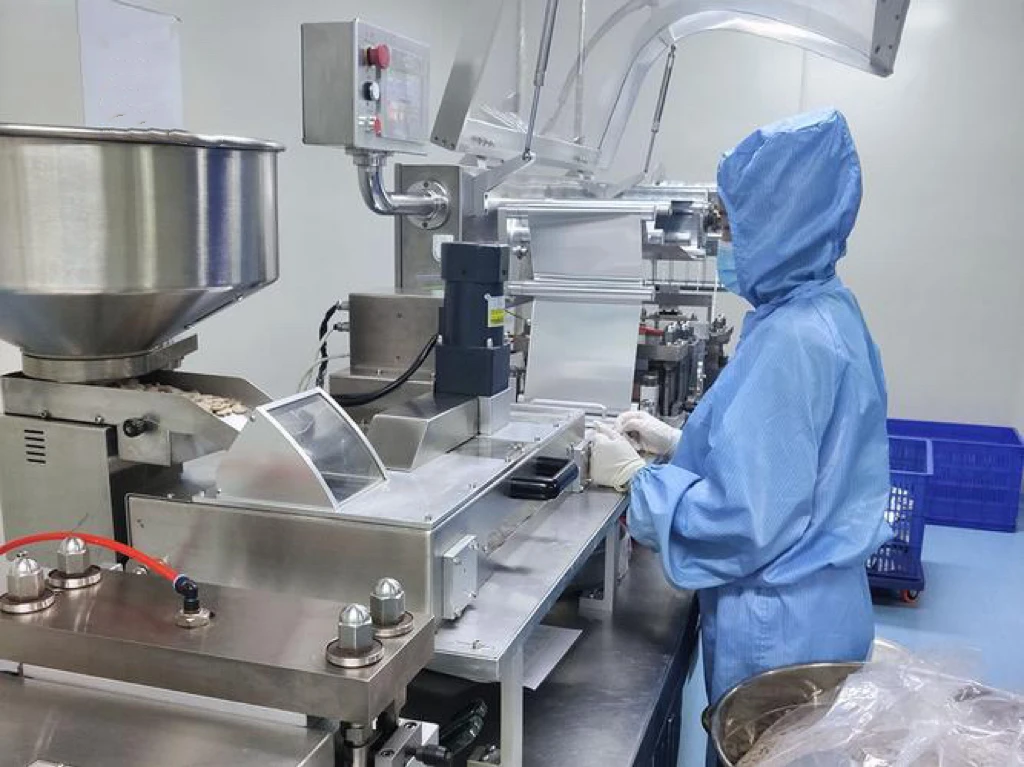
Manufacturing processes involve crushing, milling, and micronization to achieve the desired particle size (typically <75 μm for optimal absorption). The milling process requires precise control of energy input to prevent amorphous phase formation in calcium phosphate, which can negatively affect stability. Purification steps, including acid washing and filtration, remove impurities such as heavy metals and silicates. Spray drying or lyophilization (freeze-drying) are used to create a free-flowing powder with enhanced dispersibility. Key parameters controlled during manufacturing include particle size distribution (measured by laser diffraction), bulk density (governed by powder characteristics and compaction forces), and moisture content (maintained below 0.5% to prevent caking and degradation). Quality control employs techniques such as X-ray diffraction (XRD) for crystal structure analysis, inductively coupled plasma mass spectrometry (ICP-MS) for trace element analysis, and titrimetric analysis for calcium content determination.
Performance & Engineering
The mechanical performance of calcium powder in a formulated veterinary product is primarily related to its flowability and compressibility during tablet or capsule manufacturing. Poor flowability leads to weight variation in dosage forms. Compressibility impacts tablet hardness and disintegration time. Environmental resistance is crucial for long-term stability. Calcium carbonate is susceptible to atmospheric carbon dioxide, leading to slight hydration and potential caking. Calcium phosphate is relatively stable but can undergo phase transitions under prolonged exposure to humidity.
Engineering considerations involve optimizing particle morphology for improved flow properties and ensuring compatibility with excipients (binders, disintegrants, lubricants) in the final formulation. Bioavailability is a critical performance parameter, influenced by particle size, surface area, and the presence of chelating agents that can hinder calcium absorption. Compliance requirements necessitate adherence to Good Manufacturing Practices (GMP) and stringent quality control standards. Specifically, the powder must meet pharmacopoeial specifications for purity, heavy metal content, and microbial limits. Furthermore, the formulation must demonstrate adequate stability under accelerated aging conditions (temperature and humidity cycling) to ensure a defined shelf life.
Technical Specifications
| Parameter | Calcium Carbonate (Typical) | Calcium Phosphate Dibasic (Typical) | Calcium Citrate (Typical) |
|---|---|---|---|
| Chemical Formula | CaCO3 | CaHPO4 | Ca3C6H5O7 |
| Purity (Assay) | ≥ 98.5% | ≥ 98.0% | ≥ 99.0% |
| Particle Size (D90) | <10 μm | <5 μm | <8 μm |
| Bulk Density | 0.5 - 0.7 g/cm3 | 0.8 - 1.0 g/cm3 | 0.4 - 0.6 g/cm3 |
| Moisture Content | <0.5% | <0.5% | <0.5% |
| Heavy Metals (as Pb) | <10 ppm | <5 ppm | <5 ppm |
Failure Mode & Maintenance
Common failure modes for calcium powder in veterinary applications primarily relate to degradation during storage and reduced bioavailability. Caking and agglomeration, caused by moisture absorption, impede flowability and accurate dosing. Chemical degradation, particularly in calcium carbonate, can occur due to exposure to atmospheric carbon dioxide and acidic environments, leading to reduced calcium content. Oxidation is less common, but certain impurities can catalyze oxidative processes, affecting stability. Fatigue cracking is not applicable to powder forms directly, but repeated compression/decompression during handling can lead to particle fracture and dust generation. Delamination is not a relevant failure mode for powder.
Maintenance involves proper storage in airtight containers, protected from moisture and direct sunlight. Temperature control (below 25°C) is recommended to minimize degradation rates. Regular quality control testing (assay, particle size analysis, moisture content) should be performed to ensure the powder meets specifications. Batch traceability is essential for identifying and addressing potential quality issues. If caking occurs, gentle sieving can restore flowability, but severely caked material should be discarded. Formulations should include appropriate excipients to stabilize the calcium powder and protect it from degradation. Antioxidants and pH buffers may be added to enhance long-term stability.
Industry FAQ
Q: What is the impact of particle size on calcium absorption in different animal species?
A: Particle size significantly influences calcium absorption. Smaller particle sizes (<5 μm) generally exhibit higher bioavailability due to increased surface area for dissolution and enhanced absorption rates. However, the optimal particle size varies between species. For example, ruminants have a more complex digestive system, requiring larger particle sizes for bypass to the lower intestine where absorption is more efficient. Poultry, with their simpler digestive tracts, benefit from very fine particle sizes. Formulation strategies, such as microencapsulation, can also be used to modulate calcium release and improve absorption based on the target species.
Q: How do different calcium sources (carbonate vs. phosphate vs. citrate) compare in terms of bioavailability and suitability for specific conditions?
A: Calcium carbonate requires stomach acid for dissolution and absorption, making it less suitable for animals with hypochlorhydria (low stomach acid). Calcium phosphate, particularly dibasic calcium phosphate, exhibits better bioavailability in acidic environments and is generally well-tolerated. Calcium citrate is highly soluble across a wide pH range and demonstrates superior absorption, particularly in animals with compromised digestive function or those receiving antacids. For treating acute hypocalcemia, soluble forms like calcium gluconate are often preferred for rapid calcium delivery, while long-term supplementation utilizes carbonate, phosphate, or citrate depending on the animal’s physiological status.
Q: What are the key regulatory requirements regarding heavy metal contamination in veterinary calcium supplements?
A: Regulatory bodies like the FDA (in the US) and EFSA (in Europe) set stringent limits for heavy metal contamination in animal feed and supplements. Lead (Pb), arsenic (As), cadmium (Cd), and mercury (Hg) are the primary contaminants of concern. Limits vary depending on the specific metal and animal species. Manufacturers are required to demonstrate compliance through regular testing using validated analytical methods (ICP-MS is commonly employed). Sourcing calcium from reputable suppliers with established quality control systems is crucial for minimizing contamination risks.
Q: What is the role of vitamin D in optimizing calcium absorption, and how should it be considered in formulating calcium supplements?
A: Vitamin D plays a critical role in calcium absorption by promoting the synthesis of calcium-binding proteins in the intestinal mucosa. Without adequate vitamin D, calcium absorption is significantly reduced. Therefore, veterinary calcium supplements are often co-formulated with vitamin D3 (cholecalciferol) to maximize efficacy. The optimal vitamin D to calcium ratio varies depending on the animal species and physiological state. Over-supplementation of vitamin D can lead to hypercalcemia, so careful consideration of dosage is essential.
Q: How can the stability of calcium powder be enhanced during long-term storage, particularly in humid environments?
A: Enhancing stability requires a multi-faceted approach. Utilizing airtight packaging materials with low permeability to moisture is paramount. Adding desiccants (silica gel) to the packaging can further reduce humidity levels. Formulating the calcium powder with excipients that act as moisture barriers or pH buffers can also improve stability. Coating the calcium particles with a protective layer (e.g., a lipid coating) can prevent direct contact with moisture. Storage in a cool, dry place, away from direct sunlight, is essential.
Conclusion
Calcium powder for veterinary applications remains a cornerstone of animal health management, providing essential mineral support for a wide range of physiological processes and clinical conditions. Understanding the nuanced interplay between material science, manufacturing parameters, and bioavailability is critical for developing high-quality, efficacious supplements. Maintaining strict quality control throughout the entire production process, from raw material sourcing to final product packaging, ensures consistent performance and compliance with regulatory standards.
Future advancements will likely focus on optimizing calcium delivery systems through novel encapsulation technologies, tailoring formulations to species-specific needs, and exploring the synergistic effects of calcium with other essential nutrients. Continued research into the impact of particle size, crystal structure, and surface modifications on bioavailability will further refine calcium supplementation strategies and contribute to improved animal health outcomes.
Latest news
Copyright © 2026
Dingzhou Kangquan Pharmaceutical Co., Ltd. All Rights Reserved. Sitemap | Privacy
Policy


