
2695018275@qq.com
+86
13780513619
- Afrikaans
- Albanian
- Amharic
- Arabic
- Armenian
- Azerbaijani
- Basque
- Belarusian
- Bengali
- Bosnian
- Bulgarian
- Catalan
- Cebuano
- Corsican
- Croatian
- Czech
- Danish
- Dutch
- English
- Esperanto
- Estonian
- Finnish
- French
- Frisian
- Galician
- Georgian
- German
- Greek
- Gujarati
- Haitian Creole
- hausa
- hawaiian
- Hebrew
- Hindi
- Miao
- Hungarian
- Icelandic
- igbo
- Indonesian
- irish
- Italian
- Japanese
- Javanese
- Kannada
- kazakh
- Khmer
- Rwandese
- Korean
- Kurdish
- Kyrgyz
- Lao
- Latin
- Latvian
- Lithuanian
- Luxembourgish
- Macedonian
- Malgashi
- Malay
- Malayalam
- Maltese
- Maori
- Marathi
- Mongolian
- Myanmar
- Nepali
- Norwegian
- Norwegian
- Occitan
- Pashto
- Persian
- Polish
- Portuguese
- Punjabi
- Romanian
- Russian
- Samoan
- Scottish Gaelic
- Serbian
- Sesotho
- Shona
- Sindhi
- Sinhala
- Slovak
- Slovenian
- Somali
- Spanish
- Sundanese
- Swahili
- Swedish
- Tagalog
- Tajik
- Tamil
- Tatar
- Telugu
- Thai
- Turkish
- Turkmen
- Ukrainian
- Urdu
- Uighur
- Uzbek
- Vietnamese
- Welsh
- Bantu
- Yiddish
- Yoruba
- Zulu
Apr . 01, 2024 17:55 Back to list
chewable albendazole tablets Formulation Analysis
Introduction
Chewable albendazole tablets are an anthelmintic medication utilized in both human and veterinary medicine for the treatment of a broad spectrum of parasitic worm infections. Positioned within the pharmaceutical manufacturing supply chain as a finished dosage form, these tablets represent a crucial component in combating helminthiasis in developing and developed nations. Their primary active pharmaceutical ingredient (API) is albendazole, a benzimidazole derivative known for its efficacy against nematodes, cestodes, and trematodes. The chewable formulation addresses administration challenges, particularly in pediatric and veterinary applications, enhancing patient compliance. Core performance characteristics center on bioavailability, dissolution rate, stability, and consistent API dosage delivery, influenced by excipient selection and manufacturing parameters. The increasing prevalence of anthelmintic resistance necessitates ongoing formulation improvements and pharmacokinetic studies to maintain therapeutic efficacy.
Material Science & Manufacturing
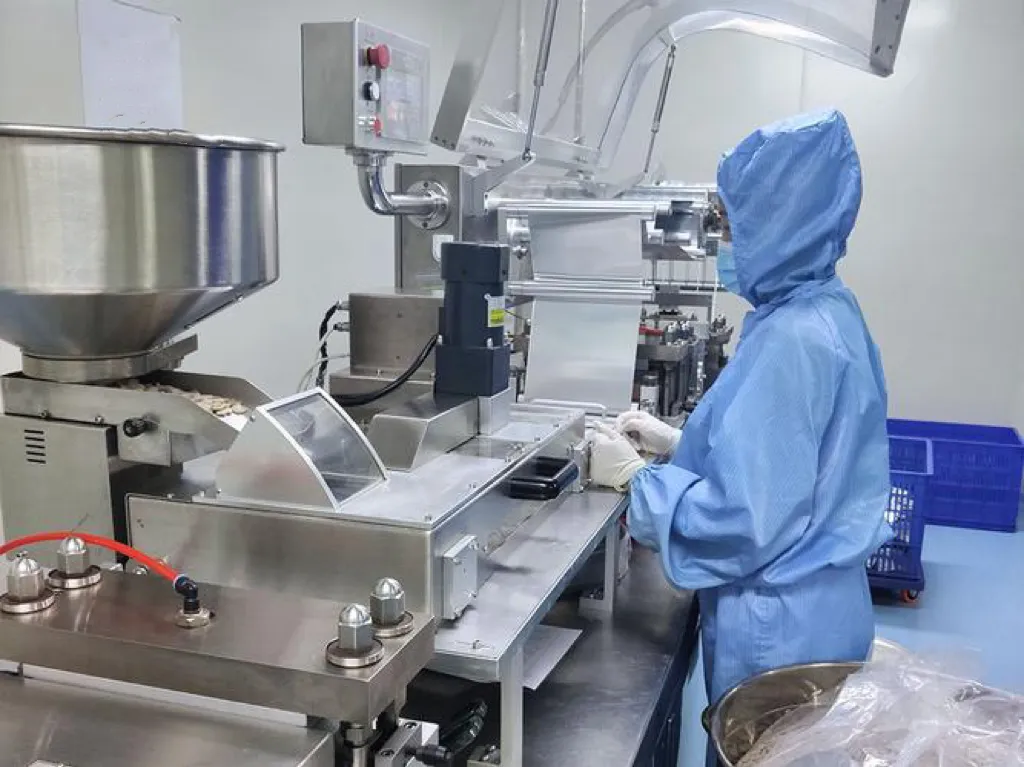
The manufacturing of chewable albendazole tablets involves a complex interplay of material science and pharmaceutical processing. Albendazole itself is a practically insoluble compound in water, presenting a bioavailability challenge. The API’s crystalline structure and polymorphism significantly impact dissolution rate. Excipients are critical in addressing this; common components include microcrystalline cellulose (MCC – for compressibility and disintegration), mannitol (as a diluent and to improve palatability), croscarmellose sodium (a superdisintegrant to facilitate tablet breakdown), magnesium stearate (a lubricant to prevent sticking to punches and dies), and flavoring agents (to mask the bitter taste of albendazole). The manufacturing process typically involves dry granulation or direct compression. Direct compression is favored for cost-effectiveness but requires excipients with excellent flow properties and compressibility. Dry granulation, often employing roller compaction, improves powder flow and compressibility but necessitates an additional processing step. Key parameter controls include blending uniformity (to ensure consistent API distribution), compression force (to achieve desired hardness and disintegration time), and particle size distribution of excipients. Moisture content must be rigorously controlled during processing and storage to prevent API degradation and maintain tablet stability. Tablet coating, though not always present, can be utilized for taste masking or to control the release profile. Material compatibility studies (API-excipient) are essential to preclude any chemical degradation or interactions that could compromise product quality.

Performance & Engineering
The performance of chewable albendazole tablets hinges on several key engineering principles. Bioavailability, a critical performance indicator, is profoundly affected by the API's solubility and dissolution rate. Formulation strategies such as particle size reduction and the inclusion of solubilizers (though less common in chewable formulations due to palatability concerns) are employed to enhance absorption. Mechanical strength, assessed via hardness testing, is vital for preventing tablet breakage during handling and shipping. Friability testing determines tablet resistance to abrasion. Disintegration time, measured according to pharmacopoeial standards (USP/EP), dictates the rate at which the tablet breaks down in a simulated gastric environment. Uniformity of dosage units is paramount; content uniformity testing ensures that each tablet contains the specified amount of albendazole. Environmental resistance, particularly humidity and temperature stability, is assessed through accelerated stability studies. Compliance with regulatory guidelines (FDA, EMA) necessitates rigorous validation of all manufacturing processes and analytical methods. Force analysis during compression considers the interplay between compression force, tablet porosity, and API distribution. The chewability of the tablet is a specific engineering challenge; the formulation must balance hardness with ease of mastication to ensure complete drug release during oral administration. Packaging materials also play a role, providing protection against moisture, light, and oxygen.
Technical Specifications
| Parameter | Specification | Test Method | Regulatory Reference |
|---|---|---|---|
| Albendazole Assay (API Content) | 95.0% - 105.0% | HPLC | USP <467> |
| Identification | Positive for Albendazole | IR Spectroscopy | USP <467> |
| Dissolution (Q10 minutes) | ≥ 60% | USP Apparatus 2 | USP <711> |
| Water Content | ≤ 2.0% | Karl Fischer Titration | USP <925> |
| Hardness | 20-40 N | Tablet Hardness Tester | USP <1217> |
| Friability | ≤ 1.0% | Friabilator | USP <1217> |
Failure Mode & Maintenance
Chewable albendazole tablets can experience several failure modes during manufacturing, storage, and patient use. Physical failures include capping and lamination (caused by air entrapment during compression), cracking (due to excessive compression force or brittle formulation), and chipping (during handling or packaging). Chemical degradation, primarily oxidation of albendazole, can occur due to exposure to oxygen, light, or moisture. This leads to a reduction in API potency. Loss of disintegration properties can result from changes in excipient characteristics (e.g., MCC swelling capacity) or the formation of tablet matrix hardening. Microbial contamination is a risk, particularly if manufacturing environments are not adequately controlled. Maintenance strategies involve strict adherence to Good Manufacturing Practices (GMP). This includes regular calibration of manufacturing equipment, controlled temperature and humidity during storage, appropriate packaging materials (blister packs or tightly sealed containers), and implementation of a robust quality control system. Stability studies are crucial for establishing retest periods and expiration dates. In-process controls, such as monitoring blending uniformity and compression force, can prevent many physical failures. Routine cleaning and sanitization of manufacturing areas minimize microbial contamination risks. Investigating failed batches through root cause analysis is essential for identifying and addressing systemic issues.
Industry FAQ
Q: What is the impact of albendazole polymorphism on tablet performance?
A: Different polymorphs of albendazole exhibit varying solubility and dissolution rates. Form I is typically preferred due to its superior solubility. Polymorphic transformations can occur during manufacturing or storage, potentially impacting bioavailability. Therefore, rigorous polymorphic control is essential, including characterization of the API and monitoring for phase transitions during process development and stability studies.
Q: How do you ensure content uniformity in a direct compression formulation?
A: Achieving content uniformity requires meticulous blending procedures. A validated blending process using a suitable blender (e.g., V-blender, bin blender) is critical. In-process controls, such as near-infrared spectroscopy (NIRS), can monitor blend homogeneity. Particle size distribution of both the API and excipients must be carefully controlled to minimize segregation during blending and compression.
Q: What excipients are commonly used to mask the bitter taste of albendazole?
A: Flavoring agents (e.g., fruit flavors, mint) and sweeteners (e.g., mannitol, xylitol) are commonly employed. Coating the tablets with a film coat containing flavoring agents can further enhance palatability. The choice of excipients must consider compatibility with albendazole and the target patient population (e.g., avoiding sugar-based excipients for diabetic patients).
Q: What are the key stability considerations for chewable albendazole tablets?
A: The primary stability concerns are moisture sensitivity and oxidation of albendazole. Packaging in tightly sealed containers or blister packs provides a moisture barrier. Addition of antioxidants (though less common in chewable formulations) can mitigate oxidative degradation. Storage at controlled temperature and humidity is crucial. Accelerated stability studies are used to predict shelf life under recommended storage conditions.
Q: How does compression force affect tablet hardness and disintegration time?
A: Increasing compression force generally increases tablet hardness. However, excessive compression can reduce porosity and delay disintegration. An optimal compression force is determined through experimentation, balancing hardness requirements with desired disintegration characteristics. Monitoring tablet porosity during process development helps to optimize compression parameters.
Conclusion
Chewable albendazole tablets represent a significant advancement in anthelmintic therapy, particularly for populations where compliance with conventional dosage forms is challenging. The successful manufacture of these tablets necessitates a deep understanding of material science principles, pharmaceutical processing techniques, and quality control methodologies. Maintaining consistent API content, ensuring adequate dissolution rates, and safeguarding against physical and chemical degradation are paramount to delivering a safe and effective product.
Future developments in chewable albendazole tablet formulations may focus on enhancing bioavailability through novel excipient combinations or particle engineering techniques. Addressing the growing issue of anthelmintic resistance will require continued innovation in formulation design and the exploration of synergistic drug combinations. Adherence to stringent regulatory standards and robust quality assurance systems remains critical for ensuring the global availability of high-quality chewable albendazole tablets.
Latest news
Copyright © 2026
Dingzhou Kangquan Pharmaceutical Co., Ltd. All Rights Reserved. Sitemap | Privacy
Policy


