
2695018275@qq.com
+86
13780513619
- Afrikaans
- Albanian
- Amharic
- Arabic
- Armenian
- Azerbaijani
- Basque
- Belarusian
- Bengali
- Bosnian
- Bulgarian
- Catalan
- Cebuano
- Corsican
- Croatian
- Czech
- Danish
- Dutch
- English
- Esperanto
- Estonian
- Finnish
- French
- Frisian
- Galician
- Georgian
- German
- Greek
- Gujarati
- Haitian Creole
- hausa
- hawaiian
- Hebrew
- Hindi
- Miao
- Hungarian
- Icelandic
- igbo
- Indonesian
- irish
- Italian
- Japanese
- Javanese
- Kannada
- kazakh
- Khmer
- Rwandese
- Korean
- Kurdish
- Kyrgyz
- Lao
- Latin
- Latvian
- Lithuanian
- Luxembourgish
- Macedonian
- Malgashi
- Malay
- Malayalam
- Maltese
- Maori
- Marathi
- Mongolian
- Myanmar
- Nepali
- Norwegian
- Norwegian
- Occitan
- Pashto
- Persian
- Polish
- Portuguese
- Punjabi
- Romanian
- Russian
- Samoan
- Scottish Gaelic
- Serbian
- Sesotho
- Shona
- Sindhi
- Sinhala
- Slovak
- Slovenian
- Somali
- Spanish
- Sundanese
- Swahili
- Swedish
- Tagalog
- Tajik
- Tamil
- Tatar
- Telugu
- Thai
- Turkish
- Turkmen
- Ukrainian
- Urdu
- Uighur
- Uzbek
- Vietnamese
- Welsh
- Bantu
- Yiddish
- Yoruba
- Zulu
Apr . 01, 2024 17:55 Back to list
Dog Food Vitamins Performance Analysis

Introduction
Dog food vitamins represent a critical component of canine nutritional support, falling within the broader pet food supplement industry. These formulations are not standalone complete feeds, but rather adjuncts designed to address specific dietary deficiencies or support particular physiological functions in dogs. Their technical position in the supply chain originates with the synthesis or extraction of individual vitamin compounds – often produced via fermentation, chemical synthesis, or sourced from natural feedstocks. These compounds are then formulated, often with mineral co-factors and carriers, into various dosage forms, including powders, tablets, liquids, and chews. Core performance characteristics center on bioavailability (the proportion of the vitamin that is absorbed and utilized by the animal), stability (resistance to degradation during storage and digestion), and palatability (willingness of the dog to consume the supplement). The industry faces growing concerns regarding regulatory compliance, sourcing of high-quality ingredients, and demonstrating clinical efficacy. Ultimately, a dog food vitamin’s effectiveness hinges on accurately supplementing deficiencies and promoting optimal health, preventing deficiencies that can lead to significant health issues such as rickets, neurological disorders, and immune dysfunction.
Material Science & Manufacturing
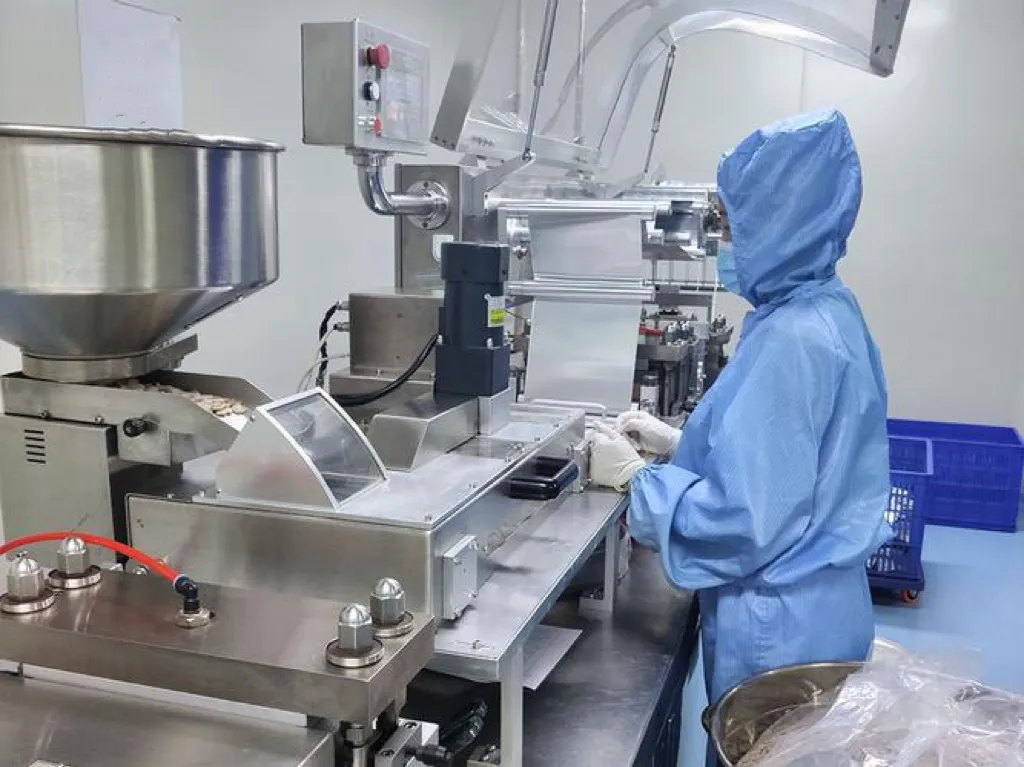
The manufacturing of dog food vitamins relies heavily on understanding the physical and chemical properties of both the active vitamin ingredients and the excipients used in formulation. Vitamins themselves encompass a diverse range of chemical structures. Fat-soluble vitamins (A, D, E, K) are lipophilic and often require emulsification or encapsulation for optimal bioavailability, given their poor water solubility. Water-soluble vitamins (B-complex, C) are hydrophilic but can be susceptible to degradation by oxidation and heat. Common raw materials include retinol (Vitamin A), cholecalciferol (Vitamin D3), tocopherol (Vitamin E), phylloquinone (Vitamin K), thiamine (B1), riboflavin (B2), niacin (B3), pyridoxine (B6), cobalamin (B12), and ascorbic acid (Vitamin C). Excipients crucial to the process are microcrystalline cellulose (a binder and diluent), magnesium stearate (a lubricant), silicon dioxide (an anti-caking agent), and various coating polymers (for controlled release or palatability). Manufacturing processes vary with the dosage form. Tablet compression involves blending ingredients, granulating (creating larger particles for flowability), and compacting under high pressure. Powder formulations require precise blending and particle size control. Liquid formulations demand careful solubilization and stabilization. Key parameter control focuses on maintaining accurate vitamin concentrations, ensuring uniform distribution within the formulation, minimizing moisture content to prevent degradation, and controlling particle size for consistent bioavailability. Encapsulation technologies, like spray drying or fluid bed coating, are increasingly utilized to protect sensitive vitamins from environmental factors and improve delivery to the gastrointestinal tract.
Performance & Engineering
The performance of dog food vitamins is intrinsically linked to bioavailability, assessed through pharmacokinetic studies measuring serum vitamin concentrations after administration. Bioavailability is not solely dependent on the vitamin itself but is impacted by factors such as the dog's digestive health, age, breed, and concurrent medications. Engineering considerations include ensuring the physical integrity of the dosage form during handling and storage. Tablets must possess sufficient hardness and friability resistance to withstand packaging and transportation. Chewable tablets require specific texture and palatability to encourage consumption. Environmental resistance is vital; vitamins are susceptible to degradation from heat, light, oxygen, and moisture. Packaging materials – often containing UV-blocking layers and moisture barriers – play a critical role in maintaining product stability. Compliance requirements are stringent, governed by organizations like the Association of American Feed Control Officials (AAFCO) and veterinary regulatory agencies. Vitamin content must be accurately labeled, and formulations must meet minimum potency standards. Formulations targeting specific conditions (e.g., hip and joint support) must be supported by scientific evidence demonstrating efficacy. Force analysis is relevant to tablet compression; the applied force must be sufficient to create a cohesive tablet without causing particle damage or vitamin degradation. Furthermore, the interaction between vitamins and other dietary components must be considered, as some vitamins exhibit synergistic or antagonistic effects.
Technical Specifications
| Vitamin | Typical Potency (per dose) | Bioavailability (%) | Stability (Shelf Life at 25°C) |
|---|---|---|---|
| Vitamin A (Retinol) | 1,000 IU | 70-85 | 12 months |
| Vitamin D3 (Cholecalciferol) | 400 IU | 60-75 | 9 months |
| Vitamin E (Tocopherol) | 30 IU | 50-65 | 18 months |
| Vitamin C (Ascorbic Acid) | 100 mg | 40-50 | 6 months |
| B1 (Thiamine) | 5 mg | 65-80 | 12 months |
| B12 (Cobalamin) | 25 mcg | 55-70 | 18 months |
Failure Mode & Maintenance
Dog food vitamins are subject to several potential failure modes. Degradation of vitamins due to oxidation, hydrolysis, and photolysis is common, particularly for water-soluble vitamins. This manifests as a reduction in potency over time, rendering the product less effective. Physical degradation includes tablet crumbling or powder clumping, stemming from moisture absorption or improper handling. Packaging failure – such as a compromised seal – accelerates degradation. Palatability issues, leading to reduced consumption, represent a functional failure. Bioavailability problems can arise from poor formulation, resulting in incomplete absorption. Failure analysis should involve potency testing (using HPLC or other analytical techniques) to quantify vitamin content, moisture analysis to assess product integrity, and visual inspection for physical defects. Maintenance strategies include proper storage (cool, dry, dark place), utilizing high-quality packaging materials, implementing stringent quality control procedures during manufacturing, and monitoring product stability over time. Regular auditing of manufacturing facilities and raw material suppliers is crucial. For consumers, proper dosage adherence and observation of the dog's response are essential; any adverse reactions should be reported to a veterinarian immediately. Prevention of contamination during manufacturing is critical to avoid toxicity.
Industry FAQ
Q: What differentiates a high-quality dog food vitamin from a generic brand?
A: A high-quality vitamin utilizes bioavailable forms of vitamins (e.g., chelated minerals, microencapsulated vitamins), undergoes rigorous third-party testing for potency and purity, and employs a formulation designed for optimal absorption. Generic brands often prioritize cost-cutting, potentially using less expensive, less bioavailable ingredients and lacking comprehensive quality control.
Q: How can I ensure the vitamin supplement isn’t interacting negatively with my dog’s existing diet?
A: Consult with a veterinarian or board-certified veterinary nutritionist to assess your dog’s current diet and determine if supplementation is truly necessary. Over-supplementation can be harmful, especially with fat-soluble vitamins. Consider the vitamin content of the dog food itself to avoid exceeding recommended daily allowances.
Q: What is the significance of AAFCO statements on vitamin supplement labels?
A: AAFCO statements indicate whether the supplement is intended for “maintenance” (supporting a healthy dog) or for “stress” or “performance” (supporting increased physiological demands). These statements are based on formulation guidelines established by AAFCO, but they do not guarantee efficacy. They indicate adherence to minimum vitamin levels.
Q: What role does encapsulation play in vitamin supplement effectiveness?
A: Encapsulation protects vitamins from degradation during storage, handling, and digestion. It can also enhance bioavailability by controlling the release of the vitamin in the gastrointestinal tract. For example, enteric coatings protect acid-sensitive vitamins from stomach acid.
Q: How should I store dog food vitamins to maximize their shelf life?
A: Store vitamins in a cool, dry, dark place, away from direct sunlight and moisture. Keep the container tightly sealed. Do not store them in the bathroom, as humidity can accelerate degradation. Check the expiration date regularly and discard any expired product.
Conclusion
Dog food vitamins are a vital component of preventative healthcare for canines, but their efficacy is contingent upon rigorous manufacturing practices, careful formulation, and accurate dosage. Understanding the material science underpinning vitamin stability and bioavailability, alongside adherence to stringent quality control measures, are paramount to ensuring product performance. The industry's ongoing challenge lies in demonstrating verifiable clinical benefits and navigating increasingly complex regulatory landscapes.
Looking forward, advancements in encapsulation technologies, personalized nutrition based on genetic predispositions, and improved analytical techniques for assessing vitamin status will likely shape the future of dog food vitamin development. Continued collaboration between veterinarians, nutritionists, and manufacturers is crucial to delivering safe, effective, and scientifically-supported supplemental solutions for optimal canine health.
Latest news
Copyright © 2026
Dingzhou Kangquan Pharmaceutical Co., Ltd. All Rights Reserved. Sitemap | Privacy
Policy


