
2695018275@qq.com
+86
13780513619
- Afrikaans
- Albanian
- Amharic
- Arabic
- Armenian
- Azerbaijani
- Basque
- Belarusian
- Bengali
- Bosnian
- Bulgarian
- Catalan
- Cebuano
- Corsican
- Croatian
- Czech
- Danish
- Dutch
- English
- Esperanto
- Estonian
- Finnish
- French
- Frisian
- Galician
- Georgian
- German
- Greek
- Gujarati
- Haitian Creole
- hausa
- hawaiian
- Hebrew
- Hindi
- Miao
- Hungarian
- Icelandic
- igbo
- Indonesian
- irish
- Italian
- Japanese
- Javanese
- Kannada
- kazakh
- Khmer
- Rwandese
- Korean
- Kurdish
- Kyrgyz
- Lao
- Latin
- Latvian
- Lithuanian
- Luxembourgish
- Macedonian
- Malgashi
- Malay
- Malayalam
- Maltese
- Maori
- Marathi
- Mongolian
- Myanmar
- Nepali
- Norwegian
- Norwegian
- Occitan
- Pashto
- Persian
- Polish
- Portuguese
- Punjabi
- Romanian
- Russian
- Samoan
- Scottish Gaelic
- Serbian
- Sesotho
- Shona
- Sindhi
- Sinhala
- Slovak
- Slovenian
- Somali
- Spanish
- Sundanese
- Swahili
- Swedish
- Tagalog
- Tajik
- Tamil
- Tatar
- Telugu
- Thai
- Turkish
- Turkmen
- Ukrainian
- Urdu
- Uighur
- Uzbek
- Vietnamese
- Welsh
- Bantu
- Yiddish
- Yoruba
- Zulu
Apr . 01, 2024 17:55 Back to list
relief powder veterinary Performance Analysis
Introduction
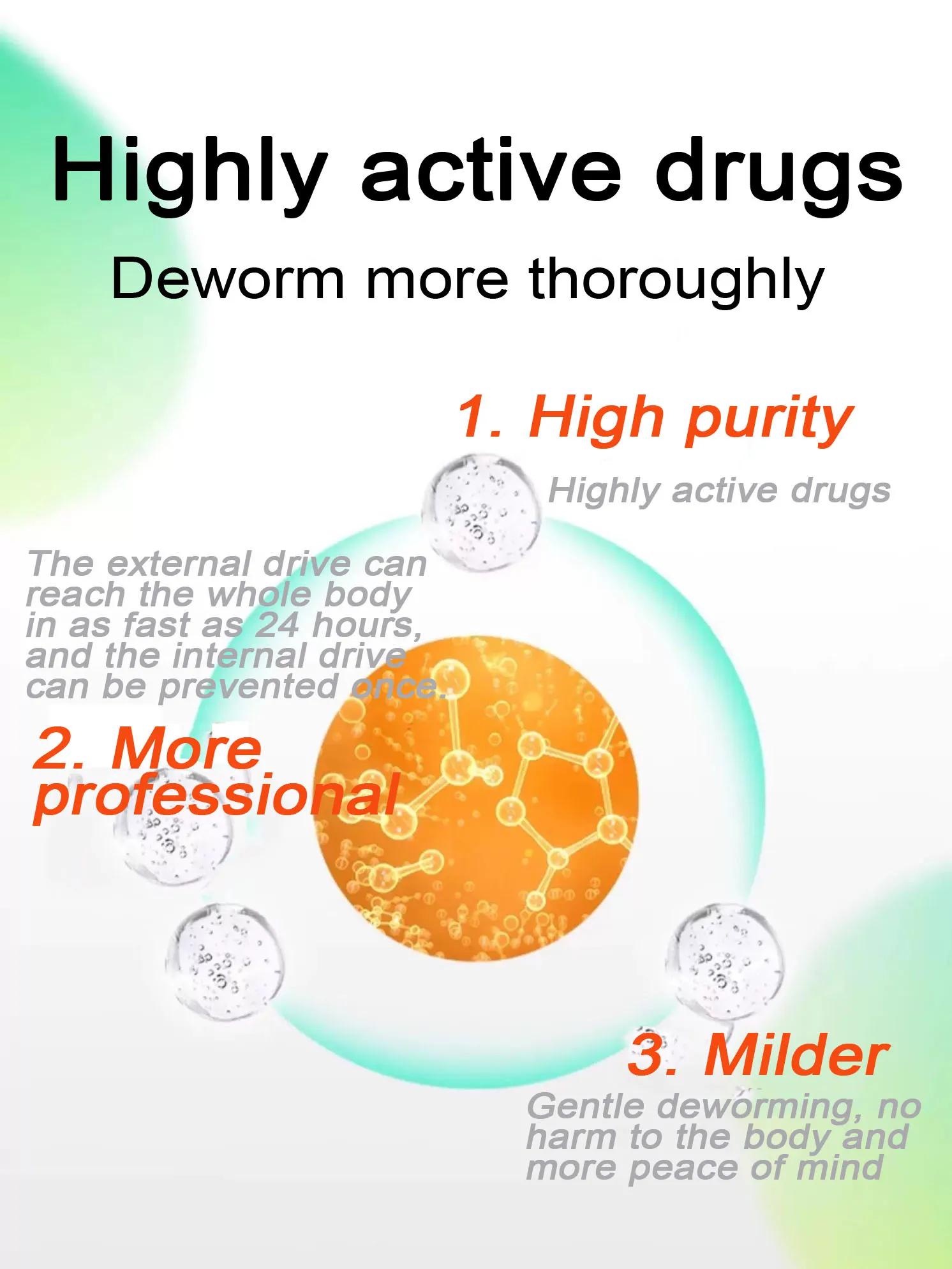
Relief powder veterinary, typically encompassing formulations of analgesic, anti-inflammatory, and antipyretic agents, represents a critical component of pain management and supportive care in veterinary medicine. Positioned within the pharmaceutical supply chain serving animal health, these powders are primarily utilized for livestock, poultry, and companion animals experiencing acute or chronic pain conditions resulting from injury, surgery, or disease. The core performance of relief powder veterinary lies in its rapid dissolution and bioavailability of active pharmaceutical ingredients (APIs), achieving therapeutic plasma concentrations to effectively mitigate pain and inflammation. Formulations frequently utilize non-steroidal anti-inflammatory drugs (NSAIDs), corticosteroids, or opioid derivatives, necessitating stringent quality control and regulatory compliance to ensure efficacy and safety. A key challenge in the industry centers around minimizing off-target effects and developing palatable formulations for ease of administration, particularly in large animal species.
Material Science & Manufacturing
The production of relief powder veterinary relies on a combination of chemical synthesis, particle engineering, and blending processes. Core APIs, such as flunixin meglumine, meloxicam, or ketoprofen, are often synthesized via multi-step organic chemical reactions, demanding precise control of reaction kinetics, stoichiometry, and purification techniques. Raw material quality, including API purity (typically assessed via High-Performance Liquid Chromatography - HPLC) and excipient characteristics (e.g., particle size distribution, moisture content), are paramount. Manufacturing typically begins with micronization of the API to enhance dissolution rate. This can be achieved through jet milling or media milling, with subsequent sieving to ensure a consistent particle size range (often between 10-50 µm). Excipients, including diluents (lactose, microcrystalline cellulose), binders (polyvinylpyrrolidone), disintegrants (croscarmellose sodium), and flavoring agents, are meticulously selected for compatibility with the API and intended route of administration. Blending is performed utilizing V-blenders or ribbon blenders to achieve homogenous distribution of components. Critical process parameters (CPP) during blending include blending time, speed, and fill level. Final product quality control involves rigorous testing for API content, uniformity of dosage, moisture content, heavy metal contamination (using Inductively Coupled Plasma Mass Spectrometry – ICP-MS), and microbiological purity (according to USP <71> standards). Packaging materials must provide adequate protection from moisture, light, and oxygen to maintain product stability over its shelf life, commonly employing high-density polyethylene (HDPE) or aluminum foil laminates.
Performance & Engineering
The performance of relief powder veterinary is fundamentally governed by pharmacokinetic and pharmacodynamic principles. Bioavailability – the fraction of the administered API that reaches systemic circulation – is a crucial parameter. Factors influencing bioavailability include particle size, dissolution rate, gastric emptying time (species-dependent), and intestinal permeability. Engineering considerations focus on optimizing these factors. Formulation strategies, such as incorporating solubility enhancers or utilizing amorphous solid dispersions, can improve API dissolution. Environmental resistance, particularly to humidity and temperature fluctuations, is also critical. Stability studies, conducted according to ICH guidelines, determine the shelf life of the product. Engineering design must also account for potential interactions between the API and packaging materials, preventing leaching or adsorption. Compliance requirements are extensive, dictated by regulatory bodies like the FDA (US), EMA (Europe), and corresponding national veterinary authorities. These regulations mandate adherence to Good Manufacturing Practices (GMP) throughout the production process, validation of analytical methods, and demonstration of product safety and efficacy through clinical trials. Force analysis during handling and transportation is essential; packaging must withstand compressive forces and prevent powder leakage. The selection of appropriate excipients impacts flowability and compressibility during manufacturing, influencing dosage accuracy.
Technical Specifications
| API Content (Assay) | Particle Size (D50) | Moisture Content | Dissolution Rate (USP Apparatus II) |
|---|---|---|---|
| 98.0% - 102.0% | 10 - 30 µm | < 2.0% | >80% in 30 minutes |
| pH (1% w/v solution) | Bulk Density | Heavy Metals (Pb, As, Cd, Hg) | Microbial Limit (Total Aerobic Microbial Count) |
| 6.0 – 8.0 | 0.4 – 0.7 g/mL | < 10 ppm | < 1000 CFU/g |
| Flowability (Carr's Index) | Loss on Drying | Specific Surface Area | Water Activity |
| < 15 | < 0.5% | 5 - 15 m²/g | < 0.6 |
| Packaging Material | Shelf Life | Storage Conditions | Dosage Form |
| HDPE/Aluminum Foil Laminate | 24 Months | Store below 25°C, Protect from Light & Moisture | Powder for Oral Administration |
Failure Mode & Maintenance
Failure modes in relief powder veterinary products can stem from several sources. API degradation, primarily through oxidation or hydrolysis, is a common concern, particularly during long-term storage. This can reduce potency and potentially generate toxic degradation products. Physical instability, manifesting as caking or agglomeration, can hinder dissolution and reduce bioavailability. Moisture ingress, facilitated by compromised packaging integrity, accelerates degradation and promotes microbial growth. Dosage uniformity issues can arise from poor blending or segregation of components during handling and transportation. Failure analysis often utilizes techniques like HPLC to quantify API degradation products, Karl Fischer titration to assess moisture content, and microscopy to examine particle morphology. Preventive maintenance involves strict adherence to GMP guidelines, regular inspection of packaging materials, controlled storage conditions (temperature, humidity), and periodic re-testing of product stability. Batch-to-batch variability must be minimized through rigorous process control and robust analytical testing. A comprehensive change control system is essential for managing any modifications to the manufacturing process or formulation. In the event of a recall, a thorough root cause analysis is paramount to identify and address the underlying issues to prevent recurrence. Regular equipment calibration and maintenance also contribute to product quality and consistency.
Industry FAQ
Q: What are the key considerations for ensuring API stability in relief powder veterinary formulations?
A: Maintaining API stability necessitates meticulous control of environmental factors like temperature, humidity, and light exposure. Employing appropriate excipients, such as antioxidants or stabilizers, and utilizing moisture-protective packaging materials (e.g., aluminum foil laminates) are critical. Conducting comprehensive stability studies according to ICH guidelines is essential to determine shelf life and establish appropriate storage conditions.
Q: How does particle size impact the bioavailability of the API?
A: Smaller particle size generally leads to increased surface area, enhancing dissolution rate and, consequently, bioavailability. However, excessively small particles can exhibit poor flowability and compressibility. Micronization, followed by careful particle size control through sieving, is crucial for optimizing bioavailability while maintaining manufacturability.
Q: What regulatory requirements govern the manufacturing of relief powder veterinary products?
A: Manufacturing must adhere to Good Manufacturing Practices (GMP) as defined by regulatory bodies like the FDA (US), EMA (Europe), and relevant national veterinary authorities. This includes validation of analytical methods, stringent quality control testing, and comprehensive documentation of all manufacturing processes. Compliance with pharmacopoeial standards (USP, EP, JP) is also required.
Q: How are dosage uniformity issues addressed during production?
A: Dosage uniformity is ensured through robust blending procedures, utilizing appropriate blender types and optimizing blending parameters (time, speed). Regular in-process control testing, including weight variation and content uniformity analysis, is essential. Segregation during handling and transportation must be prevented through careful packaging design and handling procedures.
Q: What is the role of excipients in the overall performance of the product?
A: Excipients play a critical role in enhancing API stability, improving dissolution rate, facilitating blending and compression, and ensuring palatability. Their selection must consider compatibility with the API and intended route of administration. Excipients also influence flowability, compressibility, and overall product performance.
Conclusion
Relief powder veterinary formulations are complex pharmaceutical products requiring a deep understanding of material science, manufacturing processes, and regulatory requirements. Optimizing API bioavailability, ensuring long-term stability, and maintaining dosage uniformity are critical performance characteristics. A meticulous approach to process control, quality assurance, and analytical testing is paramount throughout the entire manufacturing lifecycle.
Future developments in this field will likely focus on novel drug delivery systems to further enhance bioavailability and targeted drug delivery. The use of advanced excipients and manufacturing technologies, such as continuous manufacturing, will also contribute to improved product quality and reduced production costs. Continued adherence to evolving regulatory standards is essential to ensure the safety and efficacy of these critical veterinary medications.
Latest news
Copyright © 2026
Dingzhou Kangquan Pharmaceutical Co., Ltd. All Rights Reserved. Sitemap | Privacy
Policy


