
2695018275@qq.com
+86
13780513619
- Afrikaans
- Albanian
- Amharic
- Arabic
- Armenian
- Azerbaijani
- Basque
- Belarusian
- Bengali
- Bosnian
- Bulgarian
- Catalan
- Cebuano
- Corsican
- Croatian
- Czech
- Danish
- Dutch
- English
- Esperanto
- Estonian
- Finnish
- French
- Frisian
- Galician
- Georgian
- German
- Greek
- Gujarati
- Haitian Creole
- hausa
- hawaiian
- Hebrew
- Hindi
- Miao
- Hungarian
- Icelandic
- igbo
- Indonesian
- irish
- Italian
- Japanese
- Javanese
- Kannada
- kazakh
- Khmer
- Rwandese
- Korean
- Kurdish
- Kyrgyz
- Lao
- Latin
- Latvian
- Lithuanian
- Luxembourgish
- Macedonian
- Malgashi
- Malay
- Malayalam
- Maltese
- Maori
- Marathi
- Mongolian
- Myanmar
- Nepali
- Norwegian
- Norwegian
- Occitan
- Pashto
- Persian
- Polish
- Portuguese
- Punjabi
- Romanian
- Russian
- Samoan
- Scottish Gaelic
- Serbian
- Sesotho
- Shona
- Sindhi
- Sinhala
- Slovak
- Slovenian
- Somali
- Spanish
- Sundanese
- Swahili
- Swedish
- Tagalog
- Tajik
- Tamil
- Tatar
- Telugu
- Thai
- Turkish
- Turkmen
- Ukrainian
- Urdu
- Uighur
- Uzbek
- Vietnamese
- Welsh
- Bantu
- Yiddish
- Yoruba
- Zulu
Apr . 01, 2024 17:55 Back to list
veterinary disinfectant cleaner Performance Analysis
Introduction
Veterinary disinfectant cleaners represent a critical component in infection control protocols within animal healthcare facilities. Positioned as a vital link in the chain preventing nosocomial infections and biosecurity breaches, these formulations are distinct from general-purpose disinfectants due to their specific requirements for compatibility with animal physiology, materials commonly found in veterinary settings, and efficacy against pathogens relevant to animal health. Core performance characteristics center around broad-spectrum antimicrobial activity, rapid kill times, material compatibility (stainless steel, plastics, rubber, etc.), and safety profiles for both animals and personnel. The veterinary disinfectant market is driven by increasing awareness of zoonotic diseases, stricter regulatory standards for animal healthcare facilities, and a growing emphasis on preventative medicine. This guide provides an in-depth exploration of the science, manufacturing, performance, and maintenance considerations surrounding veterinary disinfectant cleaners, intended for procurement managers, veterinary facility engineers, and infection control specialists.
Material Science & Manufacturing
The formulation of veterinary disinfectant cleaners typically involves a complex interplay of chemical components, categorized broadly as active ingredients, surfactants, chelating agents, solvents, and stabilizing agents. Active ingredients commonly include quaternary ammonium compounds (QACs), accelerated hydrogen peroxide (AHP), chlorine-based compounds (sodium hypochlorite), peracetic acid, and phenols. QACs, prized for their residual activity, function by disrupting cell membrane integrity. AHP offers rapid broad-spectrum efficacy but can be corrosive to certain metals. Chlorine compounds provide potent disinfection but generate potentially harmful byproducts and exhibit limited organic matter tolerance. Peracetic acid delivers fast-acting, sporicidal activity but necessitates careful handling. Phenols, while effective, are often restricted due to toxicity concerns. Surfactants reduce surface tension, facilitating wetting and penetration of the disinfectant into biofilms and organic debris. Chelating agents, such as EDTA, sequester metal ions that can inactivate the active ingredient. Solvents contribute to solubility and enhance penetration. Stabilizing agents prevent degradation of the active ingredient during storage.
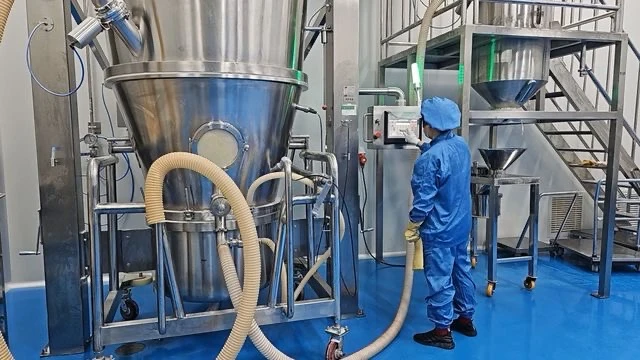
Manufacturing processes typically involve blending of concentrated raw materials in large, stainless steel reactors under controlled temperature and agitation. Quality control is paramount, necessitating rigorous testing of raw material purity, concentration accuracy, and final product efficacy via standardized methods (detailed in Performance & Engineering). Production must adhere to Good Manufacturing Practices (GMP) to ensure batch-to-batch consistency and prevent contamination. Filtration processes are employed to remove particulate matter, and packaging is carefully selected to maintain product stability and prevent degradation due to UV exposure or permeation. Specific manufacturing considerations depend on the active ingredient; for example, AHP formulations require stabilization against decomposition, while chlorine-based formulations necessitate pH control to maintain efficacy. The selection of compatible polymers for container materials is also critical to avoid leaching or chemical reaction with the disinfectant.
Performance & Engineering
Performance evaluation of veterinary disinfectant cleaners necessitates comprehensive testing against a panel of relevant pathogens, including bacteria (both Gram-positive and Gram-negative), viruses (enveloped and non-enveloped), and fungi. Standardized test methods, such as the Association of Official Analytical Chemists (AOAC) Use-Dilution Test and the ASTM E1174 Standard Test Method for Evaluation of Disinfectant Effectiveness, are employed to determine the minimum inhibitory concentration (MIC) and minimum bactericidal concentration (MBC). Kill time studies assess the rate of pathogen inactivation under various conditions (temperature, organic load, surface type). Environmental persistence and residue analysis are also crucial, evaluating the potential for disinfectant buildup and subsequent adverse effects. Force analysis, while less direct, is pertinent to the dispensing system (e.g., spray bottles, automated systems) – ensuring consistent droplet size and spray pattern for uniform coverage.
Environmental resistance considerations are significant. Veterinary facilities often operate in challenging conditions with varying temperatures, humidity levels, and exposure to organic matter (blood, feces, urine). The disinfectant's efficacy must remain stable under these conditions. Material compatibility is a critical engineering parameter. Prolonged exposure to certain disinfectants can corrode stainless steel, degrade plastics, or damage rubber seals. Selection of appropriate materials for facility surfaces and equipment is essential. Compliance requirements vary by region but generally include registration with relevant regulatory agencies (e.g., EPA in the US, ECHA in Europe) and adherence to labeling requirements regarding intended use, safety precautions, and dilution ratios. Proper ventilation and personal protective equipment (PPE) are also mandated to minimize exposure risks.
Technical Specifications
| Parameter | Unit | Typical Range | Test Method |
|---|---|---|---|
| Active Ingredient Concentration | % w/v | 0.5 - 5.0 | Titration, GC-MS |
| pH (1% solution) | - | 3.0 - 9.0 | pH Meter |
| Kill Time (Salmonella enterica) | Minutes | ≤ 10 | AOAC Use-Dilution Test |
| Kill Time (Norovirus) | Minutes | ≤ 30 | ASTM E1174 |
| Flash Point | °C | > 60 | Pensky-Martens Closed Cup |
| Specific Gravity | - | 1.00 - 1.10 | Hydrometer |
Failure Mode & Maintenance
Failure modes in veterinary disinfectant cleaners typically stem from degradation of the active ingredient, contamination, improper dilution, or application errors. Active ingredient degradation can occur due to exposure to UV light, heat, or incompatible materials. Contamination can introduce microorganisms or organic matter that neutralize the disinfectant. Improper dilution compromises the effective concentration, rendering the product ineffective. Application errors, such as insufficient contact time or inadequate surface coverage, can also lead to disinfection failures. Common failure manifestations include biofilm formation on surfaces, persistent odor, and continued presence of pathogens. Fatigue cracking and degradation of packaging materials can also occur, leading to leakage and product loss.
Preventative maintenance involves proper storage (cool, dark, dry place), regular inventory rotation (first-in, first-out), and strict adherence to dilution instructions. Quality control checks should be performed periodically to verify the active ingredient concentration and pH. Dispensing systems should be cleaned and calibrated regularly to ensure accurate delivery. Spills should be cleaned up immediately to prevent contamination and corrosion. Personnel training is crucial to ensure proper handling, application, and disposal procedures. In the event of suspected product failure, a thorough investigation should be conducted to identify the root cause and implement corrective actions. Routine monitoring of surfaces using ATP bioluminescence assays can provide an early indication of disinfection efficacy and identify areas requiring attention.
Industry FAQ
Q: What is the difference between a hospital-grade disinfectant and a general-purpose disinfectant in a veterinary setting?
A: Hospital-grade disinfectants, often containing higher concentrations of active ingredients and exhibiting broader spectrum efficacy, are specifically formulated to kill pathogens commonly found in healthcare environments – including those resistant to many standard disinfectants. Veterinary hospitals require this level of efficacy due to the potential for zoonotic diseases and the presence of immunocompromised animals. General-purpose disinfectants typically lack the potency and breadth of activity needed for effective infection control in a veterinary facility.
Q: How does organic matter affect disinfectant efficacy?
A: Organic matter (blood, feces, urine, pus) can significantly reduce disinfectant efficacy by physically shielding pathogens, chemically neutralizing the active ingredient, or providing nutrients for microbial growth. Therefore, thorough cleaning and removal of organic matter prior to disinfectant application is paramount. Some disinfectants exhibit greater tolerance to organic matter than others; accelerated hydrogen peroxide (AHP) generally performs better in the presence of organic load compared to chlorine-based compounds.
Q: What is the role of contact time in achieving effective disinfection?
A: Contact time refers to the period the disinfectant remains in contact with the surface being treated. Insufficient contact time can prevent the active ingredient from adequately killing pathogens. Disinfectant labels specify the recommended contact time for various pathogens and surface types. Allowing the disinfectant to air dry typically ensures adequate contact time, unless otherwise specified.
Q: Are all disinfectants safe for use around all animal species?
A: No. Certain disinfectants can be toxic to specific animal species. For example, phenols can be particularly harmful to cats. It is crucial to carefully review the product label and safety data sheet (SDS) to determine if the disinfectant is safe for use around the animals present in the facility. Always prioritize formulations with low toxicity profiles and ensure adequate ventilation.
Q: How should disinfectant solutions be stored to maintain efficacy?
A: Disinfectant solutions should be stored in tightly sealed containers, away from direct sunlight, heat, and extreme temperatures. Prepared solutions have a limited shelf life; refer to the manufacturer's instructions for specific storage recommendations. Avoid storing disinfectants in containers made of incompatible materials (e.g., metal containers for chlorine-based disinfectants). Regular inspection for signs of degradation (color change, precipitate formation) is recommended.
Conclusion
Veterinary disinfectant cleaners are integral to maintaining biosecurity and preventing the spread of infectious diseases within animal healthcare settings. Their efficacy hinges upon a complex interplay of material science, manufacturing precision, and diligent application. Understanding the chemical properties of active ingredients, the influence of environmental factors, and the importance of adherence to standardized testing protocols are paramount for informed procurement and optimal performance.
Moving forward, advancements in disinfectant technology will likely focus on developing more sustainable formulations, enhancing efficacy against emerging pathogens, and improving compatibility with advanced veterinary equipment. Continued emphasis on personnel training, comprehensive disinfection protocols, and routine monitoring will be crucial for mitigating the risk of healthcare-associated infections and safeguarding animal and human health. Proper material selection for facility surfaces and regular auditing of disinfection procedures will remain essential components of a robust infection control program.
Latest news
Copyright © 2026
Dingzhou Kangquan Pharmaceutical Co., Ltd. All Rights Reserved. Sitemap | Privacy
Policy


