2695018275@qq.com
+86
13780513619
- Afrikaans
- Albanian
- Amharic
- Arabic
- Armenian
- Azerbaijani
- Basque
- Belarusian
- Bengali
- Bosnian
- Bulgarian
- Catalan
- Cebuano
- Corsican
- Croatian
- Czech
- Danish
- Dutch
- English
- Esperanto
- Estonian
- Finnish
- French
- Frisian
- Galician
- Georgian
- German
- Greek
- Gujarati
- Haitian Creole
- hausa
- hawaiian
- Hebrew
- Hindi
- Miao
- Hungarian
- Icelandic
- igbo
- Indonesian
- irish
- Italian
- Japanese
- Javanese
- Kannada
- kazakh
- Khmer
- Rwandese
- Korean
- Kurdish
- Kyrgyz
- Lao
- Latin
- Latvian
- Lithuanian
- Luxembourgish
- Macedonian
- Malgashi
- Malay
- Malayalam
- Maltese
- Maori
- Marathi
- Mongolian
- Myanmar
- Nepali
- Norwegian
- Norwegian
- Occitan
- Pashto
- Persian
- Polish
- Portuguese
- Punjabi
- Romanian
- Russian
- Samoan
- Scottish Gaelic
- Serbian
- Sesotho
- Shona
- Sindhi
- Sinhala
- Slovak
- Slovenian
- Somali
- Spanish
- Sundanese
- Swahili
- Swedish
- Tagalog
- Tajik
- Tamil
- Tatar
- Telugu
- Thai
- Turkish
- Turkmen
- Ukrainian
- Urdu
- Uighur
- Uzbek
- Vietnamese
- Welsh
- Bantu
- Yiddish
- Yoruba
- Zulu
Apr . 01, 2024 17:55 Back to list
Veterinary Disinfectants types of disinfectants used in veterinary practice
Introduction
Disinfectants in veterinary practice are crucial for maintaining biosecurity, preventing disease transmission, and ensuring animal and human health. These formulations represent a diverse range of chemical agents designed to eliminate or reduce the viability of pathogenic microorganisms on inanimate surfaces, equipment, and occasionally, skin. Their selection and application are dictated by the target microorganisms, material compatibility, environmental factors, and safety considerations. Veterinary disinfectants occupy a critical niche within the broader disinfectant industry, differing from hospital-grade or household products due to the specific pathogens encountered in animal care settings – frequently including zoonotic agents – and the need for compatibility with a wider range of materials commonly found in veterinary facilities. Core performance characteristics revolve around antimicrobial spectrum, contact time, concentration efficacy, material safety, and residue profile. Effective disinfection protocols are essential for controlling outbreaks of infectious diseases like parvovirus, ringworm, and various bacterial infections, influencing both animal welfare and the economic stability of veterinary practices.
Material Science & Manufacturing
The manufacturing of veterinary disinfectants relies on a foundation of specific chemical compounds, each possessing unique antimicrobial properties. Common active ingredients include quaternary ammonium compounds (QACs), chlorine-based compounds (sodium hypochlorite, chlorhexidine), alcohols (ethanol, isopropanol), phenols, and peroxygen compounds (hydrogen peroxide, peracetic acid). The raw material sourcing of these compounds is subject to stringent quality control, requiring high purity and consistent composition. QACs, for example, are synthesized via alkylation of ammonia with alkyl halides, necessitating precise control over reaction conditions to ensure optimal chain length and branching for antimicrobial efficacy. Chlorine compounds are often produced through electrolysis of brine solutions, requiring robust electrode materials and electrolyte management.
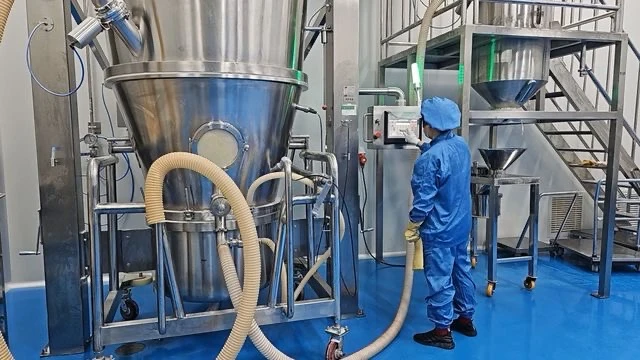
Manufacturing processes generally involve blending concentrated active ingredients with excipients—surfactants, chelating agents, solvents, and stabilizers—to enhance solubility, penetration, and shelf-life. Surfactants reduce surface tension, enabling better wetting of surfaces and improved microbial contact. Chelating agents, like EDTA, sequester metal ions that can inactivate disinfectants. Formulations are rigorously tested for stability, pH, and compatibility. Production methods adhere to Good Manufacturing Practices (GMP) to ensure batch-to-batch consistency and prevent contamination. Specific manufacturing techniques include liquid blending (for solutions and sprays), powder mixing (for granular formulations), and encapsulation (for sustained-release applications). Parameter control focuses on precise ingredient ratios, mixing times, temperature regulation, and final product pH adjustments. The selection of packaging materials, typically high-density polyethylene (HDPE) or polypropylene (PP), is crucial for chemical compatibility and prevention of degradation.
Performance & Engineering
Performance assessment of veterinary disinfectants centers on determining their antimicrobial efficacy against a defined spectrum of pathogens. This is typically evaluated through standardized laboratory tests like the Association of Official Analytical Chemists (AOAC) Use-Dilution test, which assesses the ability of a disinfectant to kill bacteria from contaminated surfaces. Suspension tests determine minimum inhibitory concentrations (MIC) and minimum bactericidal concentrations (MBC) for various microorganisms. Virucidal activity is assessed using carrier tests, where viruses are embedded in a carrier material and exposed to the disinfectant. Spores, being highly resistant, require dedicated spore kill tests. Environmental resistance encompasses the disinfectant’s ability to maintain efficacy in the presence of organic matter (blood, feces, urine), hard water, and varying temperatures. Force analysis isn't directly applicable to the disinfectant itself but is critical for the application equipment—sprayer nozzle design must ensure consistent droplet size and distribution for optimal coverage.
Compliance requirements are stringent, governed by regulations set forth by agencies such as the Environmental Protection Agency (EPA) in the United States and the European Chemicals Agency (ECHA) in Europe. Disinfectants must be registered and labeled according to these regulations, specifying target pathogens, usage instructions, safety precautions, and first aid measures. Material compatibility is a critical engineering consideration. QACs, for example, can be inactivated by anionic detergents and hard water. Chlorine-based disinfectants can be corrosive to metals. Alcohol-based disinfectants can damage certain plastics and rubber materials. Functional implementation necessitates careful consideration of contact time; sufficient exposure is required for effective disinfection. This dictates dilution rates, application methods (spray, wipe, soak), and surface dwell times. Proper ventilation is also essential to minimize exposure to disinfectant vapors.
Technical Specifications
| Disinfectant Type | Active Ingredient | Spectrum of Activity | Contact Time (minutes) |
|---|---|---|---|
| Quaternary Ammonium Compounds | Benzalkonium Chloride | Gram-positive and Gram-negative bacteria, enveloped viruses | 10-30 |
| Chlorine-Based | Sodium Hypochlorite | Broad-spectrum: bacteria, viruses, fungi, spores (high concentrations) | 5-20 |
| Alcohol-Based | Ethanol (70%) | Bacteria, enveloped viruses, fungi | 30-60 seconds |
| Phenolic | Orthophenylphenol | Bacteria, fungi, viruses | 10-20 |
| Peroxygen Compounds | Hydrogen Peroxide | Broad-spectrum: bacteria, viruses, fungi, spores | 5-15 |
| Accelerated Hydrogen Peroxide | Hydrogen Peroxide + Silver Ions | Broad-spectrum, enhanced efficacy against biofilms | 1-5 |
Failure Mode & Maintenance
Failure modes in veterinary disinfectants are multifaceted and can compromise their efficacy. Degradation of the active ingredient is a primary concern. Chlorine-based disinfectants, for example, rapidly degrade upon exposure to light, heat, and organic matter. QACs can be adsorbed onto surfaces or inactivated by anionic compounds. Loss of formulation stability, such as phase separation or precipitation, can result in uneven distribution of the active ingredient. Container compromise, including leaks or cracks, leads to concentration loss and potential contamination. Biofilm formation on surfaces can shield microorganisms from disinfectant action. Incorrect dilution or application techniques significantly reduce efficacy.
Maintenance of disinfectant efficacy requires proper storage, handling, and application procedures. Disinfectants should be stored in a cool, dry, and dark place, away from direct sunlight and heat sources. Containers should be tightly sealed to prevent evaporation and contamination. Dilution should be performed according to manufacturer instructions, using accurate measuring devices. Surfaces should be thoroughly cleaned to remove organic matter before disinfection. Regular monitoring of disinfectant concentration is recommended, especially in high-throughput environments. Rotating disinfectants with different modes of action can help prevent the development of microbial resistance. Routine inspection of application equipment (sprayers, wipes) is crucial to ensure proper function and delivery. Proper disposal of expired or unused disinfectants is essential to minimize environmental impact and comply with regulations.
Industry FAQ
Q: What is the difference between a disinfectant and an antiseptic, and which should be used in a veterinary setting?
A: Disinfectants are used on inanimate objects and surfaces to kill microorganisms, while antiseptics are applied to living tissue. In veterinary practice, both are essential. Disinfectants are used for cleaning kennels, surgical instruments, and floors. Antiseptics, such as chlorhexidine or povidone-iodine, are used for surgical site preparation, wound cleaning, and skin disinfection. The choice depends on the target application and the sensitivity of the tissue involved.
Q: How does organic matter affect the efficacy of commonly used veterinary disinfectants?
A: Organic matter—blood, feces, pus—can significantly reduce the efficacy of many disinfectants. It can physically shield microorganisms from the disinfectant, chemically inactivate the active ingredient, or consume the disinfectant through neutralization reactions. Thorough cleaning to remove organic matter before disinfection is crucial for optimal results. Higher concentrations of disinfectant may be needed in the presence of unavoidable organic load, but this should be done cautiously considering material compatibility and safety.
Q: What is the significance of contact time in disinfectant protocols?
A: Contact time refers to the amount of time the disinfectant must remain in contact with the surface to achieve the desired level of microbial kill. If the contact time is too short, the disinfectant may not be able to penetrate microbial cells or complete the killing process. Following the manufacturer's recommended contact time is paramount. Allowing the disinfectant to dry completely usually indicates sufficient contact time has been achieved.
Q: Can microorganisms develop resistance to disinfectants, and if so, how can this be mitigated?
A: Yes, microorganisms can develop resistance to disinfectants through various mechanisms, including mutations affecting cell wall permeability or upregulation of efflux pumps. To mitigate this, rotate disinfectants with different modes of action (e.g., QACs, chlorine, alcohols). Use disinfectants at the recommended concentrations. Ensure thorough cleaning to reduce the microbial load before disinfection. Implement regular disinfection protocols.
Q: What are the key considerations for choosing a disinfectant for a specific veterinary application (e.g., kennel disinfection vs. surgical instrument sterilization)?
A: The choice depends on the target microorganisms, the surface material, the potential for residue, and safety concerns. Kennel disinfection requires a broad-spectrum disinfectant effective against common pathogens like parvovirus and ringworm. Surgical instrument sterilization necessitates a high-level disinfectant or sterilization process capable of eliminating all microorganisms, including spores. Consider material compatibility to avoid damage to equipment or surfaces. Evaluate the residue profile to ensure it doesn't interfere with subsequent procedures or pose a health risk to animals. Always prioritize safety and follow manufacturer's instructions.
Conclusion
Veterinary disinfectants represent a critical component of infection control strategies within animal healthcare. The selection and implementation of appropriate disinfection protocols necessitates a thorough understanding of the chemical properties of available disinfectants, the specific pathogens targeted, and the environmental factors influencing efficacy. Effective disinfection is not merely about selecting a product but encompasses a comprehensive approach that includes proper cleaning, dilution, contact time adherence, and regular monitoring.
Looking forward, continued research and development will likely focus on novel disinfectant formulations with enhanced efficacy, reduced toxicity, and improved environmental profiles. The development of disinfectants effective against biofilms and resistant microorganisms remains a significant challenge. The integration of smart disinfection technologies, such as automated dispensing systems and real-time monitoring sensors, will contribute to improved compliance and enhanced biosecurity in veterinary facilities. Ultimately, a proactive and evidence-based approach to disinfection is essential for safeguarding animal and human health.
Latest news
Copyright © 2026
Dingzhou Kangquan Pharmaceutical Co., Ltd. All Rights Reserved. Sitemap | Privacy
Policy


