
2695018275@qq.com
+86
13780513619
- Afrikaans
- Albanian
- Amharic
- Arabic
- Armenian
- Azerbaijani
- Basque
- Belarusian
- Bengali
- Bosnian
- Bulgarian
- Catalan
- Cebuano
- Corsican
- Croatian
- Czech
- Danish
- Dutch
- English
- Esperanto
- Estonian
- Finnish
- French
- Frisian
- Galician
- Georgian
- German
- Greek
- Gujarati
- Haitian Creole
- hausa
- hawaiian
- Hebrew
- Hindi
- Miao
- Hungarian
- Icelandic
- igbo
- Indonesian
- irish
- Italian
- Japanese
- Javanese
- Kannada
- kazakh
- Khmer
- Rwandese
- Korean
- Kurdish
- Kyrgyz
- Lao
- Latin
- Latvian
- Lithuanian
- Luxembourgish
- Macedonian
- Malgashi
- Malay
- Malayalam
- Maltese
- Maori
- Marathi
- Mongolian
- Myanmar
- Nepali
- Norwegian
- Norwegian
- Occitan
- Pashto
- Persian
- Polish
- Portuguese
- Punjabi
- Romanian
- Russian
- Samoan
- Scottish Gaelic
- Serbian
- Sesotho
- Shona
- Sindhi
- Sinhala
- Slovak
- Slovenian
- Somali
- Spanish
- Sundanese
- Swahili
- Swedish
- Tagalog
- Tajik
- Tamil
- Tatar
- Telugu
- Thai
- Turkish
- Turkmen
- Ukrainian
- Urdu
- Uighur
- Uzbek
- Vietnamese
- Welsh
- Bantu
- Yiddish
- Yoruba
- Zulu
Apr . 01, 2024 17:55 Back to list
Veterinary Tablets Manufacturing Analysis
Introduction
Veterinary tablets represent a crucial segment within animal health pharmaceuticals, constituting a primary dosage form for the systemic delivery of therapeutic agents to a broad spectrum of animal species. Positioned within the pharmaceutical supply chain between active pharmaceutical ingredient (API) synthesis and clinical administration, their efficacy hinges upon a complex interplay of formulation science, manufacturing precision, and bioavailability considerations. These tablets address diverse veterinary needs, including anti-infectives, parasiticides, analgesics, and nutritional supplements. Core performance metrics center on drug release profile, palatability (critical for voluntary ingestion), mechanical strength to withstand handling and transport, and long-term stability under varied environmental conditions. The veterinary tablet market faces increasing demand driven by rising pet ownership and intensified livestock farming practices, requiring continuous innovation in formulation technologies and quality control measures.
Material Science & Manufacturing
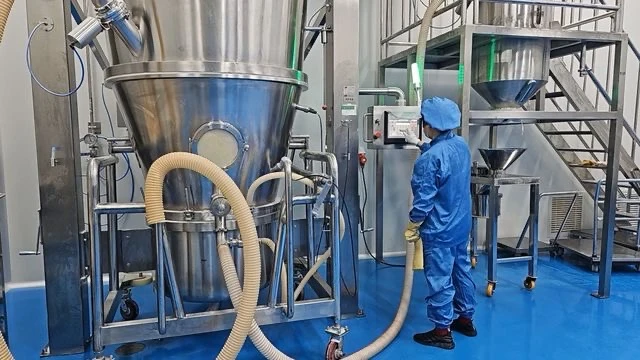
The manufacturing of veterinary tablets relies heavily on understanding the physicochemical properties of both APIs and excipients. Common APIs encompass anthelmintics (e.g., fenbendazole), antibiotics (e.g., amoxicillin), and NSAIDs (e.g., carprofen). Excipients, constituting the bulk of the tablet, include diluents (microcrystalline cellulose, lactose), binders (polyvinylpyrrolidone - PVP, hydroxypropyl cellulose - HPC), disintegrants (croscarmellose sodium, sodium starch glycolate), lubricants (magnesium stearate, stearic acid), and glidants (colloidal silicon dioxide). Raw material sourcing demands stringent quality control, including API impurity profiling via HPLC-MS and excipient grade verification based on USP/NF or Ph. Eur. standards. The manufacturing process typically involves blending API and excipients to achieve homogeneity, followed by granulation (wet, dry, or direct compression) to improve flowability and compressibility. Tablet compression is a critical step, with parameters like compression force, dwell time, and turret speed meticulously controlled to ensure consistent weight, hardness, and friability. Coating, often film coating with polymers like HPMC, enhances palatability, protects the API from environmental degradation (oxidation, hydrolysis), and modifies drug release characteristics (e.g., enteric coating for acid-labile drugs). Process Analytical Technology (PAT) tools, such as Near-Infrared Spectroscopy (NIR), are increasingly employed for real-time monitoring of blend uniformity and tablet characteristics during manufacturing.
Performance & Engineering
Tablet performance is dictated by several engineering principles. Mechanical strength, assessed via hardness and friability testing, is vital to prevent breakage during handling, packaging, and administration. Hardness is directly related to compression force and excipient properties. Friability, measuring the tendency to chip or crumble, is crucial for maintaining dosage uniformity. Disintegration time, evaluating the breakdown of the tablet in a simulated gastric or intestinal fluid, influences drug dissolution rate. Dissolution testing, performed using USP apparatus I or II, quantifies the rate and extent of drug release. This is directly correlated to bioavailability. Palatability is a unique challenge in veterinary medicine; tablets are often unpalatable to animals. Coating with palatable flavors (e.g., meat, cheese) or incorporating taste-masking agents is paramount. Environmental resistance considerations include moisture sensitivity, which can lead to degradation of APIs, and temperature fluctuations during storage and transport. Packaging, often blister packs made of aluminum foil and PVC, provides a barrier against moisture, light, and oxygen. Stability studies, conducted under accelerated and long-term conditions, are essential to determine shelf life and ensure product efficacy over time, conforming to ICH guidelines.
Technical Specifications
| Parameter | Specification (Typical) | Test Method | Industry Standard |
|---|---|---|---|
| Hardness (N) | 40-150 N | USP <603> | USP |
| Friability (%) | ≤ 1.0% | USP <1217> | USP |
| Disintegration Time (min) | ≤ 30 min | USP <701> | USP |
| Drug Assay (%) | 95.0 – 105.0% | HPLC-UV | USP |
| Moisture Content (%) | ≤ 2.0% | Karl Fischer Titration | USP |
| Weight Variation (%) | ≤ ± 5.0% | USP <905> | USP |
Failure Mode & Maintenance
Veterinary tablets are susceptible to several failure modes. Capping and lamination occur due to insufficient binder or excessive compression force, resulting in separation of tablet layers. Sticking and picking arise from moisture absorption or inadequate lubricant, causing the tablet to adhere to the die wall. Friability leading to chipping or breakage is linked to low hardness and poor material flow. Degradation of the API due to oxidation, hydrolysis, or photolysis can reduce potency. Inconsistent drug release profiles may result from poor blend uniformity or inadequate disintegration. For maintenance, equipment should undergo routine cleaning and preventative maintenance. Die walls should be polished to prevent sticking. Humidity control in the manufacturing environment is crucial to minimize moisture-related issues. Regular calibration of compression machines and analytical instruments is essential for accurate measurements. Storage conditions must adhere to label recommendations (temperature, humidity, light protection). Lot traceability should be maintained throughout the supply chain to facilitate recall procedures if necessary. Proper handling procedures during transportation are also vital to prevent physical damage.
Industry FAQ
Q: What are the critical considerations regarding excipient selection for a chewable veterinary tablet?
A: Excipient selection for chewable tablets prioritizes palatability and ease of mastication. Microcrystalline cellulose provides bulk and compressibility, while sweeteners (sorbitol, mannitol) enhance taste. Flavorings (meat, poultry, cheese) are essential. Binders like PVP or HPC ensure tablet integrity during chewing. Lubricants must be carefully chosen to avoid a waxy mouthfeel. Disintegrants are less critical in chewable tablets as mechanical breakdown during chewing is primary.
Q: How does the particle size of the API impact tablet manufacturing and performance?
A: API particle size significantly affects flowability, compressibility, and dissolution. Smaller particle sizes generally exhibit better flow but can lead to segregation during blending. Larger particle sizes may improve compressibility but can reduce dissolution rate. Uniform particle size distribution is crucial for consistent tablet weight and drug release. Milling or micronization may be employed to control particle size.
Q: What validation requirements are necessary for a new veterinary tablet manufacturing process?
A: Process validation is crucial, following ICH Q7 guidelines. This includes equipment qualification (IQ, OQ, PQ), process validation (PV), and cleaning validation. PV requires demonstrating that the process consistently produces tablets meeting predefined quality attributes. Three consecutive successful validation batches are typically required. Analytical method validation is also essential to ensure accuracy and reliability of testing procedures.
Q: What are the implications of using different coating polymers on tablet stability and drug release?
A: Coating polymers influence tablet stability and drug release kinetics. HPMC provides a film coat for protection and controlled release. Enteric polymers (e.g., Eudragit) protect acid-labile drugs. Polyethylene glycol (PEG) can enhance drug dissolution. Polymer molecular weight and concentration affect film thickness and permeability. Stability studies are essential to evaluate the impact of coating on API degradation.
Q: How does Good Manufacturing Practice (GMP) impact veterinary tablet production and quality control?
A: GMP guidelines are paramount. They mandate strict control over all aspects of manufacturing, from raw material sourcing and facility design to personnel training and documentation. GMP ensures consistent product quality, traceability, and adherence to regulatory standards. Regular audits are conducted to verify compliance.
Conclusion
Veterinary tablet manufacturing is a complex and highly regulated process demanding meticulous attention to material science, engineering principles, and quality control. Achieving optimal tablet performance – encompassing mechanical strength, bioavailability, palatability, and stability – relies on a thorough understanding of API and excipient interactions, precise control of manufacturing parameters, and adherence to stringent industry standards. The continuous advancement of formulation technologies, coupled with the implementation of PAT tools, will further enhance the efficiency and reliability of veterinary tablet production.
Future trends point towards a greater emphasis on personalized medicine for animals, potentially leading to the development of customized tablet dosages and formulations. Furthermore, innovative drug delivery systems, such as orally disintegrating tablets and modified-release formulations, are anticipated to improve patient compliance and therapeutic outcomes. Maintaining robust quality assurance systems and staying abreast of evolving regulatory requirements will be critical for success in this dynamic industry.
Latest news
Copyright © 2026
Dingzhou Kangquan Pharmaceutical Co., Ltd. All Rights Reserved. Sitemap | Privacy
Policy


